For a classic car, the correct coolant is not necessarily the green or blue bottle marketed as “standard.”The reference to follow is the specification intended for the engine and the materials of its circuit, then the product’s technical data sheet. If the coolant already present is unknown, it is better to identify its history or have the circuit drained and flushed by a professional rather than mixing two products at random.
The choice is important: the coolant must dissipate heat, protect against freezing, and limit corrosion of the radiator, block, cylinder head, water pump, and heater. A classic car may combine several metals, aged seals, and a radiator that has been repaired or replaced. A universal rule based solely on the year or colour would therefore be misleading.
Article verified on 5 October 2026. The recommendations of the manufacturer, tuner, or engine builder always take precedence over general advice.
Quick answer: which product to choose?
Proceed in this order:
- consult the user manual, workshop manual, or manufacturer documentation corresponding exactly to the model, engine, and year;
- note the technology and especially the required standard or approval;
- choose a coolant whose technical data sheet explicitly mentions this compatibility;
- for a top-up, use the same product if its identity is certain;
- if the fluid is unknown, rusty, oily, or very cloudy, do not top up blindly: have the circuit diagnosed and plan an appropriate drain.
A ready-to-use product limits dilution errors. A concentrate must be mixed in the proportion indicated by its manufacturer, with the prescribed water quality. Do not improvise a stronger concentration: more antifreeze does not automatically mean better cooling.
What is the coolant really for?
The circuit transports the engine’s heat to the radiator. The fluid generally contains water, a glycol, and inhibitors designed to protect metals and control deposits. BASF, for example, describes its Glysantin G30 as a concentrate based on ethylene glycol with organic inhibitors, designed to protect against corrosion, overheating, and freezing. This description illustrates why coolant is not simply coloured water.
In a classic car, the stakes are often heightened by:
- a copper-brass radiator, aluminium, or one replaced during the car’s life;
- a block and cylinder head that are not necessarily made of the same metal;
- hoses, seals, heater valves, and caps that are ageing;
- deposits left by previous fillings or by the use of hard water;
- occasional use which lengthens the time between checks.
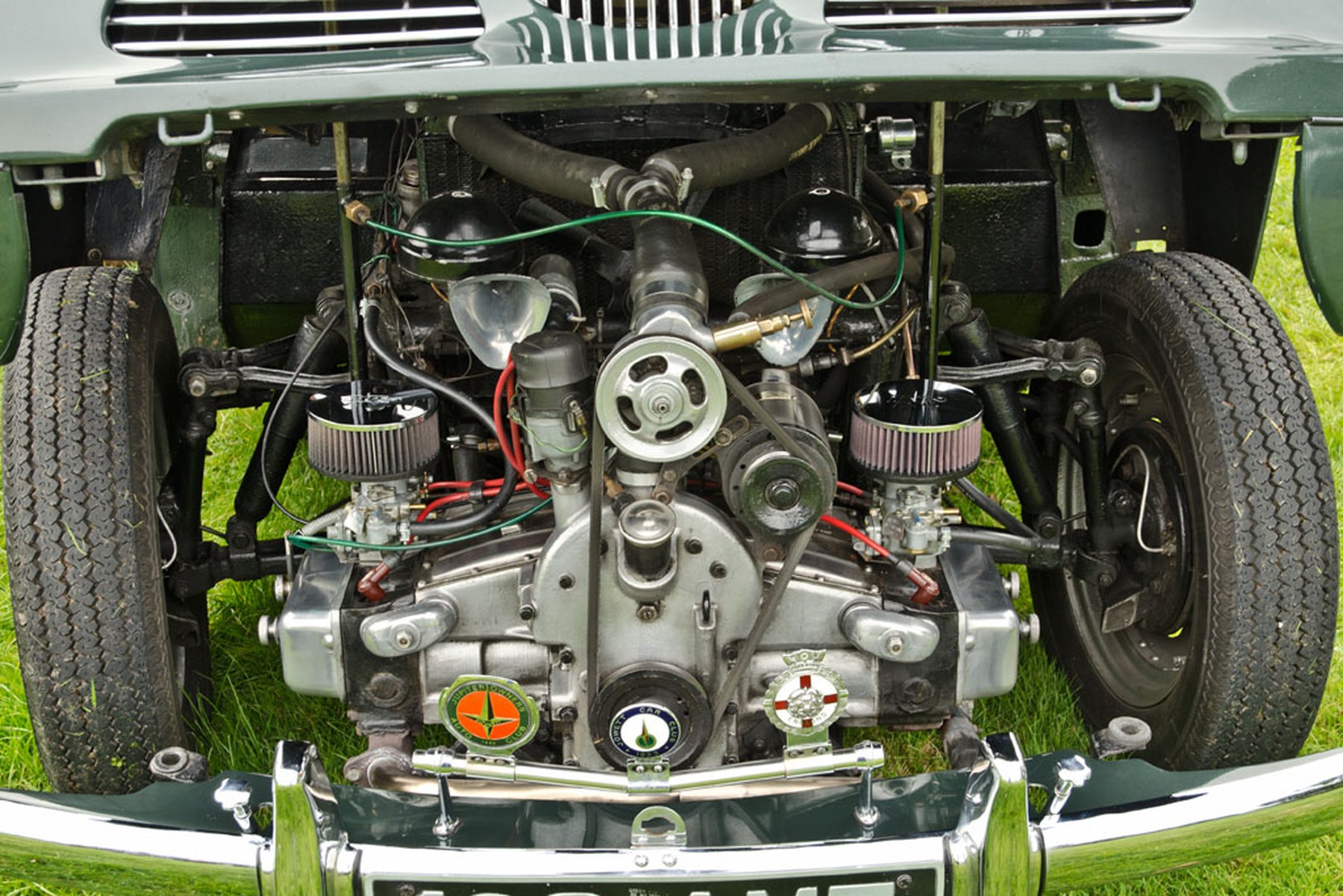
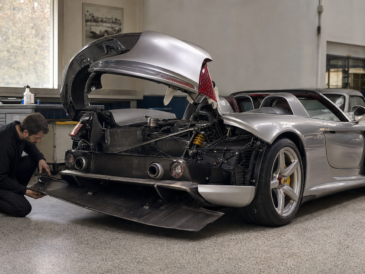
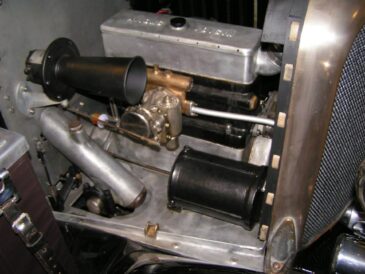
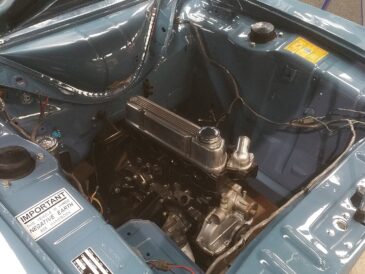
On a classic car, the materials, repairs, and modifications of the circuit matter as much as the vehicle’s year. Photo: SG2012, Wikimedia Commons, CC BY licence 2.0.
IAT, OAT, HOAT: what do these families mean?
Coolants are notably distinguished by the technology of their corrosion inhibitors.
| Family | General principle | What to remember for a classic car |
|---|---|---|
| IAT | Inorganic additives, often combined with silicates depending on the formulation | Historically common technology, but not automatically suitable for every classic car |
| OAT | Organic acid-based inhibitors | Often longer service life, but compatibility must be checked with manufacturer recommendations and materials |
| HOAT or Si-OAT | Combination of organic and inorganic technologies | Formulations vary according to manufacturers; exact approval remains decisive |
Motul presents its Inugel Classic as a ready-to-use product based on monoethylene glycol using non-organic additives. Conversely, BASF’s datasheet for G30 describes an OAT technology without silicates. These two examples show that coolants can be based on different chemistries: their colour or marketing alone is not sufficient to make them interchangeable.
Is the colour of the coolant a standard?
No. Colour helps to see the level or a leak, but it does not replace the standard or the technical datasheet. Products of different technologies can share a similar hue, and the same family can exist in several colours.
To choose, look on the bottle and in its documentation for:
- the inhibitor technology;
- the respected technical standards;
- the manufacturer approvals or recommendations;
- the mention “ready-to-use” or “concentrate”;
- the announced protection temperature for the intended dilution.
A reference such as “G11”, “G12” or “G13” originates from the Volkswagen Group’s specifications. It is frequently used commercially as a shorthand, but it does not constitute a universal classification for all classic cars.
Is it possible to mix two different coolants?
The cautious answer is no, unless the manufacturer explicitly confirms compatibility between the two references. BASF states in its Glysantin FAQ that different products use different additive combinations and that mixing them can reduce anticorrosion protection or cause compatibility issues.
A mixture can reduce anticorrosion protection, alter service life, or promote deposits. The result is not always immediately visible. Therefore, a correct level in the expansion tank does not guarantee that the circuit’s chemistry is correct.
What should be done if the product already present is unknown?
Do not choose a top-up solely because its colour resembles that of the existing fluid. Look for invoices, the label left by the garage, and the vehicle documentation. If the identity remains unknown, a drain with appropriate flushing is preferable. For an old, heavily scaled or leaking circuit, entrust the operation to a specialist: aggressive cleaning can reveal weaknesses that deposits were masking.
Tap water, demineralised water or ready-to-use coolant?
A ready-to-use product already contains the proportion of water specified by its manufacturer. It should normally not be diluted further. For a concentrate, respect the dilution instructions in its technical data sheet and the required water quality. Minerals in hard water can contribute to deposits; however, the appropriate water depends on the product’s formulation.
Water alone does not offer the same protection against freezing and corrosion. It can only be used in an emergency situation where the priority is to avoid immediate overheating, after which the mixture must be promptly restored to specification. Never open a radiator or pressurised expansion tank cap when the engine is hot: the fluid can spray out and cause severe burns.
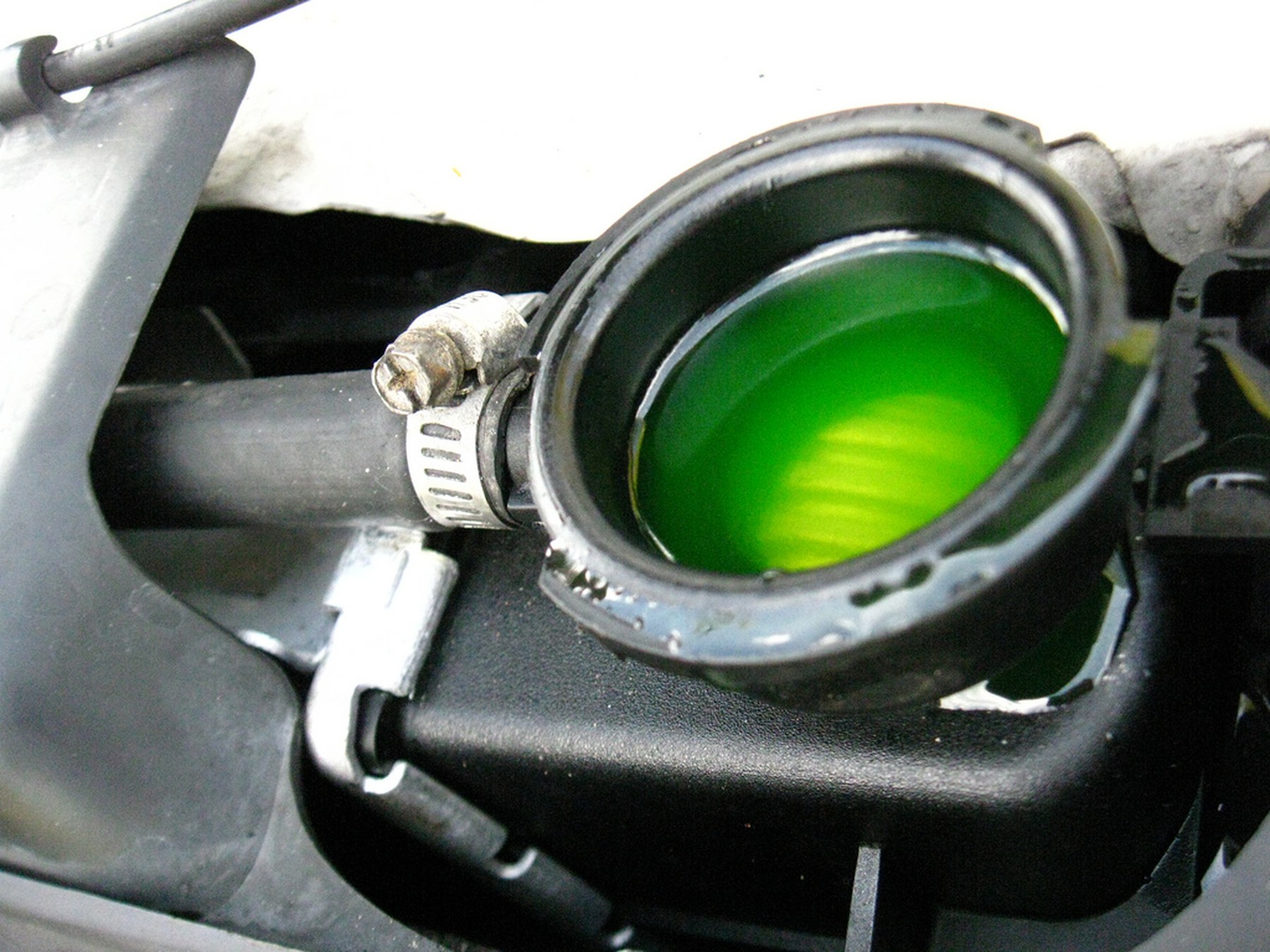
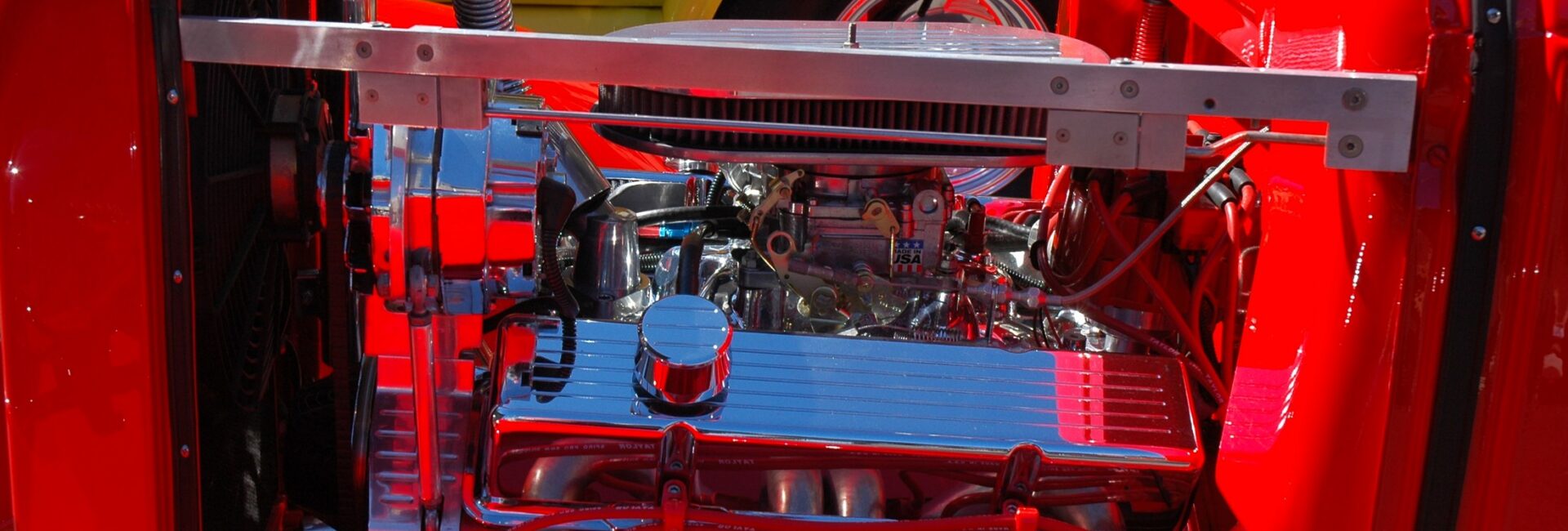
Colour alone does not allow certain identification of a coolant’s technology. The cap should only be opened when the engine is cold. Photo: EvelynGiggles,Wikimedia Commons, licence CC BY 2.0.
How to check the circuit before topping up?
With the engine cold and the car on level ground:
- check the level according to the manual’s procedure;
- look for wet or crystallised traces around hoses, clamps, radiator, water pump and heater;
- inspect hoses for swelling, cracking or hardening;
- observe the fluid without relying solely on its colour;
- check for absence of oily film, sludge, rust or persistent foam;
- monitor temperature and heater behaviour during the next journey.
Repeated level drops are not normal maintenance. The leak or sealing defect must be located. A top-up masks the symptom without correcting the cause.
When should the coolant in a classic car be drained?
There is no single interval. Follow the manual and the duration specified for the product actually used. Chronological age matters even if the car is rarely driven: inhibitors do not remain effective indefinitely.
An intervention should be considered when:
- the history is absent or contradictory;
- the product in place does not correspond to the specified requirement;
- the liquid shows deposits, rust or contamination;
- the circuit has been opened to replace a radiator, pump, thermostat or hose;
- the antifreeze protection or the condition of the fluid no longer complies with the check carried out by a professional.
A complete drain does not consist of emptying only the radiator. Some liquid may remain in the block, the heater or certain pipes. Bleeding is also specific to the vehicle: air pockets can cause poor heating, insufficient circulation or overheating. Therefore, the exact workshop procedure must be followed.
Mistakes that can be costly
Choosing solely by colour
This is the most common trap. Two liquids of the same colour can have different specifications.
Pouring in a “universal” product without checking
The commercial label does not replace an approval nor confirmed compatibility for the model.
Opening the circuit when hot
A pressurised circuit can spray boiling liquid. Wait for it to cool completely and follow the manual.
Mixing a concentrate at random
Incorrect dilution alters the advertised performance. Use the proportions and water specified in the technical data sheet.
Ignoring a loss of level
A minor leak can become a major overheating issue. For a rarely used car, place a clean cardboard under the engine after parking to more easily spot drops, without foregoing an inspection.
Disposing of used liquid down the sink or on the ground
Many antifreezes contain ethylene glycol. The INRS classifies it as harmful if ingested. Collect the liquid in a closed container, keep it away from children and animals, then take it to a recycling centre or a professional who accepts this waste. Do not mix it with used oils.
Purchase checklist before ordering a container
Before purchase, note:
- make, model, year and engine type;
- known materials of the radiator, block and cylinder head;
- reference of the current coolant if documented;
- required standard or approval;
- total capacity of the circuit;
- ready-to-use product or concentrate;
- draining and bleeding procedure;
- any recent work on the cooling system.
If the car has just been purchased without invoices, include this check as part of an overall overhaul. Our guide to restarting an old car that has been stationary helps to prioritise the checks. Also consider the choice of engine oil for classic cars and the inspection of the battery 6 V or 12 V.
Verdict: specification before colour
The best coolant for a classic car is the one that meets the vehicle’s technical recommendation and remains compatible with the entire system. A so-called conventional formulation may be suitable for some models, while an organic or hybrid product with precise approval will be preferable for others.
If the history is unknown, do not turn topping up into a chemical experiment: have the condition of the system identified, choose a documented reference, and apply the correct draining and bleeding procedure. This method protects the engine better than any rule based solely on the colour of the bottle.
You can also browse classic and vintage cars for sale to compare available models and their levels of preparation.
Frequently asked questions
What coolant should be used in a car from the 1960 or 1970 years?
The year alone is not enough. Consult the engine documentation and check the materials as well as any modifications to the system. Then choose a product whose technical data sheet confirms compatibility.
Can modern coolant be used in a classic car?
Sometimes yes, if its specification is compatible with the engine, radiator, seals, and residual coolant. The term “modern” alone does not indicate the chemistry. When changing technology, an appropriate drain and flush are preferable.
Can blue and green coolant be mixed?
Colour does not provide an answer. You need to know the references, technologies and approvals of both products. Without written confirmation of compatibility, do not mix them.
Can you top up with demineralised water?
Only according to the prescribed procedure and concentration. Adding water alters protection against freezing, boiling and corrosion. After a repair, have the mixture checked and corrected.
Why does the level drop without visible puddles?
A leak may only appear when hot or under pressure. The heater radiator, cap, water pump, a seal or a hose can also leave little trace on the ground. A pressure test by a professional helps locate the cause.
Should the system be flushed at every drain?
Not systematically. Flushing depends on the condition of the fluid, presence of deposits and any change in technology. On an old and fragile system, apply a validated procedure rather than a generic aggressive treatment.
Sources
- Motul — Inugel Classic technical data sheet: characteristics, safety and revision of August 2024.
- Motul — How to Choose the Right Coolant: priority to the manual, colour, mixing and emergency top-up.
- BASF — Glysantin G30, technical data sheet: ethylene glycol base, OAT technology, anticorrosion protection and approvals.
- BASF Glysantin — use and maintenance: compatibility, colour, mixtures, dilution water and ready-to-use products.
- INRS — toxicological sheet no. 25, ethylene glycol: uses in antifreezes and harmful classification in case of ingestion.