Buying a classic car without a registration document can be possible, but only in certain situations and provided that its identity, origin and chain of ownership can be clearly established. It is not a formality that the FFVE certificate would automatically circumvent.
In a standard private sale, the rule is simple: the registration certificate must be in the seller’s name. If they have lost it, it is normally their responsibility to request a duplicate before the sale. When a seller has never had the registration document issued in their name, when several transfers have not been recorded, or when the vehicle’s provenance remains unclear, the buyer risks being unable to register it — and sometimes even doubts about the vehicle’s ownership itself.
Short answer: do not buy a classic car without a registration document based solely on the promise that “it will be registered as a classic.” The correct procedure depends on the exact reason why the title is missing. Verify this reason, the identification numbers and all supporting documents before paying a deposit or starting restoration.
Is it legal to sell a car without a registration document?
To normally transfer a vehicle already registered in France, the seller must hand over to the buyer the crossed-out, dated and signed registration document. It must be issued in their name, except in specific regulated cases, notably certain inheritances or sales made by a professional.
A simple declaration of loss therefore does not replace the registration document during the sale. If the registered holder has lost it, they can request a duplicate on the France Titres website. This request can in principle only be made by the holder or by an authorised person.
It should also be recalled that a vehicle no longer roadworthy cannot be sold to a private individual as an ordinary vehicle: it can only be transferred to an automotive professional with a SIRET number. An incomplete or non-running “barn find” therefore requires extra caution.
The five situations to distinguish before purchase
| Situation | Level of risk | Recommended action |
|---|---|---|
| The seller is the registered holder but has lost the registration document | Moderate | Ask them to obtain a duplicate before concluding the sale |
| The registration document exists but is not in the seller’s name | High | Suspend the purchase until regularisation or complete reconstruction of transfers |
| The classic vehicle genuinely has no known title | High | Verify its origin, ownership and eligibility for a “classic vehicle” procedure |
| The vehicle comes from an inheritance or an auction sale | Variable | Gather the documents related to the inheritance or the auction sale receipt |
| The vehicle is imported without foreign title | Very high | First check the requirements of the country of origin, customs and France Titres |
1. The seller has simply lost the registration document
This is the easiest case to resolve. If the seller is indeed the registered holder, they must request a duplicate. The buyer thus avoids taking on a difficulty that still belongs to the seller.
The prudent approach is to delay the final signature and payment of the balance until the document is presented. An attractive advertisement, a low price or urgency claimed by the seller never compensate for the absence of the necessary document for a regular transfer.
To reduce this risk upstream, favour documented advertisements and identifiable contacts among the classic cars for sale on Plethore Cars, then always condition your decision on the verification of the original documents.
2. The seller is not the name shown on the registration document
This is one of the main warning signs. It may be an old vehicle bought but never registered, sometimes resold several times with successive transfer certificates. Yet each change of ownership must normally be regularised.
The FFVE specifies that a certificate does not serve to erase an irregular chain of ownership. It is necessary to link the seller to the registered holder by means of coherent supporting documents: transfer certificates, professional invoice, notarial deed, judgement or auction receipt as appropriate. An incomplete chain may lead to the rejection of the registration application.
3. The vehicle no longer has any known documents
Some very old cars have been stored for decades, sometimes before the computerisation of files. Registration may then still be possible, notably under the classic vehicle regime, but it is never guaranteed.
The applicant will have to document the vehicle’s origin and prove legitimate ownership. The regulations provide, when the old registration certificate cannot be produced, for the presentation of proof of ownership. Depending on the file, an invoice, a notarial deed, a judgement, an auction receipt or several documents tracing the transfers may be useful.
It is also necessary to precisely identify the car: make, model, year, serial or chassis number, technical characteristics and any former registration. For several decades, many vehicles remain identifiable in administrative files even when the paper document has disappeared.
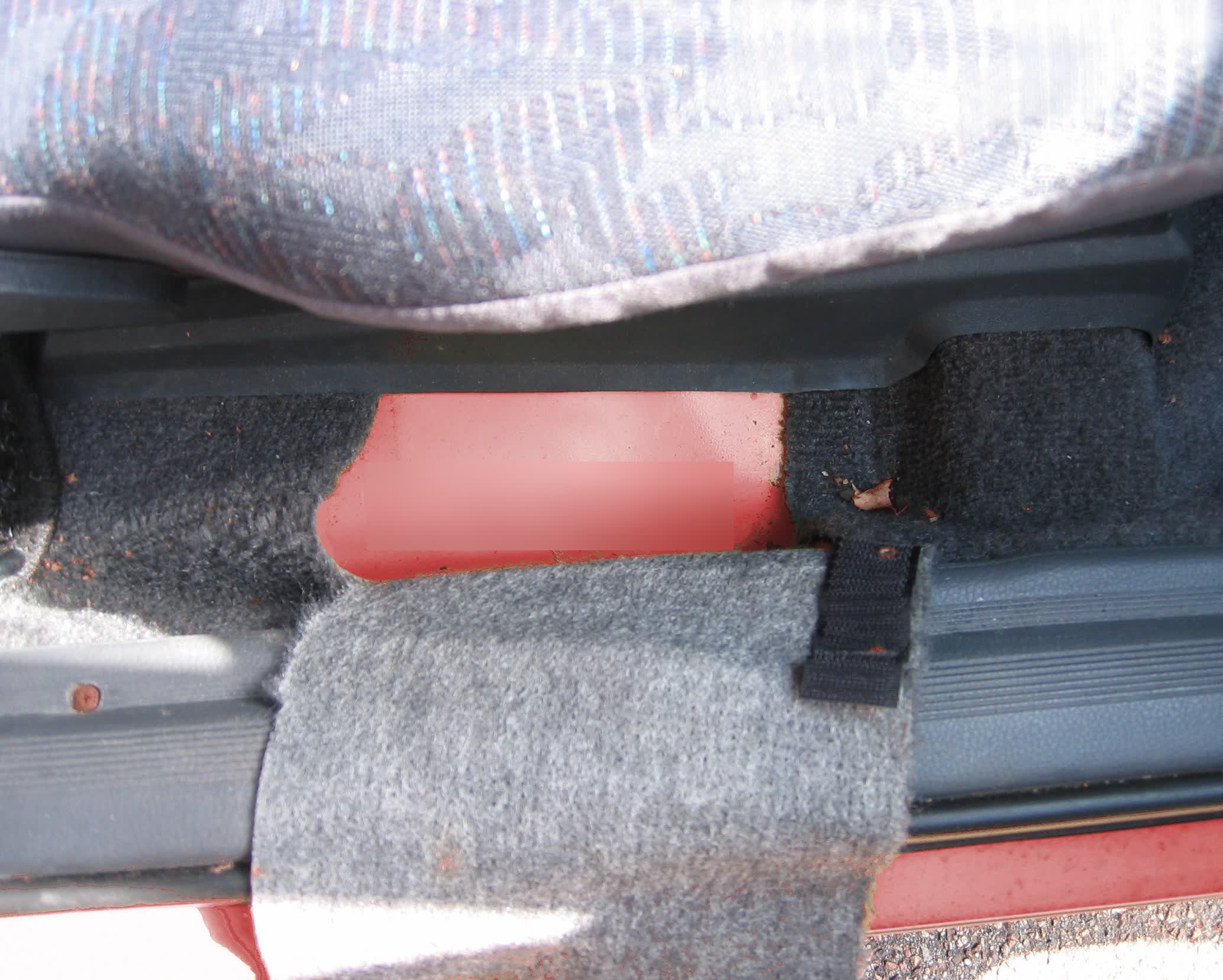
The serial or chassis number must be carefully noted and correspond to the supporting documents. In this illustrative photograph, part of the number has been deliberately masked by its author. Photo: Hans Haase, CC BY-SA 3.0, via Wikimedia Commons.
4. The vehicle comes from an inheritance or an auction
An inheritance follows particular documentary rules. The registration document in the name of the deceased, proof establishing heir status and, depending on circumstances, the agreement of co-heirs may be necessary. This case should not be treated as a simple “paperless” car.
At an auction, the adjudication slip is an important document to establish the purchase, but the buyer must still verify the administrative identity of the vehicle and the conditions for its future registration.
To explore this first case further, consult our guide dedicated to procedures for selling the car of a deceased person.
5. The vehicle is imported without foreign title
A foreign car without an original registration certificate or equivalent document represents a significantly riskier file. A dating and characteristics certificate does not replace export proofs, customs formalities, or the documents required by France Titres.
For a vehicle purchased within the European Union, a tax clearance certificate may be required. For a vehicle coming from a country outside the Union, the customs clearance certificate 846 is generally part of the file. Before any purchase, one must consult the administration or a competent professional about the acceptable documents for the country concerned.
Registration certificate, proof of ownership and FFVE certificate: three different documents
Confusion between these documents leads to many unpleasant surprises.
- The registration certificate, or certificate of registration, authorises the administrative identification of the vehicle and its holder. It is not, by itself, a title of ownership in the civil sense.
- Proof of ownership establishes how the vehicle was acquired: for example, transfer certificate, invoice, notarial deed, judgment or adjudication slip.
- The dating and characteristics certificate, issued by the manufacturer, its representative or the FFVE, describes and dates the vehicle to support a registration application with the mention “vintage vehicle”.
The FFVE certificate is therefore not a registration certificate and does not guarantee that France Titres will accept the file. It does not regularise an illicit sale, lack of owner consent, or provenance that cannot be demonstrated.
What are the conditions for a vintage vehicle registration certificate?
A vehicle may fall under the administrative definition of a vintage vehicle when it meets notably three criteria:
- having been built or first registered at least 30 years ago;
- corresponding to a type that is no longer produced;
- being preserved in its original condition, without essential modification of its technical characteristics.
The switch to a vintage registration certificate is not automatic. It requires an application and the production of the required documents. A heavily modified classic, lacking an identifiable number or assembled from several vehicles, may raise significant difficulties.
Our dossier on the classic vehicle registration certificate, its advantages, limitations and procedures complements these points.
Procedures to follow for a classic car genuinely without a registration certificate
Step 1: establish the vehicle’s identity and origin
Record the serial or chassis number exactly as it appears. Look for any manufacturer’s plate, previous registration, invoice, dated photograph, logbook, maintenance file or correspondence that might trace the car’s history.
Check that the numbers show no signs of tampering, cutting or suspicious re-stamping. If in doubt, have an automotive expert inspect the vehicle before purchase.
Step 2: reconstruct the chain of ownership
Ask the seller to demonstrate how they acquired the car and to provide any original documents available. Their identity, address and the information on the documents must be consistent.
A single handwritten invoice is not proof of registration. The more the vehicle has changed hands informally, the more fragile the documentation becomes.
Step 3: verify the vehicle’s eligibility
Before submitting a request for a certificate, ensure the car meets the criteria for a classic vehicle and that its essential characteristics have not been altered. For a more recent car, the classic vehicle procedure is not a fallback option.
Step 4: request a dating and characteristics certificate
The certificate can be requested from the manufacturer or their representative in France if one exists, or from the FFVE. The file should include the applicant’s identity details, photographs, the vehicle’s characteristics and numbers, as well as proof of origin and ownership.
As documents, fees and processing times may change, always use the official forms and instructions in force on the day of the application.
Step 5: carry out the technical inspection when required
For a first request for the “classic vehicle” designation, a valid technical inspection may be necessary depending on the vehicle’s first registration date and category.
Once the designation is obtained, classic cars registered from 1960 onwards are subject to a periodic inspection every five years. Classic vehicles under 3,5 tonnes registered before 1960 are exempt. However, it is important to verify the applicable rule for the specific vehicle and procedure.
Step 6: submit the registration application
The application is made via the France Titres portal or through an authorised professional. The file may include, among other things:
- proof of ownership or the previous registration certificate if it exists;
- the certificate from the manufacturer, their representative or the FFVE;
- the technical inspection when required;
- proof of identity and address;
- the driving licence corresponding to the vehicle category;
- an insurance certificate;
- the tax and customs documents for an import.
The authorities may request additional documents or reject an application if the origin, identity, or compliance is not sufficiently established.
Why it is essential to secure registration before restoration
A car without registration is often sold as an attractive project. However, the bodywork, engine, and interior can swallow tens of thousands of euros before the administrative hurdle is even discovered.
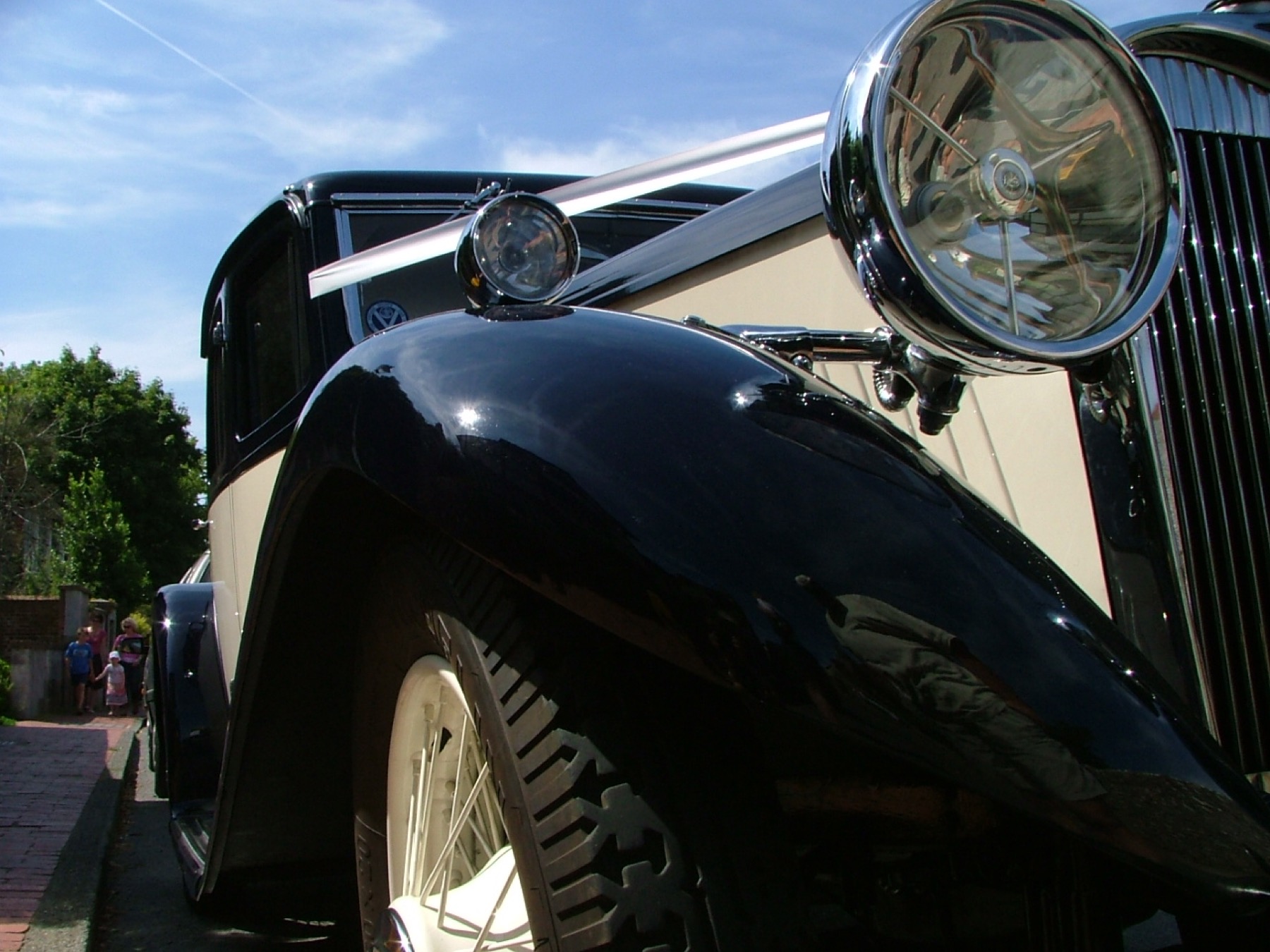
Before starting restoration, verify the vehicle’s identity and the feasibility of its registration. Photo: Martin Leng, public domain, via Wikimedia Commons.
Before any work begins, have the file checked, photograph the original markings, and keep all evidence. Restoration can erase historical clues, make certain numbers less legible, or introduce modifications incompatible with the expected characteristics.
A methodical inspection of the classic car should thus cover both the mechanical condition and the administrative identity. Also find the mistakes to avoid when starting out with classic cars.
Warning signs that should cause you to abandon or suspend the purchase
It is better not to conclude the sale until the situation is clarified if:
- the seller claims that an FFVE certificate is “automatic”;
- they refuse to request a duplicate even though they are the registered holder;
- their name does not appear on any document and the chain of ownership transfers is incomplete;
- the chassis number is illegible, altered, or different from the documents provided;
- the imported vehicle has neither foreign title, proof of export, nor customs documentation;
- the seller demands an immediate deposit before any verification;
- a non-running vehicle is offered by a private individual as if its ordinary transfer posed no difficulty.
A written condition making the sale subject to the feasibility of registration can reduce risk, but its wording must be tailored to the file. For a valuable vehicle, the joint opinion of a motor expert and a legal professional is a reasonable precaution.
Frequently asked questions
Can the FFVE issue a registration certificate directly?
No. The FFVE issues a certificate of dating and characteristics. The registration decision is the responsibility of France Titres.
Is a purchase invoice sufficient to register the classic car?
Not necessarily. It can help prove ownership, but the authorities may require additional information about the vehicle’s origin and the chain of ownership transfers.
The seller has lost the registration document: can I request a duplicate after purchase?
The duplicate should normally be requested by the registered holder. The safest option is for the seller to obtain it before the transfer.
Can I buy if the registration document is not in the seller’s name?
It is strongly discouraged until the situation has been regularised. An FFVE certificate does not replace omitted ownership transfers.
Can I restore the car before submitting the application?
It is risky. First have its identity, origin and administrative feasibility confirmed, then keep photographic evidence of the markings before any work.
Can I drive away on the road with a car without registration?
No, not without a valid circulation permit, insurance and technical inspection when required. Arrange professional transport on a flatbed.
In conclusion
Buying a classic car without registration is not always impossible, but success depends less on the age or prestige of the car than on the quality of its documentation. A registration lost by its holder is normally resolved by a duplicate. A genuine barn find can sometimes be registered as a classic if its ownership, origin and identity are established. Conversely, a series of undeclared sales, a dubious number or an import without documents are major risks.
The golden rule is to check before paying and before restoring. No attractive price compensates for a car whose origin you cannot prove or for which you cannot obtain registration.
This article provides general information verified as of 8 September 2026. The required documents depend on the case and may change. For a complex situation or a valuable vehicle, request written confirmation from the competent authority and appropriate legal advice.
Official sources
- Service-Public — Selling or giving away your vehicle
- Service-Public — Vehicle technical inspection
- France Titres — Reissuing your registration certificate
- Légifrance — Order of 9 February 2009 relating to vehicle registration procedures
- Service-Public — “Classic vehicle” registration document
- FFVE — Registering a vehicle without registration document
- FFVE — Obtaining a Dating and Characteristics Certificate
- FFVE — The Certificate of Ownership
- French Customs — Purchasing a Vehicle Abroad