To properly insure a classic car, you must first check how the contract will determine compensation, and not just the amount of the premium. A declared value informs the insurer but does not always guarantee payment of that amount. An agreed value corresponds, when expressly accepted and recorded in the contract, to a compensation basis agreed with the insurer. However, the exact definitions and limits remain those of the general and specific conditions of each policy.
Direct answer: for a rare, restored, highly valued or hard-to-compare automobile, request an appraisal, submit the report to the insurer and obtain in writing the value retained, its validity period and the covered events. An appraisal report alone does not automatically convert an estimated value into a contractual agreed value.
Agreed value, declared value and expert valuation: the differences
These terms are often used as if they were interchangeable. They are not necessarily so. You must read their definition in the proposed contract, as the same commercial term may be accompanied by limits, deductibles, exclusions or a revision rule.
| Concept | What it generally means | Point to check before signing |
|---|---|---|
| Declared value | Amount communicated by the insured to describe the risk and possibly calculate the premium | Is it a simple ceiling or a guaranteed sum in the event of total loss? |
| Agreed value | Value accepted by the insurer and insured, often based on an expert report, then recorded in the specific conditions | For how long does it apply and in which claims? |
| Expert valuation | Estimate established by an expert at a given date according to condition, authenticity and market | Does the contract adopt this estimate or provide for a new evaluation after a claim? |
| Replacement value before claim | Estimated amount to find an equivalent vehicle before damage | Which comparables and which costs are included in the calculation? |
The classic car insurance conditions published by MMA illustrate this distinction: they define the agreed value as a price estimated by an expert, contractualised by a report and appearing in the specific conditions. This document also defines market value as the price at which the vehicle can be purchased on the second-hand or classic market. This wording clarifies the mechanism, but it should not be generalised to all insurers.
Why the valuation of a model is not enough
Two cars from the same year can have very different values. The expert must examine the exact version, identification numbers, original configuration, condition of the bodywork and mechanics, quality of any restoration, invoices, provenance, and comparable transactions.
The French Federation of Automotive Experts indicates that the valuation of a classic vehicle is based notably on specialised price guides and the results of private or auction sales. An online listing alone does not prove a realised value. Asking prices, auction results, sales between professionals, and private transactions do not always reflect the same market.
Rarity alone is not sufficient either. A rarely produced version that is not sought after does not automatically command a premium, whereas a relatively common model can be highly valued if it has exceptional specifications, provenance, or condition.
Authenticity must also be documented. Our feature on the matching numbers of a classic car explains why a matching engine number alone does not summarise either originality or value of a car.
When should you have your classic car appraised for insurance?
An appraisal is particularly useful when the car is difficult to compare, has just been purchased, has been restored, has changed configuration, or has experienced a significant market shift. It can also be useful before transport, storage, lending for an exhibition, or the vehicle’s inclusion in an inheritance.
Have the value reassessed when:
- a major restoration has just been completed;
- the engine, gearbox, bodywork or configuration have changed;
- new historic parts or invoices have been found;
- recent transactions show a significant market evolution;
- the validity period allowed by the contract is coming to an end;
- the vehicle changes use, storage location or owner.
There is no universal frequency applicable to all contracts. Some insurers accept a report for a fixed duration, others impose a value threshold or require more frequent updates. The correct timing is that specified in writing in the special conditions or confirmed by the insurer.
For an inheritance transfer, the report serves a different purpose: to establish a value at a given date for inventory or declaration. Our guide on appraising a classic car in an inheritance details this specific context.
How to choose a competent automotive expert?
The profession of automotive expert is regulated by the Highway Code. Road Safety publishes a national list of automotive experts under Article L. 326-3. Verify that the chosen professional is listed, then ask if they regularly appraise classic vehicles and if they are familiar with the brand or period concerned.
Presence on the national list alone does not replace specific experience with a Ferrari with a Colombo engine, a Porsche with a dry sump, a pre-war car, or a restomod. Request an anonymised example report, the scope of the assignment, required documents, fees, travel expenses, and turnaround time.
The FFEA specifies that a heritage appraisal report can be used for an agreed value, inheritance, donation, or transaction. In 2026, a professional certification “Appraising a classic vehicle” has also been registered with France Compétences. It complements the expert’s regulatory foundation with skills dedicated to authentication, documentation, and the classic vehicle market.
Which documents should you prepare before the appraisal?
An organised file improves the quality of the analysis. The aim is not to impress the expert with volume, but to enable them to identify the car, trace the work carried out, and compare the correct vehicle.
Prepare, according to what is available:
- the registration certificate and chassis number;
- the maintenance logbook and invoices arranged chronologically;
- delivery documents, manufacturer certificates or brand archives;
- previous expert reports;
- photographs before, during and after restoration;
- a list of replaced parts and original parts retained;
- the results of technical inspections and mechanical diagnostics;
- documented provenance, without turning an anecdote into certainty;
- the insurance contract or draft of special conditions;
- accessories, spare parts and equipment to be insured separately.
If you are also preparing a purchase, use our method to inspect a classic car. The purchase inspection and valuation expertise can complement each other, but their objectives are not identical.
What does the expert check on the car?
The mission must be defined before the appointment. For a classic car valuation, the expert usually examines the vehicle’s identity, its configuration, apparent condition, mechanics, bodywork, interior, documentation and any modifications. They then compare these findings with the relevant market.
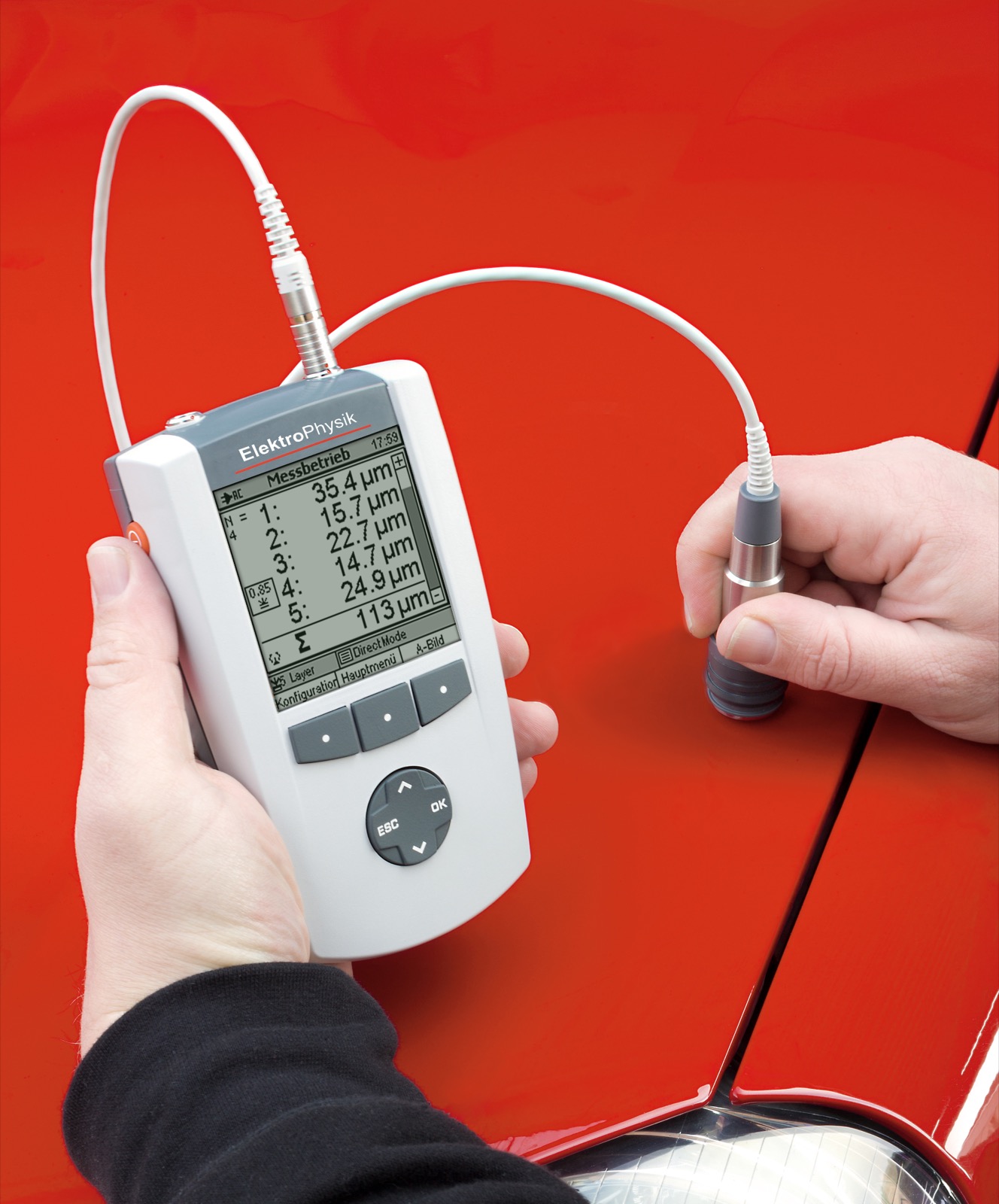
A thickness measurement can help detect paint touch-ups or successive layers, but it is never sufficient alone to judge the quality of a restoration. Photo: Grey and red fairy, CC BY-SA 4.0, via Wikimedia Commons.
Measuring paint thickness, examining welds, alignments and corrosion traces provide clues about the bodywork history. Mechanically, the expert observes visible components, looks for inconsistencies and may request additional checks. A visual inspection does not automatically include disassembly, fluid analysis or compression testing: verify what is actually included.
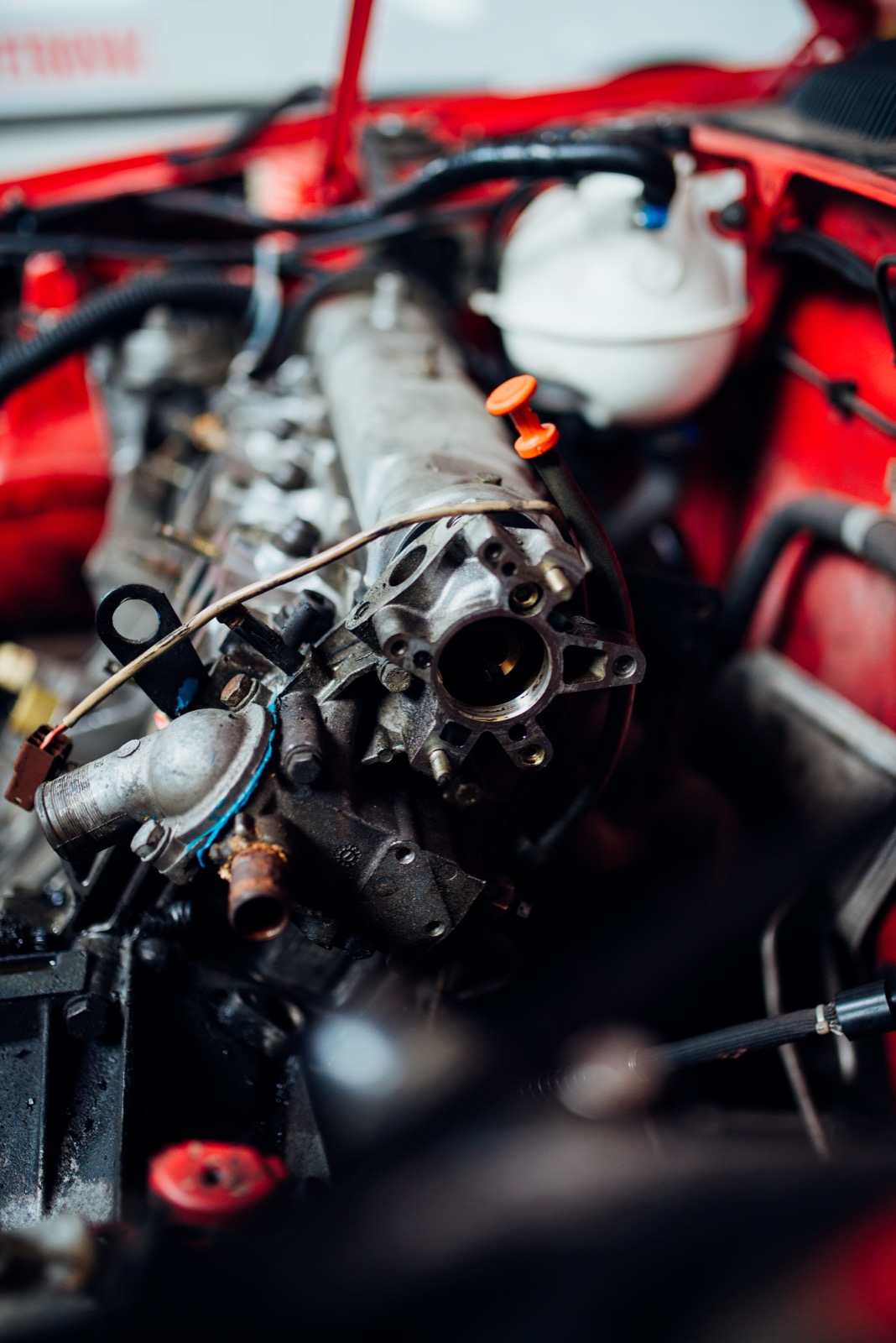
Mechanical condition, component conformity and traceability of interventions contribute to value; the scope of checks must be written into the mission. Photo: Shixart1985 / Nenad Stojković, CC BY 2.0, via Wikimedia Commons.
A serious valuation does not simply apply a price guide and then add the amount of invoices. Not all restoration expenses are recovered euro for euro in market value. Conversely, exceptional documentation or a compliant restoration can make the car easier to compare and defend with the insurer.
How to convert the report into an agreed value?
The decisive point comes after the appraisal. Send the complete report to the insurer and request written confirmation of the agreed value. Check that it appears in the special conditions or in an endorsement and that it specifically concerns the car identified by its registration or chassis number.
Ask these questions before confirming:
- Does the amount constitute an agreed value or merely a limit?
- Does it apply to theft, fire, total destruction and partial damage?
- Is a deductible or depreciation still applicable?
- Are transport, storage and repatriation costs included?
- Are spare parts, tools, accessories and historical documents covered?
- What is the expiry date of the accepted report?
- What happens if the market rises sharply before renewal?
- Are regularity rallies, circuits, weddings, rentals or professional uses excluded?
Do not rely on a telephone conversation alone. In insurance, the contractual wording and exclusions take precedence over any commercial impression. A high value stated in the contract does not create cover for an event that is not insured.
What happens after a claim?
After a declaration, the insurer may appoint an expert to determine the damage, its cause and the vehicle’s value before the incident. Service-Public reminds that the expert is chosen by the insurer when they decide to use an appraisal, and that a policyholder who disputes the findings can request a counter-expertise.
An up-to-date agreed value facilitates discussion about the value, but it does not exempt you from proving the claim or complying with the policy terms. The insurer will notably verify the circumstances, declared use, required protection measures and any exclusions.
If you disagree:
- request the report or any disclosable conclusions and a quantified justification;
- gather invoices, previous photographs, private reports and relevant comparables;
- submit your dispute in writing;
- request a counter-expertise at your own expense, unless a specific guarantee covers the fees;
- consult the complaint and mediation procedure indicated in the contract.
Service-Public also specifies that a vehicle may be considered economically irreparable when the repair costs exceed its value. For a classic car, an initial undervaluation can therefore affect not only the compensation but also how the repair file is handled.
The most costly mistakes to avoid
The first mistake is to confuse the classic vehicle registration certificate with proof of value. The administrative mention describes a status; it does not certify condition, provenance or market price.
The second is insuring the car based on an old estimate after restoration or a rise in valuation. The third is providing only listings with ambitious prices, without truly comparable sales. The fourth is forgetting spare parts, transport or the value of specific accessories.
Finally, do not assume that an appraisal commissioned for an inheritance, purchase or restoration will automatically be accepted as is by the insurer. Ask beforehand for the required criteria, then have the agreed amount confirmed after the report is submitted.
Checklist before signing the contract
- ☐ Expert verified on the national list and competent in classic vehicles
- ☐ Mission and scope of the report defined in writing
- ☐ Identity, history, invoices and restoration documented
- ☐ Dated value and understandable comparison method
- ☐ Amount accepted by the insurer in the special conditions or an endorsement
- ☐ Validity period and update procedure known
- ☐ Theft, fire, total loss and partial damage clearly distinguished
- ☐ Deductibles, limits, depreciation and exclusions reviewed
- ☐ Transport, parts and accessories explicitly addressed
- ☐ Actual use, drivers and storage location correctly declared
Frequently asked questions
Is an appraisal mandatory to insure a classic car?
Not systematically. The insurer may accept a declared value below certain thresholds or for certain vehicles, then require a report in other cases. The conditions depend on the contract and the value to be covered.
Is the declared value fully reimbursed after a theft?
Not necessarily. It may be used to price the risk or constitute a ceiling without guaranteeing automatic payment of that sum. Check the contractual definition, required supporting documents and deductibles.
Is an appraisal report sufficient to obtain an agreed value?
No. It provides a reasoned estimate, but the insurer must still accept this value and formalise it contractually. Request an endorsement or special conditions mentioning the amount.
How much does a classic car appraisal cost?
There is no single regulated rate. The price depends on travel, rarity, historical research, inspections, number of vehicles and the level of detail in the report. Request a quote specifying fees and scope.
How long is an appraisal valid?
The useful duration depends on the insurer, the contract and market volatility. Have the report’s acceptance deadline confirmed and update after restoration, modification or significant change in value.
Can the commissioned appraisal be contested after a claim?
Yes. Service-Public states that the insured may request a counter-expertise if they dispute the conclusions. First, check whether the contract covers all or part of the fees for your own expert.
The correct value is the one that is documented and contractualised.
A classic car cannot be protected with a generic valuation and a verbal promise. The car must be documented, a competent expert called in when its value justifies it, and then ensure that the accepted amount is clearly stated in the contract.
Review this dossier after every major change to the vehicle or the market. An expert report describes a value at a given date; an agreed value is only truly useful if it remains up to date and applies to the cover you need.