Short answer:When applying for the “vintage vehicle” designation, the right choice is not to seek the most prestigious certificate, but the one that can accurately describe the vehicle in question. French law provides for a certificate issued either by the manufacturer or its representative in France, or by the French Federation of Vintage Vehicles (FFVE). The FFVE certificate is not the registration document: it documents the dating and characteristics prior to the administrative procedure.
This distinction becomes crucial for a rare, imported, restored car or one with incomplete paperwork. Before purchasing fromthe classic cars offered on PlethoreCars, therefore check the chain of ownership, the numbers, the configuration and the consistency between the car and its documents.
Start with eligibility, not the form
Service-Public recalls three cumulative conditions: the vehicle is over30 years old, its type is no longer produced and its technical characteristics have not been modified. The transition to vintage status is neither automatic nor mandatory. Sufficient age does not compensate for uncertain identity or poorly documented modifications.
Have the chassis number, manufacturer’s plate, type, known first registration date and visible characteristics recorded. Compare them with the existing certificate, old invoices, customs documents if the vehicle is imported, and available archives. Any discrepancy must be explained before the application, not concealed.
Manufacturer’s certificate: choose it when the brand can respond precisely
The manufacturer route is relevant when an archives or homologation service accepts the file and can link the vehicle to its original data. Ask exactly what the document will certify: date, type, number, configuration or simple belonging to a range. Also check the required photographs, translations and supporting documents.
For a prestigious car, a production sheet can enrich provenance without replacing the required administrative documents. Conversely, a commercial certificate should not be presented as an administrative decision. Always distinguish historical proof, regulatory certificate and registration document.
FFVE certificate: a regulatory route, not a valuation expertise
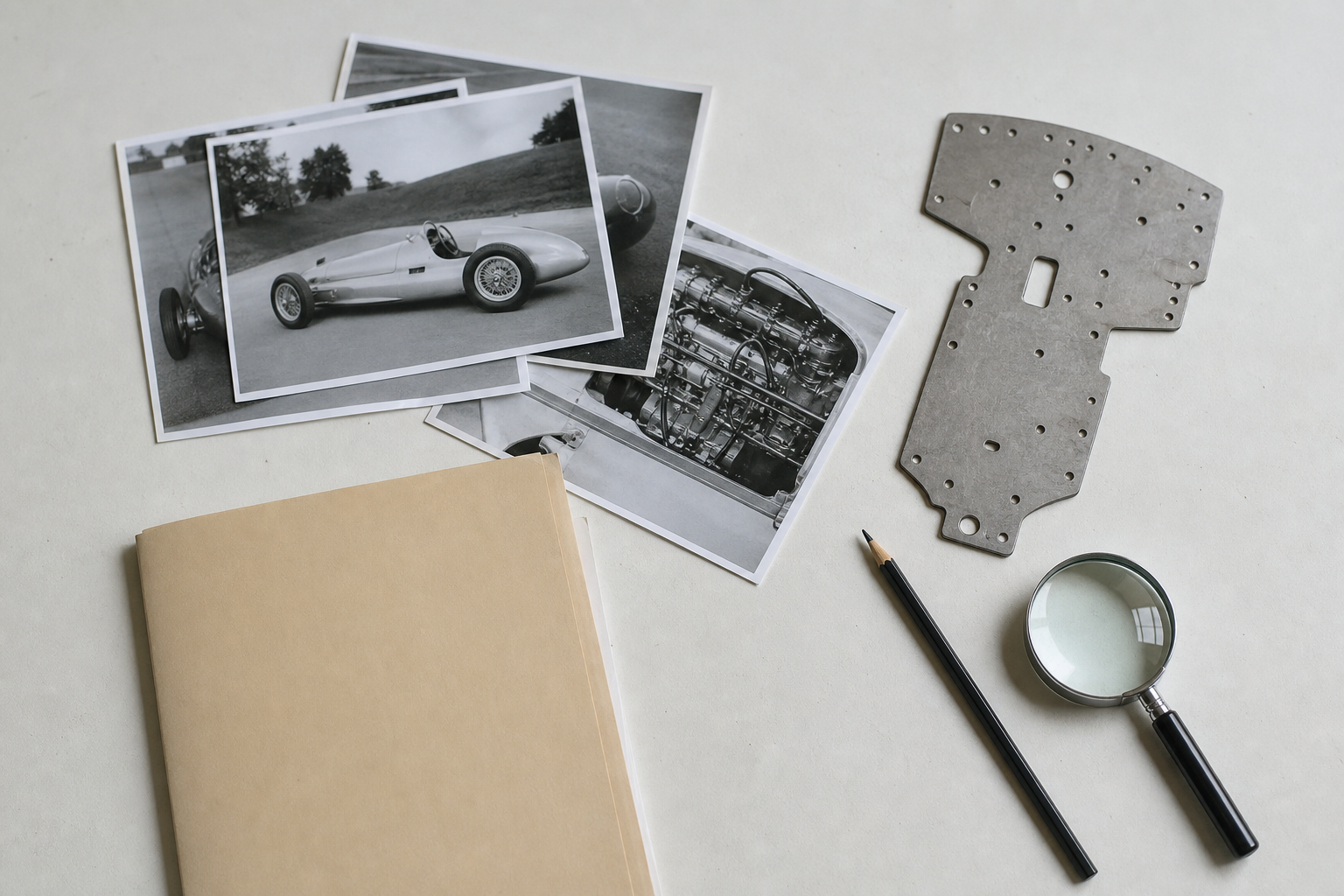
The FFVE states that it issues a certificate of dating and characteristics based on a regulatory file. This certificate is then presented as part of the procedure; it does not constitute a financial estimate, mechanical guarantee, nor the registration document itself.
Prepare clear and consistent images, proof of ownership, vehicle identity documents and elements allowing tracing of its origin. Use the official portal and beware of intermediaries promising a result without examining the documents. The file must remain understandable to someone not yet familiar with the car.
Address modifications before they become a blockage
Non-compliant paint, a replaced engine, transformed bodywork or modernised running gear do not all raise the same issue. The regulatory point concerns technical characteristics; the heritage point concerns fidelity to the original state. Document both separately.
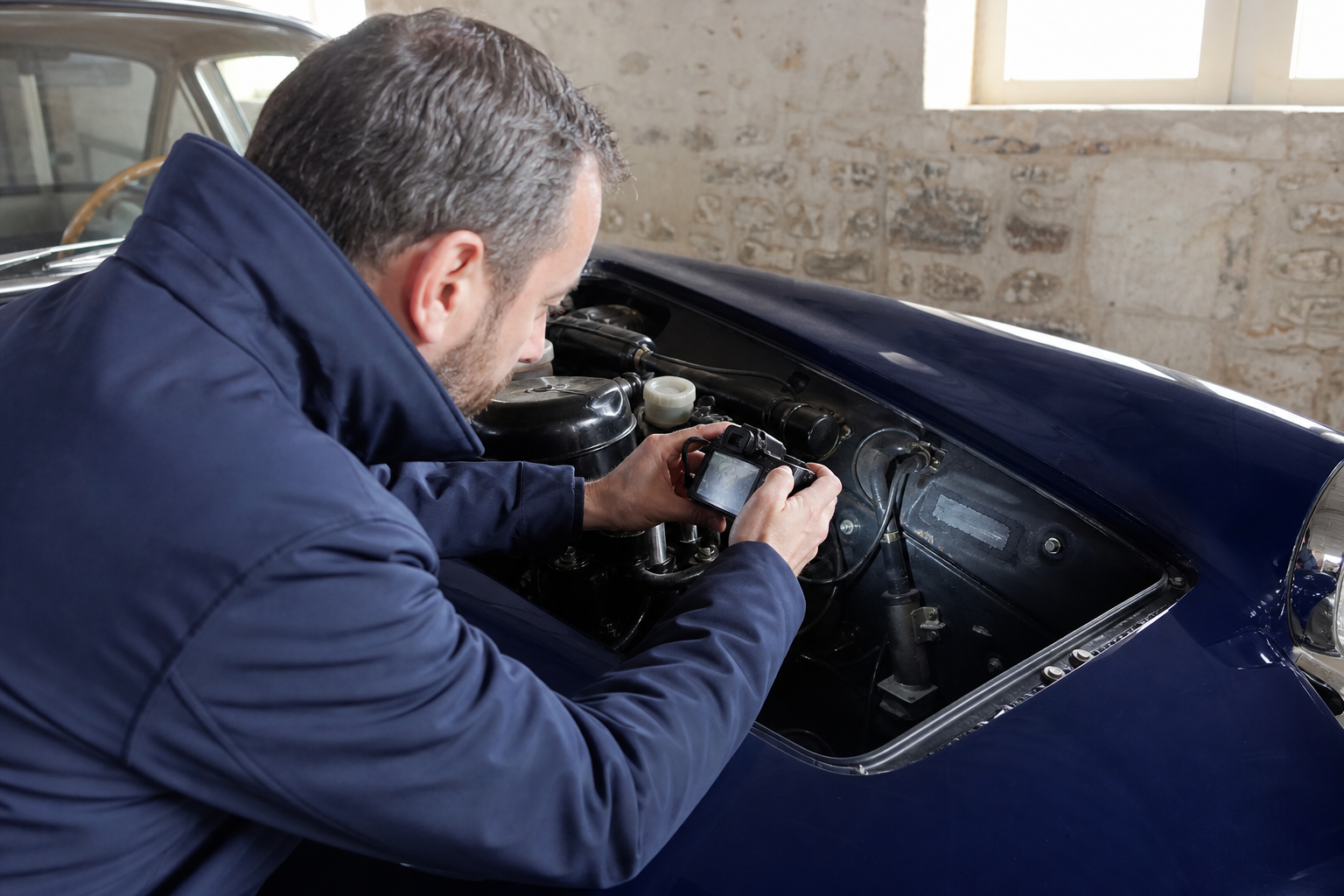
Before reverting to a supposed original configuration, consultour analysis between origin and transformation. Photograph markings, keep removed parts and have the specifications validated. A rushed restoration can erase evidence that would have allowed understanding an earlier evolution.
Ordering the procedure after a purchase
- Verify the identity of the seller and the chain of ownership.
- Compare the vehicle to the documents without limiting yourself to the announced model year.
- Identify the actually available certification route.
- Compile a photographic file before any work is carried out.
- Check the technical inspection requirements applicable to the situation.
- Submit the application through the appropriate official channel.
- Archive the response, supporting documents and the complete chronology.
The presence of a collection mention on a previous document does not exempt one from verifying the procedure for changing the holder. Forums reveal frequent confusion on this point, but only the administrative status of the vehicle and the official rule should guide the action. The collection status also affects city driving:which remains true of LEZs in 2026.
Do not confuse administrative file and purchase inspection
A consistent certificate says nothing about the condition of the chassis, engine, brakes or hidden corrosion. Apply in parallelour method for inspecting a classic car and have the car examined by an independent specialist. The objective is to obtain two distinct answers: “what is this automobile?” and “what condition is it in?”.
Finally, keep a structured copy of the file. It will facilitate insurance, maintenance and a future presentation amongthe classic cars already soldwithout turning past transactions into an automatic valuation.
Conclusion: choose the most accurate proof
The manufacturer’s certificate and the FFVE certificate are two routes provided to document an application, not two levels of prestige. Choose the one that can characterise the vehicle with the least ambiguity and prepare the evidence before any modification. Have the entire file proofread before submission: consistency of names, dates, numbers, supporting documents and photographs. Keep the version sent and the response received so that the chronology remains verifiable during a subsequent transfer. This information is general: check the texts, documents, procedures, history, inspection and market conditions applicable to your case.
FAQ on the certification of a classic vehicle
Is the mention “classic vehicle” automatic?
No. It must be requested and the vehicle must meet the applicable regulatory conditions.
Is the FFVE certificate a registration document?
No. It certifies the dating and characteristics; it is then used in the registration process.
Can you always choose a manufacturer’s certificate?
The regulation provides for a certificate from the manufacturer or their representative in France, or from the FFVE. The route actually available depends on the model and the contact person.
Is restoration necessary before submitting the application?
It is especially important to avoid modifying or erasing elements that prove the identity and characteristics. A prior inspection is recommended.