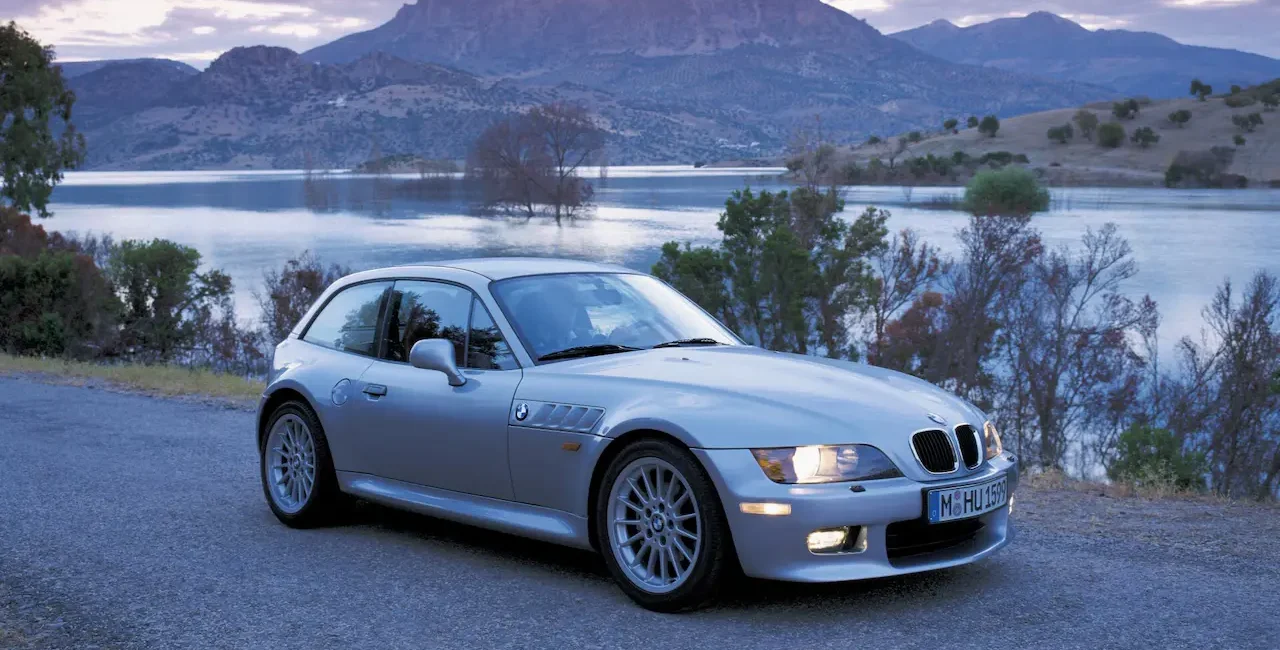
In the automotive landscape of the 1990s, few models embody the promise of driving pleasure as faithfully as the BMW Z3. Officially launched in 1995 and produced until 2002, this compact roadster successfully reconciled the spirit of classic sports cars with the demands of a modern market. The first BMW series car to be entirely manufactured outside Germany — at the Spartanburg plant in South Carolina — the Z3 marked a strategic turning point for the Munich manufacturer.
Today, the Z3 is attracting growing interest in the collector market. The most sought-after versions, notably the M Coupé and the M Roadster, now command significant values, while entry-level models offer a remarkably accessible entry point into the BMW world. But how can one distinguish a good example from a mechanical trap? Which engines should be prioritised? And above all, has the value of the Z3 reached its floor?
This comprehensive guide provides you with all the keys — history, technical details, market evolution and purchasing advice — to approach the BMW Z3 with the eye of a discerning collector.
To delve deeper into this subject, consult our article dedicated to classic BMWs for sale.
Genesis of a roadster: from GoldenEye to legend
A pioneering development
Development of the Z3 began in 1991 under the direction of engineer Burkhard Göschel. The exterior design was entrusted to Japanese designer Joji Nagashima, who finalised the roadster’s lines by mid-1992. The design was frozen in 1993, and patents were filed in Germany in April 1994. The official presentation took place on 12 June 1995, via a video release from BMW North America, and production started on 20 September of the same year at the Spartanburg plant. This was a milestone: the Z3 was designed and built in just 36 months, a record for BMW at the time.
To support the launch, BMW orchestrated a legendary media coup: the Z3 appeared in GoldenEye, the James Bond film released in November 1995, alongside Pierce Brosnan. To capitalise on this visibility, BMW issued a “James Bond Edition” offered through the Neiman Marcus Christmas catalogue: 100 units in Atlanta Blue, beige leather interior, 007 badge, sold for 35 000 dollars at the time (approximately 70 000 dollars in 2024 value). The initial target of 20 units was quickly raised due to enthusiasm.
A platform between heritage and compromise
Technically, the BMW Z3 is based on the E36/5 Compact platform, a shortened version of the E36 chassis from the 3 Series. This choice entails a semi-trailing arm rear suspension inherited from the older E30, simpler than the multi-link setups of the competition. This architecture, criticised by some testers at the time compared to the Porsche Boxster or Mazda MX-5, nevertheless gives the Z3 a vintage character appreciated by purists. The front suspension, meanwhile, uses the proven McPherson geometry from the E36, offering a satisfactory overall balance.
Engines and versions: an overview of the BMW Z3 range
The four-cylinder engines: the gateway to pleasure
The Z3 started with modest but pleasant engines. The 1.8 litre (M43, 115 hp) and the 1.9 litre (M44, 140 hp) powered the first European and American models. These four-cylinder units offer reasonable fuel consumption and affordable maintenance, suited to leisurely use. The 1.9 litre remains the most common on the second-hand market. Note: the 1.8 and 2.0 litre engines were never sold in the United States.
The inline six-cylinder engines: the BMW soul
It is with the six-cylinder engines that the Z3 truly reveals its character. The 2.8 litre (M52, 192 hp) introduced in 1996 marked the first real leap in performance. During the 2000 facelift, BMW replaced the M52 engines with the M54 generation: the 2.2 litre (170 hp), the 2.5 litre (184 hp) and the 3.0 litre (231 hp) completed the range. These engines are distinguished by the legendary smoothness of BMW’s inline six-cylinders, generous torque and unmatched sound. The six-cylinder models are recognised by their twin exhaust outlets and, on pre-facelift versions, by widened rear wings.
The M Versions: The Pinnacle of the Hierarchy
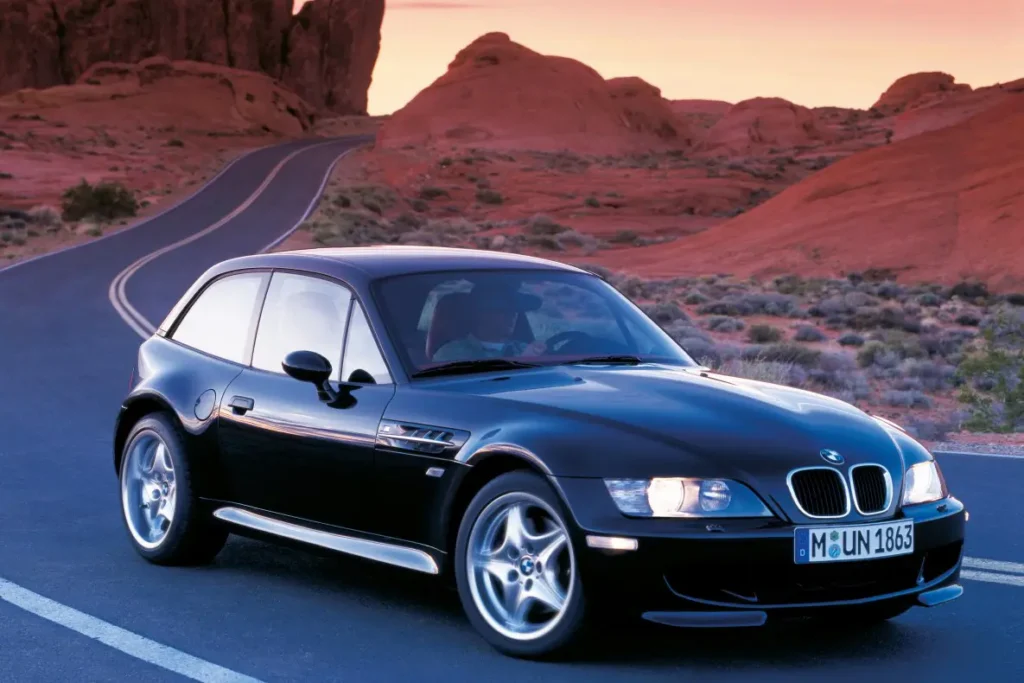
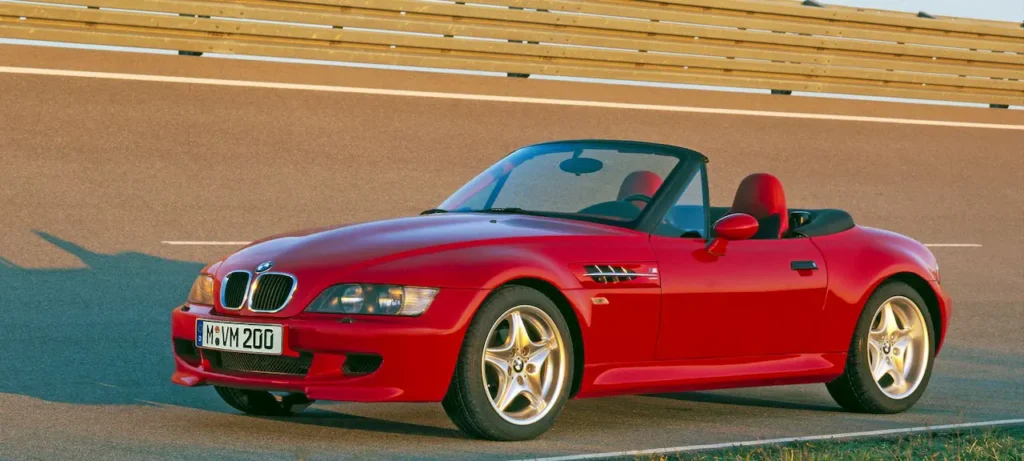
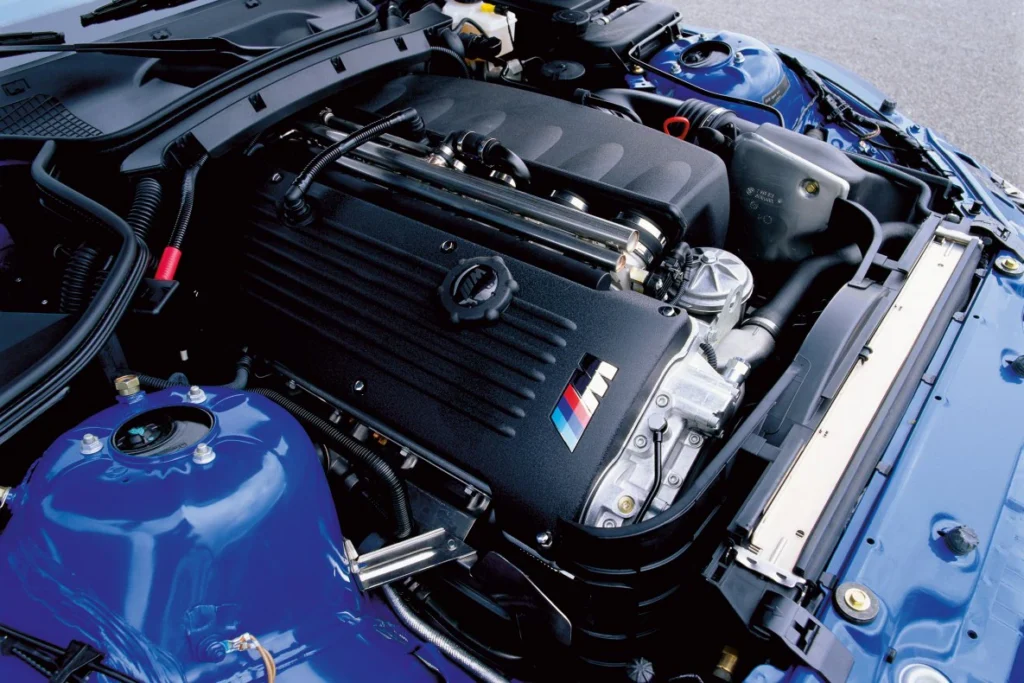
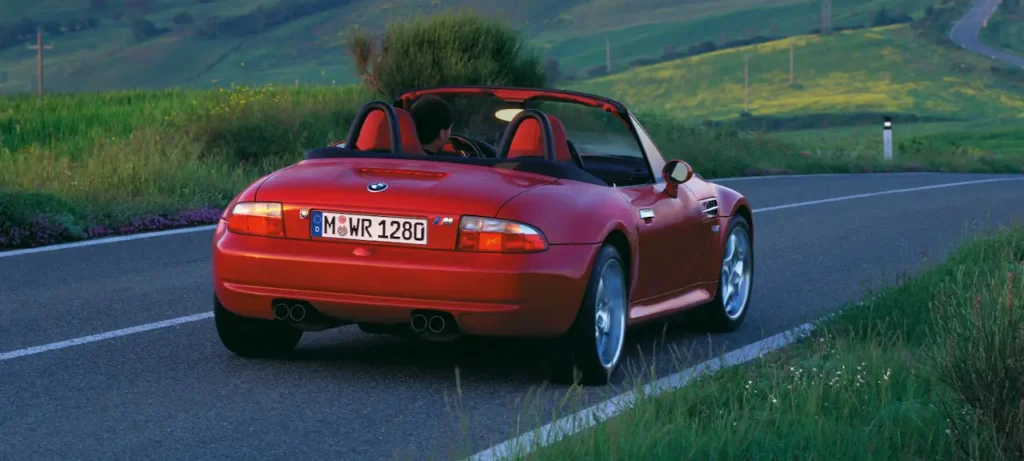
The M Roadster and M Coupé represent the pinnacle of the Z3 range. Introduced in 1997–1998, they initially received the six-cylinder S50 engine producing 321 hp in Europe (S52 with 240 hp in North America). In 2001, both markets adopted the new S54 engine, developing 325 hp in Europe and 315 hp across the Atlantic. The S54 represents a technical milestone: it was the first BMW engine to exceed the symbolic threshold of 100 hp per litre of displacement.
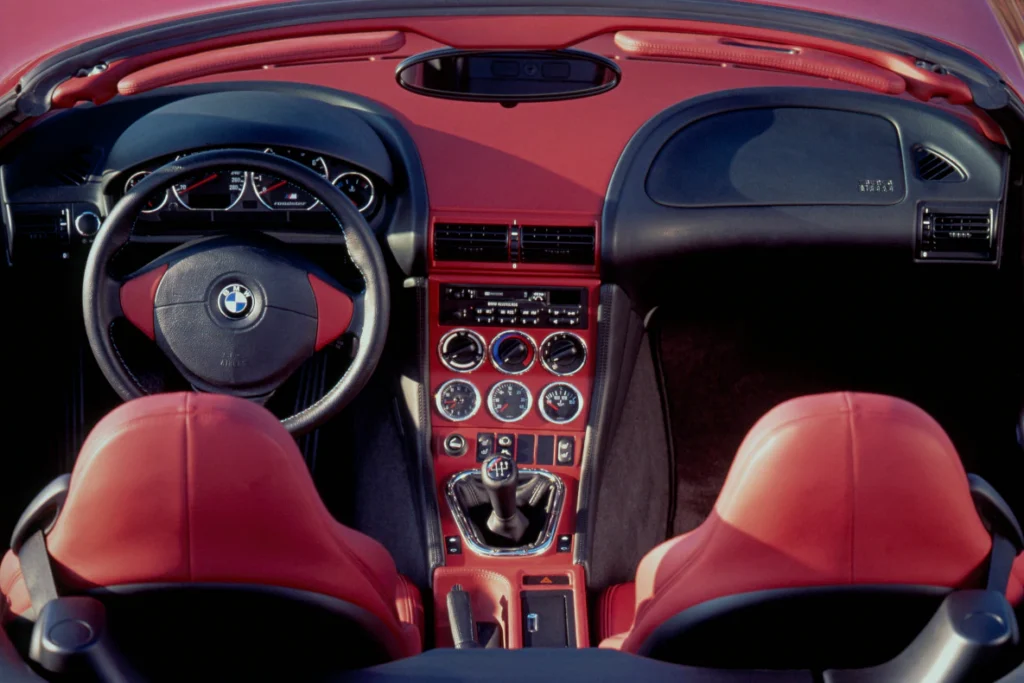
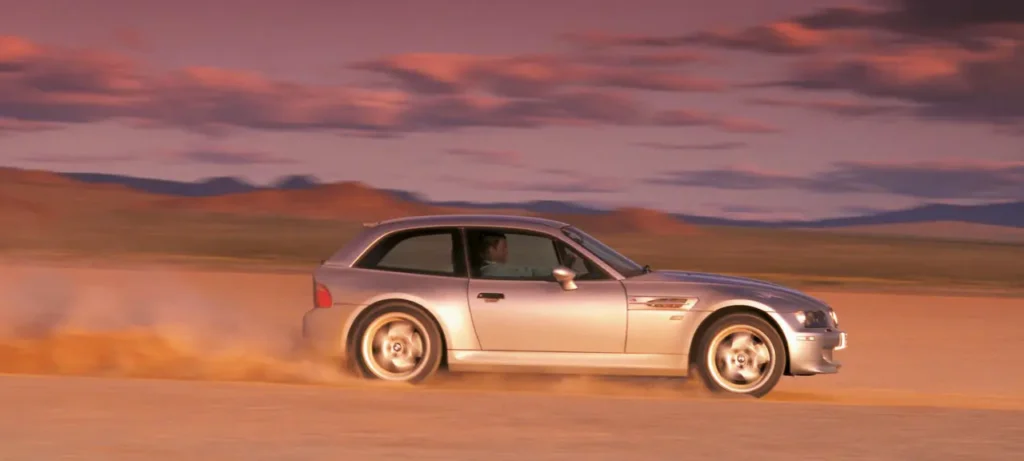
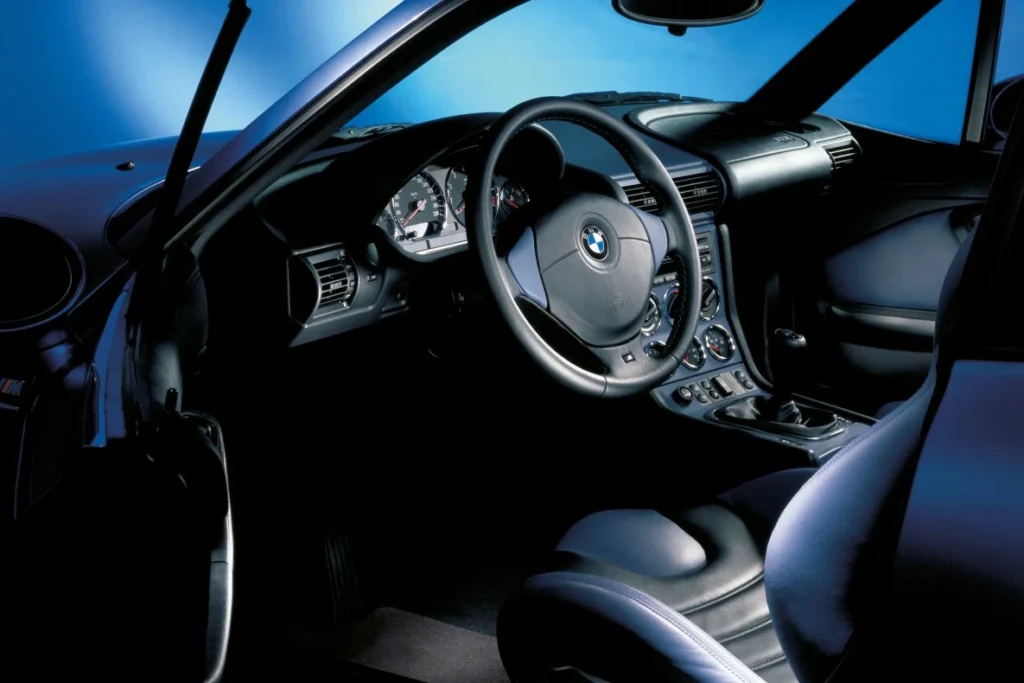
The M models are distinguished by a limited-slip differential, a widened rear track, more powerful brakes borrowed from the M3 E36, aerodynamic oval mirrors, and the first use by BMW M of a quad-exit exhaust. The interior features three additional dials (voltmeter, oil temperature, clock) on the centre console and specific sports seats. The transmission is exclusively a five-speed manual: no automatic gearbox was ever offered on the M versions.
The Coupé: The Divisive Shooting Brake
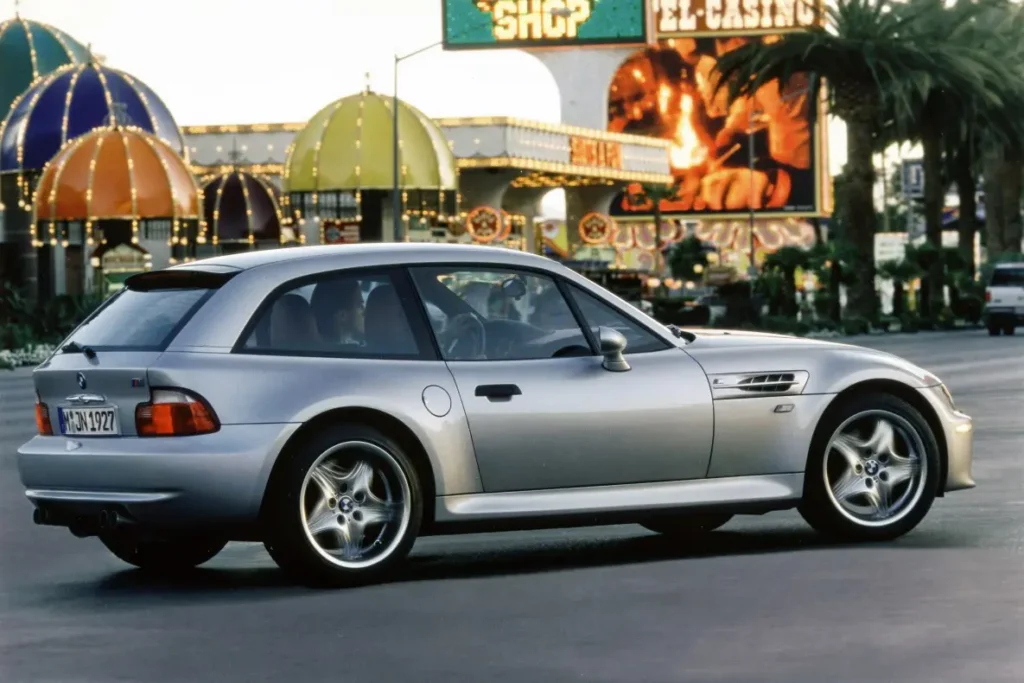
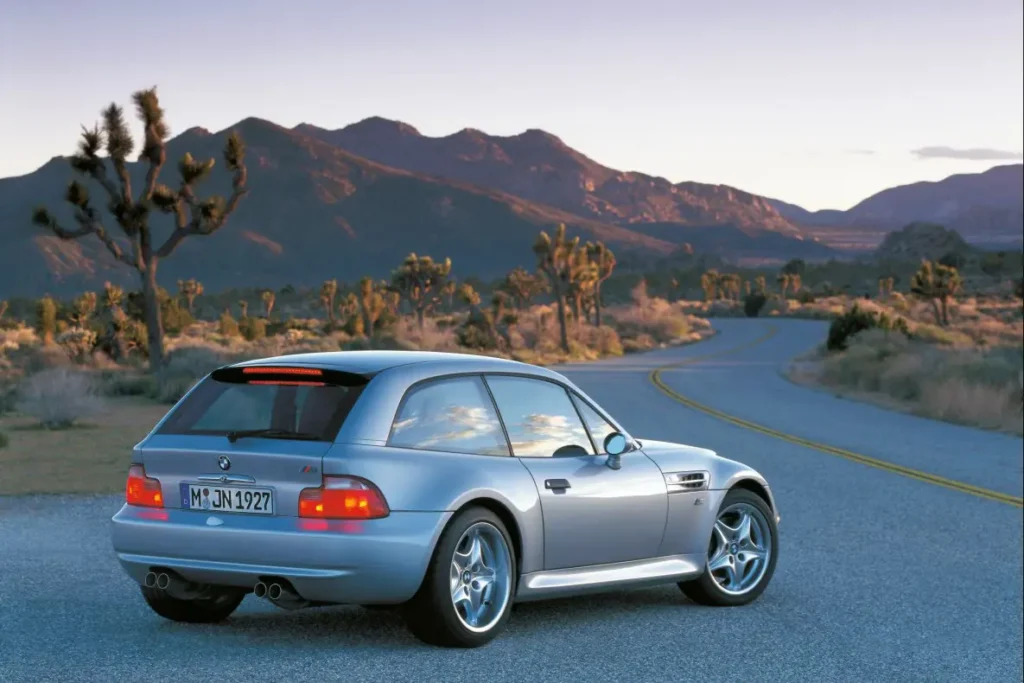
The Z3 Coupé, unveiled at the Frankfurt Motor Show 1997, was born from the personal work of a small group of five BMW engineers led by Burkhard Göschel, developed outside their working hours. Its atypical side profile earned it colourful nicknames: “clown shoe” in the United States, “Turnschuh” (sports shoe) in Germany. According to BMW, the roofline deliberately recalls the 328 Mille Miglia of the 1940s.
Behind its controversial design lies a chassis 2,7 times stiffer than that of the roadster, a boot capacity of 410 litres, and significantly sharper road handling. Across the entire production, BMW assembled only 17 815 coupés, compared to 279 273 roadsters. This relative rarity now fuels a steadily rising value, particularly for the M Coupé (6 291 units produced according to BMW M).
Production and Key Figures
Between September 1995 and 28 June 2002 — the date the last Z3 rolled off the line — the Spartanburg factory assembled a total of 297 088 units, divided into 279 273 roadsters and 17 815 coupés. The Z3 was sold in nearly 120 countries worldwide, demonstrating considerable commercial success for a roadster in this segment.
Among these volumes, the M versions remain limited productions: the M Coupé was manufactured in only around 6 291 units, and the M Roadsters in similarly limited numbers. Variants equipped with the S54 engine (2001–2002) are among the rarest of the entire production: some colour-engine combinations do not exceed a few hundred examples worldwide.
Value Evolution: The BMW Z3 in the Collector Market
A Market Segmented by Versions
The BMW Z3 market shows a considerable price range. Data from specialised platforms reveal the following trends: in 2025, the average price of a Z3 across all models stands at around 20 000 € among collector specialists, while common used models exchange hands from approximately 10 000 €. This gap reveals interesting opportunities for buyers capable of accurately assessing the condition of a vehicle. In a completely different artisanal register, the Morgan sports cars still play the card of old-fashioned craftsmanship.
Prices peak for the M versions: M Coupés in excellent condition regularly reach 30 000 to 40 000 €, and exceptional examples occasionally exceed 100 000 € at auction. As a reference, an M Coupé S54 from 1998 in concours condition achieved 313 500 $ at a sale in June 2025, according to Classic.com data. At the opposite end, project-condition Z3 can be found from 3 000 to 5 000 €.
Valuation Factors
Several criteria directly influence the value of a BMW Z3 on the collector market. The engine is the primary determining factor: six-cylinder models consistently command a premium over four-cylinder ones, and the M versions occupy a significantly higher price segment. The type of transmission also plays a role: manual gearboxes are more sought after, particularly on six-cylinder and M versions.
The condition of the soft top, documented maintenance history, mileage, and specific colours (Dakar Yellow, Laguna Seca Blue, Estoril Blue) are all parameters that can significantly affect the value of an example. A complete maintenance file with a BMW specialist can represent an added value of 15 to 25 % compared to an equivalent model without history.
Buying a classic BMW Z3: essential checkpoints
Mechanics and vital components
The cooling system is the primary area of concern on any Z3. The water pump, thermostat and hoses age and can cause catastrophic overheating if neglected. On four-cylinder engines, the head gasket may fail after an episode of coolant loss. The plastic parts of the system (water elbows at the rear of the cylinder head) become brittle over time and should be replaced preventively.
Oil leaks are common after 100 000 km: valve cover gaskets and sump gaskets are the usual suspects. On six-cylinder engines, the VANOS variable valve timing system can show signs of wear (ticking noise when cold, loss of low-end torque). Regarding M engines, particular attention must be paid to the connecting rod caps of the S50/S52 block, some early examples of which experienced failures — normally covered under warranty, but check the history. For an older, more affordable roadster, the Triumph Spitfire remains a coherent entry point.
Bodywork, soft top and interior
Corrosioncorrosionis not the primary flaw of the Z3, but age does begin to take its toll on neglected models. Check the rear subframe mounting points and the perimeter of the boot lock. The front lights, made of plastic, become cloudy over time (opacity) but can be restored by polishing.
soft topsoft top represents a significant budget item in the event of replacement (expect a four-figure sum for specialist work). Check the condition of the fabric, the rear window (often clouded), and the waterproofing: water ingress into the boot via the third brake light seal or the antenna base is a common issue with the Z3. The original aluminium hardtop, rare and sought after, is a real bonus.
Never underestimate the importance of the ignition key: ensure the vehicle comes with a spare. Replacing and reprogramming a BMW key represents a significant cost. Also beware of poor-quality replacement wheels (replicas) and unprofessional suspension lowering, which degrade comfort and suspension geometry. Finally, the integrated service indicator can be manually reset: always demand service invoices, never rely solely on the dashboard indicator.
Never underestimate the importance of the ignition key: ensure that the vehicle comes with a spare. Replacing and reprogramming a BMW key can be a significant expense. Also be wary of poor-quality replacement wheels (replicas) and unprofessional suspension lowering, which can degrade comfort and the suspension geometry. Finally, the integrated service indicator can be manually reset: always insist on seeing the service invoices, never just the dashboard indicator.
BMW Z3 versus the competition: positioning and alternatives
In the market for collectible roadsters from the 1990–2000 era, the BMW Z3 holds a distinctive position. Compared to the Mazda MX-5, it offers superior brand prestige, more powerful engines, and a more luxurious interior, but falls short in terms of lightness and long-term mechanical reliability. Against the Porsche Boxster, the Z3 proves less precise on the track but provides a more relaxed driving experience, in the grand touring tradition.
The Mercedes SLK (R170) and the first-generation Audi TT are the two other direct rivals. The Z3 stands out from these competitors due to its rear-wheel-drive layout, the refinement of its inline six-cylinder engines, and, for the M versions, a level of performance that places it in a class of its own.
Key points: expert advice for your purchase
1. Prioritise the six-cylinder engines— they represent the very essence of the Z3 and offer the best balance between enjoyment and value retention. The pre-facelift 2.8 litre and the post-2000 3.0 litre engines are the most well-balanced.
2. Demand a complete maintenance history— regular servicing by a BMW specialist is a guarantee of peace of mind and a key factor in the car’s valuation.
3. Check the cooling system as a priority— it is the mechanical Achilles’ heel of the Z3, regardless of engine type.
4. Inspect the soft top and boot sealing— water ingress is a common issue and can cause cascading electrical problems.
5. Consider the M Coupé as an investment— its rarity (6 291 units), superior structural rigidity and unique character make it the version whose value increases most steadily.
6. Remember the cost of ownership— with an estimated average annual maintenance cost of around 650 to 700 €, the Z3 remains reasonable for a BMW, but genuine parts remain expensive. Aftermarket suppliers offer quality alternatives.
Conclusion
The BMW Z3 embodies a specific moment in automotive history: when a major German manufacturer successfully reinvented the classic roadster formula for the 1990 generation. Produced in nearly 300 000 units over seven years, it remains today an accessible collector’s item, capable of delivering authentic driving pleasure without imposing the maintenance costs of a prestigious GT.
With the gradual disappearance of purely mechanical sports cars in favour of electrification, the Z3 gains relevance among collectors. The analogue experience it offers — unfiltered power steering, manual gearbox, naturally aspirated six-cylinder — is precisely what BMW will never produce again in this form. The question may not be whether the value of the Z3 will rise, but rather:how much longer will it remain accessible?
FAQ — Frequently Asked Questions about the BMW Z3
Which BMW Z3 is the most reliable?
Versions equipped with the M54 engine (post-2000), notably the 2.5i and 3.0i, benefit from improvements made over the seven years of production. They are generally considered the most reliable, provided the cooling system is regularly maintained.
How much does annual maintenance for a BMW Z3 cost?
The average annual maintenance cost is estimated at around 650 to 700 € according to RepairPal. This amount can vary depending on the vehicle’s age, mileage and whether genuine or aftermarket parts are used. Major repairs (soft top, VANOS, clutch) are occasional expenses to anticipate.
Is the BMW Z3 a good collector’s investment?
The M Coupé and M Roadster versions in S54, as well as special editions (James Bond, rare colours), show an upward trend in the collector market. Six-cylinder models in good condition with complete histories also represent an interesting medium-term investment, given the scarcity of naturally aspirated roadsters.
What is the difference between the BMW Z3 Roadster and Coupé?
The Coupé shares the Roadster’s platform but offers a chassis that is 2,7 times more rigid, a boot capacity of 410 litres, and a sharper on-road behaviour. Its significantly more limited production (17 815 compared to 279 273 Roadsters) makes it a rarer model and generally more valued on the market.
Are you considering acquiring a classic BMW Z3?Discover our comprehensive files dedicated to BMW icons on Plethore.fr— your French-language reference for classic cars.