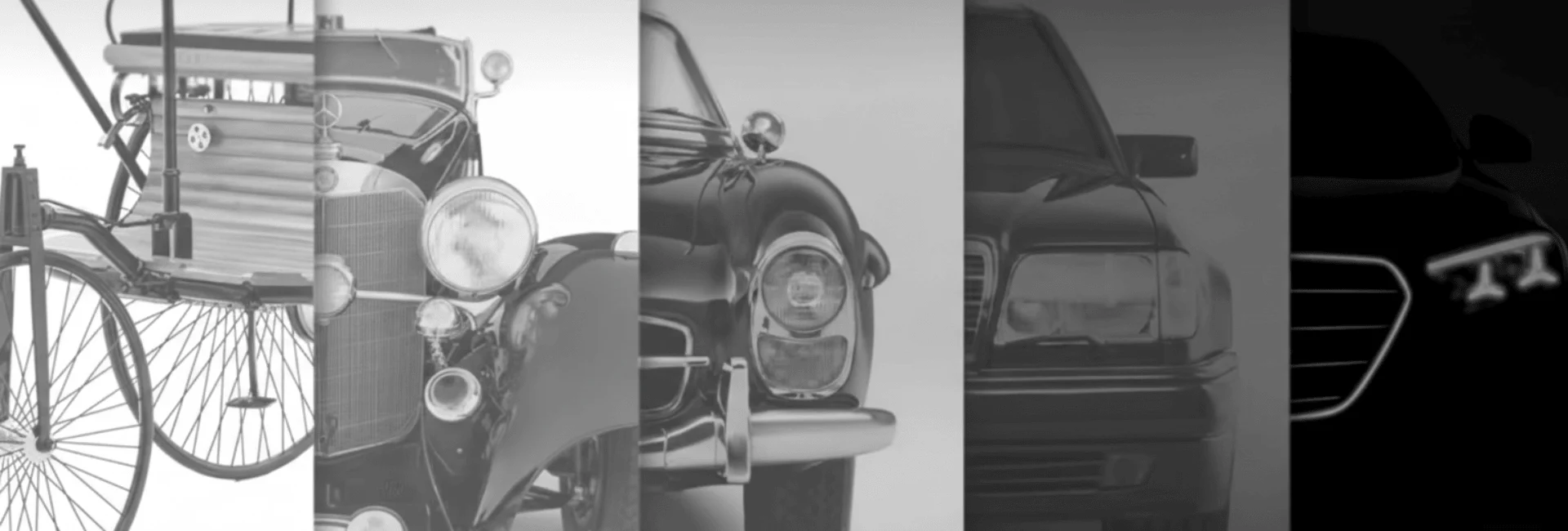
140 years ago, a man invented the automobile. Today, his most illustrious rival pays him a moving tribute. A story of a day when automotive history vibrated with a rare emotion.
There are dates etched into the marble of history. On 29 January 1886, in a workshop in Mannheim where the acrid smell of engine oil and wood ash hung in the air, a German engineer named Carl Benz signed a document that would change the course of humanity. Patent No.37435, filed that day with the Imperial Office of Patents in Berlin, simply described a “gas-powered vehicle.” Simply. As if one could summarize in a few technical lines the invention of the most powerful dream of freedom ever conceived.
On 29 January 2026, the automobile celebrates its 140 years. A century and four decades of passion, innovation, speed, and beauty. Mercedes-Benz, the direct heir to this original spirit, marks the event with the solemnity that can be guessed. But what made enthusiasts around the world vibrate, what ignited social media and warmed the coldest hearts, came from an unexpected place. From Zuffenhausen, very precisely. From Porsche.
The genesis: when Carl Benz reinvented the world
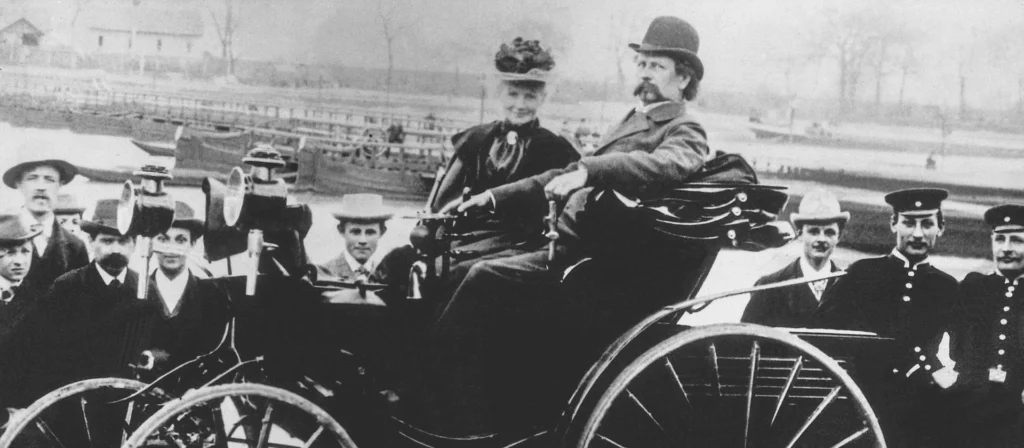
To understand the scope of what happened on this 29 January 2026, we need to go back to the sources. In this Germany of the late 19th century, teeming with inventors and visionaries. Carl Benz was not an ordinary dreamer. He was a methodical engineer, obsessed with a fixed idea: to create a vehicle that would not depend on horses, rails, or human power. A free vehicle.
His Patent-Motorwagen, this fragile-looking tricycle with its single-cylinder engine of 954 cm³ developing the most revolutionary 0,75 horsepower in history, was much more than a machine. It was a promise. The promise that man could now go wherever he wished, whenever he desired, carried by the roar—then barely a whisper—of an internal combustion engine.
The story could have ended there, in the polite indifference of the contemporaries. But there was Bertha. Bertha Benz, Carl’s wife, understood more than anyone what her husband had created. In August 1888, unbeknownst to him, she seized the Motorwagen no. 3 with her two teenage sons and embarked on a journey of 104 kilometers between Mannheim and Pforzheim. The first road trip in history. A woman, two boys, an improbable machine, and the dusty roads of Baden-Württemberg. Along the way, Bertha had to stop at a pharmacy in Wiesloch to buy Ligroin — the gasoline of the time — making this pharmacy the world’s first gas station. She also invented leather brake linings, improvising a repair at a local shoemaker.
Meanwhile, sixty kilometers away, in his workshop in Bad Cannstatt, another genius was working on a similar idea. Gottlieb Daimler, working alongside the brilliant Wilhelm Maybach, was developing his own internal combustion engine and adapting it to a four-wheeled car. Two parallel visions, two destinies that would cross forty years later in 1926, when the Benz & Cie and Daimler-Motoren-Gesellschaft companies would merge to give birth to Mercedes-Benz. The three-branched star and the laurels of Benz finally came together. Other manufacturers claim a comparable seniority:the oldest brands still in operation.
140 years of innovations: the automobile as a vector of progress
Since the founding day of 1886, Mercedes-Benz has continuously pushed the boundaries of the possible. The history of the star-shaped brand is intertwined with the history of automotive progress itself. Listing its innovations would be dizzying.
First came safety, the field where Stuttgart wrote the rules that the entire world eventually adopted. In 1951, Béla Barényi filed the patent for the deformation zone, a revolutionary concept in which a car must sacrifice itself to protect its occupants. The W111, nicknamed “Heckflosse,” incorporated this philosophy from 1959 onwards, which would save millions of lives. Then came ABS in 1978, the driver’s airbag in 1981, and ESP in 1995—each time, Mercedes-Benz was the first to turn an idea into a production reality.
Then came luxury, this territory where the S Class reigns without a doubt since 1972. “S” for “Sonderklasse” — special class. A simple name for an immense ambition: to create the best car in the world, generation after generation. The W126 of the 1980 years remains for many the perfect embodiment of this quest, with its lines designed by Bruno Sacco, its captain’s cabin upholstered in leather and precious wood, and its cathedral-like silence at 200 km/h on the Autobahn.
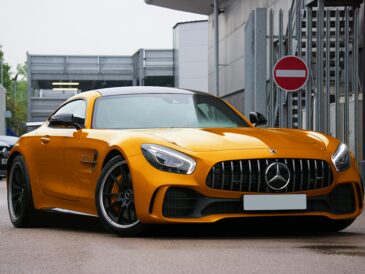
There was the performance, of course. The Silver Arrows that dominated the pre-war Grand Prix races with legendary drivers like Rudolf Caracciola. The 300 SL “Gullwing” of 1954, the first production sports car with direct injection, whose butterfly doors and sensual lines continue to stir the hearts. And then AMG, this Affalterbach workshop that became Stuttgart’s arm in arms, transforming bourgeois sedans into missiles capable of challenging the most exotic supercars.
But beyond technical innovations, it is perhaps in its ability to transform mobility into emotion that Mercedes-Benz has most marked our era. Every model, from the most accessible to the most exclusive, carries with it this original promise of Carl Benz: the freedom of movement as a fundamental right, travel as a source of happiness.
Porsche’s tribute: when rivals become poets
And it is here that our story takes an unexpected turn. On this 29 January 2026, while Mercedes-Benz was respectfully celebrating its founding anniversary, a message appeared on Porsche’s Instagram account. A carousel of eight images, simple and elegant, accompanied by a text that would move the entire automotive world.
“140 years of the automobile. Dear Mercedes-Benz…” — this was how this open letter began, a gesture of rare elegance in a world where competition is often waged with harsh comparisons and media wars.
“We share more than passion. We share the visionary foundation of our pioneers.” Porsche thus reminded of the unbreakable bonds that unite the two brands. For before founding its own legend, Ferdinand Porsche was technical director of Mercedes from 1923 to 1928. It was in the design studios of Stuttgart-Untertürkheim that he created the Mercedes S, SS, and SSK, these compression-driven cars that dominated the automobile racing of the roaring twenties. The Porsche DNA was forged between the walls of Mercedes.
“We share our hometown.” Stuttgart, the world capital of automobiles. Just a few kilometers away, two monumental museums—the Mercedes-Benz Museum and the Porsche Museum—tell the parallel story of two giants born from the same Swiss soil. The engineers of both houses cross paths in the same cafes, their children attend the same schools, their destinies are intertwined like the curves of the Nürburgring.
“We share the love for motorsports. We share the feeling of winning the greatest races. We share the setbacks.” This line, slipped between victories and friendships, says everything about the authenticity of this tribute. Because yes, Mercedes and Porsche have experienced the triumphs—at the 24 Le Mans 24 Hours, in Formula 1, in endurance racing. But they have also shared the dramas, the humiliating defeats, the years of doubt. And perhaps it is in those moments, when the laurels are scarce and the public turns away, that the respect between rivals is truly forged.
“We even share the legendary 500 E.” This is undoubtedly the phrase that made the connoisseurs smile the most. The Mercedes-Benz 500 E, this W124 supercharged sedan produced from 1991 to 1995, is indeed the common child of the two houses. Faced with the complexity of the project — integrating the V8 5.0 liters of the 500 SL into an expanded body — Mercedes had turned to Porsche for development and assembly. Each 500 E underwent an improbable ballet between Sindelfingen and Zuffenhausen, painted at Mercedes, assembled at Porsche, inspected at Mercedes. Eighteen days of manufacturing for each unit. 10 479 units produced in total. A collaboration that saved Porsche from a major financial crisis while offering Mercedes one of the most desirable sedans in its history. The most beautiful milestones of this story are gathered inour ranking of the most beautiful Mercedes.
But it was the conclusion of the message that truly touched the hearts: “But most importantly, we share the same belief: that cars are there to not only move your body, but also your heart.” Cars are not just made to move bodies. They are made to move souls. In one sentence, Porsche had just summarized a hundred and forty years of automotive passion.
Brotherly rivalry: the DNA of Stuttgart
This gesture from Porsche is part of a tradition of German fair play that earns admiration. In 2016, for the 100 years of BMW, Mercedes-Benz had published a full-page advertisement showing the Bavarian manufacturer’s bean mascot with this mischievous message: “Thank you for 100 years of competition. The 30 previous years were a bit boring.” A affectionate jab that reminded that Mercedes was thirty years ahead of its Munich rival.
Porsche also saluted BMW at this occasion, publishing an equally elegant advertisement. This culture of mutual respect, noble competition that elevates all participants, is embedded in the DNA of the German automotive industry. It partly explains why this country produces some of the best cars in the world: the constant rivalry pushes everyone to surpass themselves, while respect prevents falling into the mediocrity of petty quarrels.
Stuttgart embodies this philosophy better than any other city in the world. Imagine: within a thirty-kilometer radius, you find the headquarters of Mercedes-Benz, Porsche, the design studios of each brand, their respective museums, their test tracks, and their delivery centers. Thousands of engineers, designers, and mechanics who live and breathe the automotive industry, challenging themselves day in and day out and celebrating in the local Weinstube bars at night. This geographical proximity creates a constant sense of emulation, a unique ecosystem where excellence is the only currency that matters.
Porsche’s tribute to Mercedes for its 140 anniversary is therefore not an accident. It is the natural expression of a shared culture, a common history, and a visceral love for the automobile that transcends logos and accounting statements.
2026 and beyond: the moving legacy
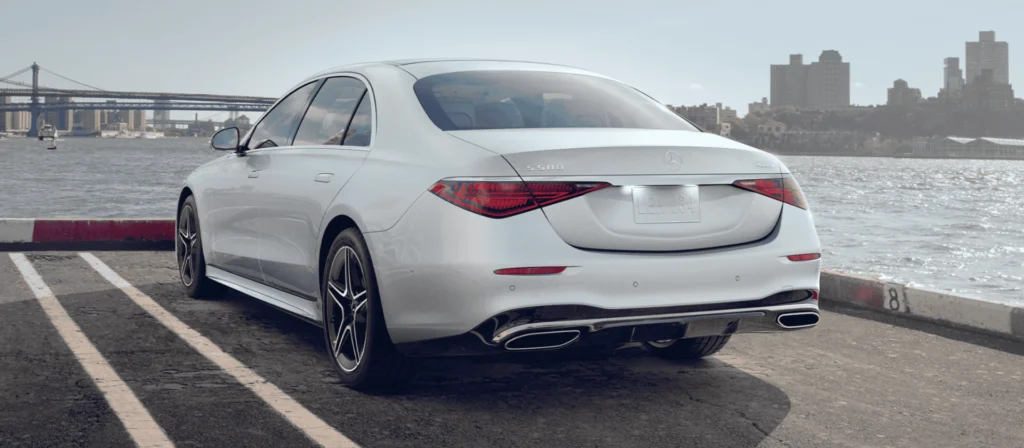
Mercedes-Benz did not choose to celebrate this anniversary with nostalgic contemplation. On the very day of 29 January 2026, the brand presented the new generation of the S-Class, thus continuing this tradition of excellence that has defined the flagship of Stuttgart for more than half a century. A few weeks earlier, the new CLA had been crowned “Car of the Year 2026”, confirming that the star shines with the same intensity on entry-level segments as on the top luxury segments.
In its anniversary statement, Mercedes-Benz announced the largest launch program in its history. Dozens of new models over the next two years, covering all segments, from electrified entry-level models to the most exclusive GTs. The brand is also celebrating the 100 years of the Mercedes-Benz name itself — born from the merger of 1926 —, the 130 years of its first commercial vehicles, the 75 years of Béla Barényi’s “safety bodywork” patent, the 50 years of the W123 — ancestor of the current E-Class — and the 20 years of the Mercedes-Benz Museum.
Electrification, of course, occupies a central place in this roadmap. But unlike some competitors who seem to want to wipe out the past, Mercedes-Benz is embedding its electric revolution into the continuity of its heritage. The EQS, a luxury electric sedan, is not a break: it is the logical extension of the quest for excellence that has driven the brand since Carl Benz. The materials change, the technologies evolve, but the promise remains the same: to create the best automobiles in the world.
Move your body, move your heart
“Cars are there to not only move your body, but also your heart.” This statement from Porsche, as a conclusion to its tribute to Mercedes-Benz, resonates with a particular strength on this anniversary. It reminds us why we love automobiles, beyond their practical utility, beyond even their performance or beauty.
The automobile is a machine of emotions. The rumble of an engine waking up in the early morning. The smell of leather mingling with that of gasoline. The sensation of holding the steering wheel in our hands as the road stretches ahead of us, full of promises. The memory of our first car trip with our parents, the pride of the first vehicle purchased with our own savings, the emotion of transporting our own children on the back seat for the first time.
Carl Benz, this 29 January 1886, didn’t know he was inventing all this. He simply thought about creating a practical vehicle, free from the constraints of the horse. One hundred and forty years later, his invention has spawned an entire civilization, redesigned our cities, revolutionized our lifestyles, and created a passion shared by hundreds of millions of people around the world.
So yes, let’s thank Porsche for this gesture of rare elegance. Let’s thank Mercedes-Benz for these 140 years of innovation and beauty. And let’s thank Carl Benz, Bertha Benz, Gottlieb Daimler, Wilhelm Maybach, Ferdinand Porsche, and everyone who has contributed to making the automobile much more than just a means of transportation: an art of living, a philosophy, a passion that unites us across borders and generations.
The 140 coming years are just as exciting. And somewhere in Stuttgart, in the design studios of Mercedes-Benz and Porsche, engineers are already working on the cars that will make our hearts beat tomorrow.
image source:https://www.mercedes-benz.fr/