In short:The ten oldest car brands still in operation are led by Tatra, Peugeot and Mercedes-Benz, followed by Opel and Vauxhall. All were founded before 1900 and are still producing today.
The automobile continues to fascinate with its rapid technological evolution. Electric vehicles, autonomous driving, composite materials… Yet, behind every contemporary innovation lie pioneers whose legacy sometimes dates back more than a century and a half. These visionary manufacturers have survived world wars, economic crises, and industrial revolutions to reach us today. Their longevity demonstrates remarkable adaptability and craftsmanship passed down from generation to generation. Some began by manufacturing coffee mills or sewing machines before revolutionizing global mobility. Others gave birth to the first motorized automobiles in history. Let’s discover together these legendary brands that have shaped the automotive industry as we know it today.
1. Tatra (1850) – The unrecognized elder of the automobile
Founded in 1850, Tatra holds the record for the oldest company to have participated in automobile construction. The history begins when Ignaz Schustala established a workshop for the manufacturing of horse-drawn vehicles in the Austro-Hungarian village of Nesseldorf, now Kopřivnice in the Czech Republic. It was only in 1897 that Baron Theodor von Liebig brought the company into the automobile era with the President prototype, equipped with a Benz two-cylinder engine. The speed achieved by 82 km/h in 1899 according to Radio Prague International constitutes a technical achievement for the time.
The brand adopted the name Tatra in 1920, in reference to the Tatra Mountains in the Carpathians. Under the direction of engineer Hans Ledwinka, Tatra developed avant-garde models. The T77 of 1934 marked a turning point: the first car with an aerodynamic style in the world, it reached 153 km/h thanks to its rear-mounted air-cooled engine. Its influence on the Volkswagen Beetle is undeniable. The T603, the most produced car by Tatra, served as an official limousine for communist dignitaries during the Cold War. Car production stopped in 1998 after the T700, but Tatra continued its activity in the truck industry, notably participating in the Dakar Rally.
2. Peugeot (1810 / 1882) – The French automotive pioneer
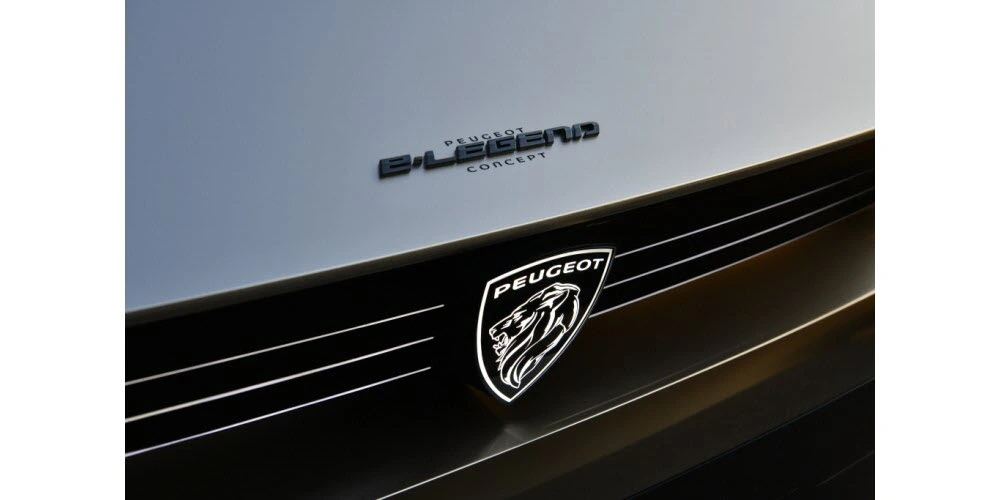
When discussing the oldest automobile brands, Peugeot holds a unique place. The company founded in 1810 according to the official Stellantis Media website is the oldest company still in operation that has manufactured automobiles. Jean-Pierre and Jean-Frédéric Peugeot initially established a foundry producing coffee mills, saws, and springs for watchmaking. The transition to cycles occurred in 1830, and then to automobiles in 1882.
In 1889, during the World’s Fair in Paris, Armand Peugeot presented the Type 1, a steam tricycle developed with Léon Serpollet. Although it was a non-commercialized one-of-a-kind model, it marked the beginning of the automotive adventure. Quickly, Peugeot adopted the gasoline engine and developed its own powertrains starting with 1903. The brand survived both World Wars by adapting its production, before experiencing a real surge with the post-war 203. The 205 GTI from the 1980 era remains one of the most iconic French sports cars. Today, integrated into the Stellantis group, Peugeot continues its electric offensive while celebrating over two centuries of existence.
3. Mercedes-Benz (1883 / 1926) – German excellence since the beginning
Mercedes-Benz claims a foundational place in automotive history. Karl Benz founded Benz & Cie in 1883, the first company in the world dedicated to the manufacturing of automobiles, according to Guideauto.com. In 1886, he filed the patent for the Motorwagen tricycle, which is considered the first gasoline automobile. At the same time, Gottlieb Daimler developed his own engines. The merger of the two entities in 1926 gave birth to Mercedes-Benz, a name associated with the Daimler-Motoren-Gesellschaft brand and its flagship model, the Mercedes. This birth occurred just 140 years ago:we have returned to Mercedes-Benz’s birthday.
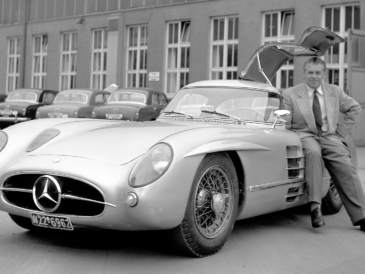
Innovations follow one another: the first diesel engine for automobiles in 1936, the development of safety technologies, and then onboard electronics. The Class S becomes the symbol of German automotive luxury, concentrating the latest technological advancements. In 2022, the 300 SLR Uhlenhaut Coupé sets a record by selling for 135 million euros, confirming the exceptional status of the star brand. With more than 140 years of existence, Mercedes-Benz continues to embody mechanical excellence and automotive prestige.
4. Opel (1862 / 1899) – From sewing machines to electromobility
Opel’s history begins in 1862 when Adam Opel founded his sewing machine company in Rüsselsheim, according to Stellantis Media. The diversification into bicycles occurred in 1886, making Opel one of the first German manufacturers. The automotive shift took place on 21 January 1899: Wilhelm Opel signed a contract with Friedrich Lutzmann for 116 887 marks, according to Opel’s official statement, thus acquiring a complete automobile factory.
The first Patent Motorwagen vehicles, equipped with a monocylinder of 1545 cm³ developing 3,5 horsepower, are launched in spring. In 1914, Opel becomes the German number one with a production of3 335 vehiclesannually. The introduction of the assembly line in 1924 propelled the brand into the era of mass production. The acquisition by General Motors in 1929, then by the PSA group in 2017, did not undermine the brand’s German identity. Today, integrated into Stellantis, Opel celebrates its 125 years of automotive history with a fully electrified range in 2024.
5. Vauxhall (1857 / 1903) – The British heritage
Founded in 1857 by the Scottish engineer Alexander Wilson, Vauxhall began as a manufacturer of boat engines and pumps in London. The production of gasoline engines started in 1894. The first Vauxhall automobile was born in 1903 with the 6CV, a single-cylinder machine with two forward speeds but no reverse, marketed at the high price of 150 pounds.
General Motors’ acquisition in 1925 allows Vauxhall to accelerate its development and democratize its models. The brand becomes emblematic in the United Kingdom, offering reliable and affordable vehicles. Today, as part of Stellantis like Opel, Vauxhall continues to offer a complete range in the British market, preserving an industrial heritage of more than 160 years.
6. Fiat (1899) – The Italian icon of mobility
On 11 July 1899, Giovanni Agnelli and 29 shareholders founded the Fabbrica Italiana Automobili Torino at the Palazzo Bricherasio in Turin, according to Guideauto.com. The name Fiat alone encapsulates the ambition: to industrialize automobile production in Italy. The first model, the 4 HP, launched as 1899 and inaugurated a long series of technical innovations.
In the 1920 years, Fiat adopted mass production, which quadrupled its production over five years, becoming the symbol of the Italian economic miracle. The Fiat 500, introduced in 1957 and relaunched in 2007, embodies the very essence of the brand: a compact, economical, and stylish urban car. Today, a pillar of the Stellantis group, Fiat remains the Italian benchmark with over 125 years of automotive history.
7. Renault (1899) – The adventure of the visionary brothers
The Renault adventure begins in 1899 when Louis Renault builds his first Type A carriage in his family workshop in Billancourt. The public demonstration during the ascent of Rue Lepic in Montmartre convinces the skeptics: twelve orders were placed that same evening. Louis, accompanied by his brothers Marcel and Fernand, officially founds Renault Frères.
Innovation constitutes the brand’s DNA. Renault develops its own powertrains from 1903 according to AutoAubaine and multiplies technical patents. The 4CV of 1946 restarts post-war production, followed by the Dauphine in 1956. The commitment to competition, from Formula 1 to rallies, shapes the sporting legend with the RS models. The Renault 5, the Clio Williams, and the Mégane RS remain benchmarks. Despite recent financial difficulties, Renault remains a major player with over 125 years of history. In terms of volumes, these manufacturers have also set records: seethe most sold French cars in history.
8. Buick (1899 / 1903) – American accessible luxury
David Dunbar Buick founded Buick Auto-Vim and Power Company in 1899, but it was in 1903 that the Buick Motor Company was officially established, according to Guideauto.com. Quickly integrated into the nascent General Motors in 1908, Buick positioned itself in the accessible luxury segment. Technological innovation prevailed with the development of performance and reliable engines.
The Roadmaster model from the years 1940 and 1950 symbolizes post-war American luxury, according to the same source. Today, Buick remains the oldest American automobile brand still in operation, focusing its business on the Chinese market where it has achieved considerable success. The brand thus continues a legacy of more than 120 years.
9. Ford (1903) – The revolution of mass production
Henry Ford founded the Ford Motor Company on 16 June 1903 in Dearborn, Michigan. Although the company is not the pioneer, its contribution to the automobile is revolutionary. The Model T, launched in 1908, democratized the automobile through the introduction of the assembly line in 1913. This innovation dramatically reduced production costs and assembly times.
More than 15 million Model Ts were produced between 1908 and 1927, transforming American society. The car ceased to be a luxury and became an accessible means of transportation. The Mustang from 1964, the F-Series pickup, and the victorious GT40 at the 24 Le Mans races enrich the legend. Today, Ford remains one of the most important global automakers, faithful to its pioneer spirit for more than 120 years.
10. Cadillac (1902) – American prestige
Founded in 1902 by Henry Leland in Detroit, Cadillac gets its name from Antoine de Lamothe-Cadillac, the founder of the city. Quickly, the brand established itself as a benchmark for American luxury, developing major technical innovations. The introduction of the electric starter in 1912 revolutionized automobile usage.
Integrated into General Motors in 1909, Cadillac becomes the group’s technological showcase. The imposing Fleetwood sedans, the Eldorado of the 1950 era, and the spectacular Eldorado Biarritz embody the American dream. Today, Cadillac positions itself in the premium segment with a modernized lineup that includes electric models such as the Lyriq, continuing a legacy of prestige for over 120 years.
Comparative Table of the Oldest Automobile Brands
| rank | mark | Year of founding | First car | Country of origin | Current owner | status |
| 1 | Tatra | 1850 | 1897 (President) | Austro-Hungarian Empire (current Czech Republic) | Tatra Trucks a.s. | Trucks only from 1998 |
| 2 | Peugeot | 1810 | 1889 (Type 1 steam) | France | Stellantis | working life |
| 3 | Mercedes-Benz | 1883 | 1886 (Benz Patent-Motorwagen) | Germany | Mercedes-Benz Group AG | working life |
| 4 | Opel | 1862 | 1899 (Patent Motorwagen) | Germany | Stellantis | working life |
| 5 | Vauxhall | 1857 | 1903 (6CV) | United Kingdom | Stellantis | working life |
| 6 | Fiat | 1899 | 1899 (4 HP) | Italy | Stellantis | working life |
| 7 | Renault | 1899 | 1899 (Type A) | France | Renault Group | working life |
| 8 | Buick | 1899/1903 | 1904 | United States | General Motors | working life |
| 9 | Ford | 1903 | 1903 (Model A) | United States | Ford Motor Company | working life |
| 10 | Cadillac | 1902 | 1903 | United States | General Motors | working life |
The legacy of the pioneers
These ten brands represent much more than centennial automobile companies. They embody the history of global industrialization, having endured two world wars, the Great Depression, oil shocks, and successive technological revolutions. Their ability to reinvent themselves while preserving their DNA serves as a lesson in adaptability.
Several constants emerge from this ranking. First, the diversified origins: sewing machines for Opel and Peugeot, horse-drawn vehicles for Tatra, boat engines for Vauxhall. This initial versatility undoubtedly facilitated their later adaptability. Second, technical innovation as a driving force of development: from the Ford assembly line to diesel engines, from Tatra aerodynamics to Mercedes safety technologies.
Finally, industrial consolidations characterize recent developments. General Motors has unified Opel, Vauxhall, Buick, and Cadillac for decades. Today, Stellantis brings together Peugeot, Opel, Vauxhall, and Fiat, creating the fourth global automaker. These consolidations allow for sharing of technical platforms and research and development investments, which are particularly crucial in the current electric vehicle transition.
Electrification is precisely the new major challenge. After inventing the gasoline car, these pioneers now have to reinvent their models for the zero-emission era. Mercedes-Benz aims for carbon neutrality in 2039, Opel offers every model in an electric version since 2024, and Renault is focusing on popular electric vehicles with the new R5. The loop is closed: the heirs of the inventors of the 20th century become the pioneers of the 21st.
A lesson in automotive resilience
This journey through automotive time reveals a fundamental truth: longevity does not guarantee immobility. The surviving brands are those that were able to anticipate, innovate, and sometimes radically question themselves. Tatra abandoned automobiles to focus on trucks. Peugeot stopped producing coffee mills. Ford revolutionized the industry with mass production.
The history of these centuries-old brands reminds us that prestige is built over time. The record value of the Mercedes 300 SLR Uhlenhaut Coupé or the iconic status of the Fiat 500 result from decades of excellence and emotional attachment passed down through generations.
The automobile industry is currently undergoing its most profound transformation since the invention of the internal combustion engine. These historic manufacturers possess the key advantage of the experience of past revolutions to write the next chapters of automotive history.
Your opinion interests us
Which centennial brand do you admire the most for its ability to withstand the ages? Do you own or have ever driven a historic model of one of these legendary brands? Share your memories and passion in the comments.
Discover the world of exceptional cars on Plethore.fr, your reference for high-end automotive culture.
Image source: https://cdn-s-www.leprogres.fr/images/39faecb6-be33-4b96-beb7-1f1a0d569119/NW_detail/le-logo-sur-la-e-legend-1601666995.jpg