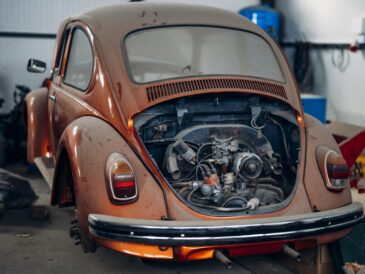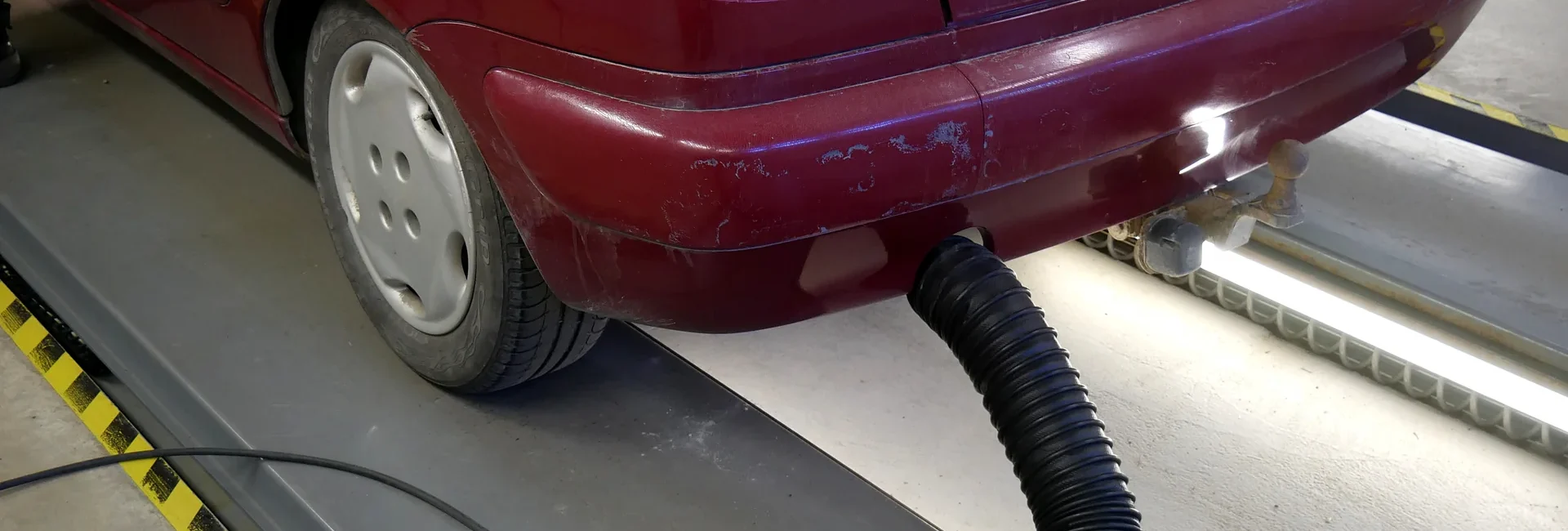
A petrol classic car is not assessed against the same emissions limits as a modern vehicle at the French roadworthiness test. In France, the date of first registration and the presence of an emissions-control system determine which measurement applies. Cars first registered before 1 October 1972 are not subject to the carbon-monoxide (CO) content test, while later vehicles must meet graduated limits.
This exemption does not remove the need to maintain the engine or present a safe exhaust system. Nor does it mean that every classic car is exempt from the French contrôle technique: registration status, first-registration date and use remain decisive.
Which CO limits apply to a petrol classic car in France?
The table below summarises the principal limits for M1 passenger cars. Where the manufacturer has supplied a model-specific value to the French technical authority, that figure may take precedence over the default limit.
| First registration | Configuration | CO limit |
|---|---|---|
| Before 1 October 1972 | Petrol | No statutory CO-content test |
| 1 October 1972 to 30 September 1986 | Petrol | 4.5% maximum at idle |
| 1 October 1986 to 31 December 1993 | Petrol | 3.5% maximum |
| 1 January 1994 to 31 December 1995 | Without catalytic emissions control | 3.5% maximum |
| 1 January 1994 to 1 July 2002 | Catalyst and closed-loop control | Manufacturer’s value or, by default, 0.5% at idle and 0.3% at fast idle |
| From 2 July 2002 | Catalyst and closed-loop control | Manufacturer’s value or, by default, 0.3% at idle and 0.2% at fast idle |
For the relevant catalyst-equipped vehicles, lambda must also remain within the statutory range — generally 0.97 to 1.03 where no particular manufacturer value applies. This guide mainly concerns petrol engines. Diesels follow a different procedure based in particular on exhaust-smoke opacity.
Key point: do not select a limit from the car’s approximate age. Use the exact first-registration date, fuel, vehicle category and original emissions-control configuration.
Does the pre-October 1972 exemption mean that nothing is checked?
No. It only means that CO content is not measured under that statutory test item. The inspector still examines the points applicable to the vehicle, including the condition and security of the exhaust, leaks, noise, abnormal smoke and equipment originally fitted. The UTAC instruction states that a leak liable to affect the measurement can constitute a major defect.
The emissions test must also be distinguished from the inspection interval. A car officially registered in France as a véhicule de collection and first used from 1960 onwards will generally require an inspection every five years. A pre-1960 car with that registration designation is exempt. An older car kept on an ordinary French registration generally retains the normal interval. Our guide to French classic-car technical inspection rules for 2027 explains these cases.
How is the exhaust-gas measurement carried out?
The inspector first conditions the vehicle and checks the exhaust system visually and audibly for leaks. An analyser probe is then placed at the outlet. The French technical instruction also provides adaptations for multiple outlets and circumstances requiring a specific method.

On a carburettor car, the idle test mainly indicates mixture strength and combustion quality at that moment. A high result does not identify the cause by itself. It may reflect an over-rich adjustment, but it can also be caused by a choke that does not fully release, a clogged air filter, an ignition fault, an incorrect float or needle valve, a crankcase-ventilation problem or mechanical wear.
How should you prepare a classic without disguising a fault?
Proper preparation means returning the engine to its normal operating condition, not weakening the mixture artificially for a few minutes. Work through the following sequence:
- Find the model documentation. Confirm the specified CO figure, idle speed, ignition timing and adjustment procedure for the exact engine.
- Check safety before warming the engine. Look for fuel, oil and coolant leaks, as well as cracked hoses.
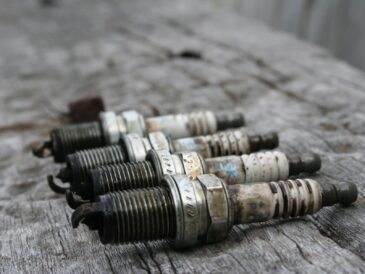
- Set the ignition first. Spark plugs, leads, contact breakers or electronic ignition, timing and distributor condition must be correct before the carburettor is adjusted.
- Inspect the intake. A blocked filter enriches the mixture; an air leak makes adjustment unstable. The choke must release fully.
- Inspect the exhaust. A leak can distort the reading and may itself be recorded as a defect.
- Bring the engine to normal temperature. A sensible drive, provided the car is safe and legal, is preferable to prolonged idling.
- Arrange a pre-test. A workshop with a gas analyser can measure the result before the appointment and correct the cause rather than turning the mixture screw at random.
If the car overheats, leaks fuel, lacks oil pressure or misfires heavily, stop the preparation. The roadworthiness centre is not a diagnostic workshop for an unsafe vehicle.
Why can a correctly adjusted carburettor still fail?
A carburettor does not work in isolation. Compression, valve timing, ignition, temperature and crankcase ventilation all influence combustion. Oil diluted by repeated short journeys can also enrich the gases drawn through the breather. Conversely, making the mixture excessively lean may cause hesitation, overheating or misfires without solving the underlying fault.
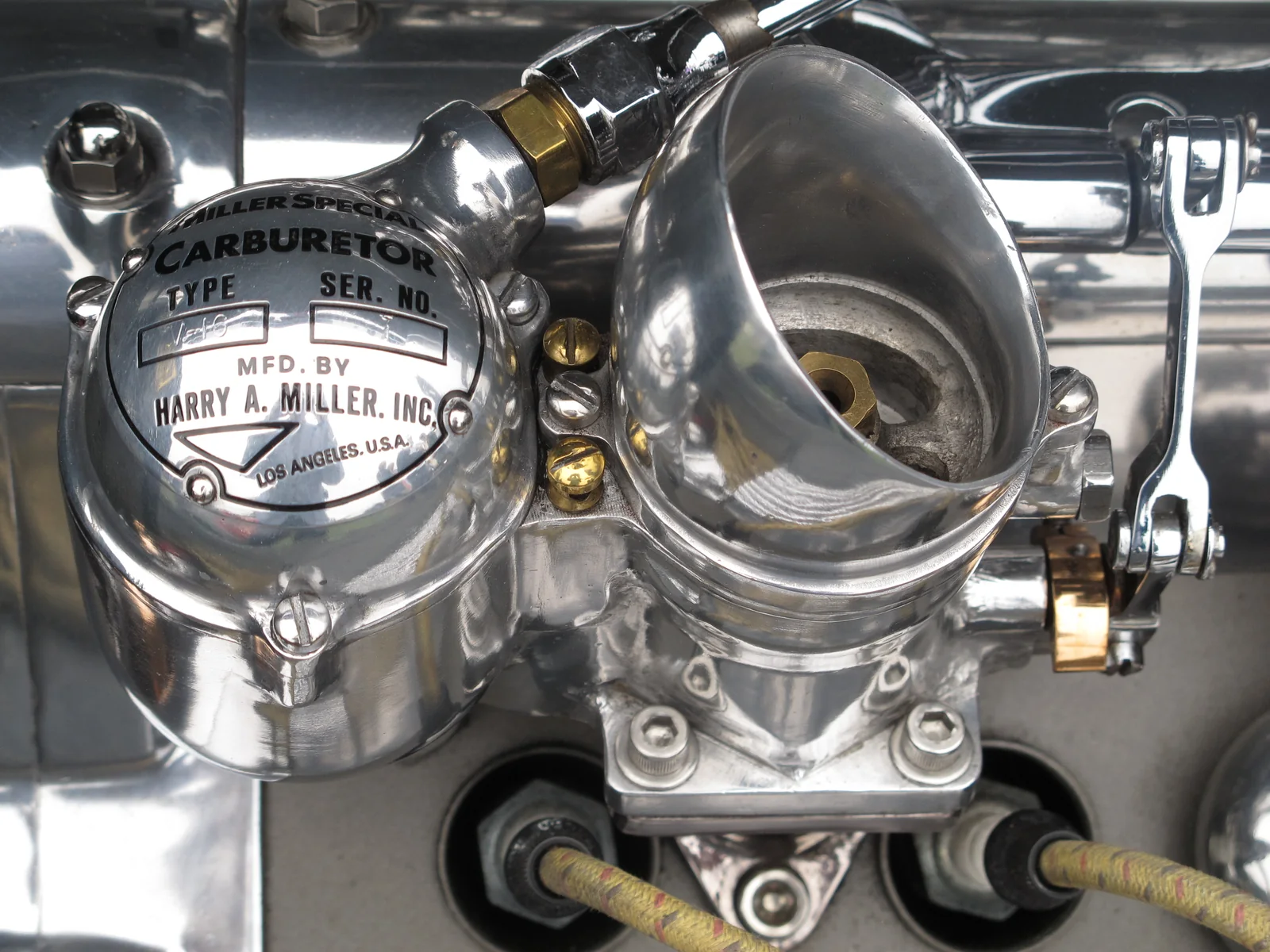
The mixture screw should therefore be adjusted only after the preliminary checks and in accordance with the manufacturer’s procedure. Our guide to cleaning, adjusting and diagnosing a classic-car carburettor explains why Weber, Solex, SU, Zenith and Dell’Orto systems require different methods.
What should you do after an emissions failure?
Begin with the figures printed on the inspection report and relate them to the test speed. Do not immediately replace the carburettor or alter the original configuration without a diagnosis. Depending on the model, ask for a methodical check covering:
- CO, CO2, HC and, where relevant, lambda analysis;
- ignition condition and combustion misfires;
- engine temperature and choke operation;
- intake-air and exhaust-leak checks;
- float level, needle valve, jets and fuel-supply pressure;
- a compression test if mechanical condition is in doubt.
Keep the inspection report, invoice and before-and-after measurements. This evidence improves the maintenance history and helps a future buyer understand the work. If you are considering a purchase in France, the classic cars offered for sale by Plethore Cars also provide useful descriptions and files to compare.
Frequently asked questions
Must a petrol car first registered in 1971 undergo the CO test?
No. If it was first registered before 1 October 1972, it is not subject to the statutory CO-content measurement. Other applicable points, including exhaust condition, are still inspected.
What is the CO limit for a 1980 petrol car?
For an M1 passenger car first registered between 1 October 1972 and 30 September 1986, the limit is 4.5% CO at idle.
Should the carburettor be adjusted immediately before the test?
Only if measurement and the correct technical data show that adjustment is required. Check ignition, filter, choke, air leaks, fuel supply and mechanical condition first.
Can an exhaust leak lead to a retest?
Yes. A leak capable of affecting emissions measurements can be classed as a major defect, independently of the CO result.
Do old diesels follow the same limits?
No. Their inspection is based in particular on smoke opacity and on requirements specific to the vehicle’s date and configuration.
Sources and verification date
- Légifrance — Order of 18 June 1991 on French roadworthiness testing for light vehicles: CO limits and exemptions.
- UTAC-OTC — Light-vehicle technical instruction F8, nuisances: test method, exhaust integrity and defects.
- Service-Public — French collector-vehicle registration: inspection intervals and exemptions associated with the French collector designation.
Information checked on 23 November 2026 for France. Regulations and technical instructions can change; confirm the version applicable before the appointment.