
Yes, a registration document bearing the mention “vintage vehicle” does not, by itself, impose a maximum number of days or kilometres per year. It allows driving in France as well as abroad, and the former departmental restrictions have disappeared. However, the vehicle must remain assigned to a private use : professional use is excluded according to the French Federation of Vintage Vehicles. Above all, the insurance contract may prohibit daily use, limit the mileage, or only authorise occasional home-to-work journeys.
The correct answer therefore depends on three distinct elements: the mention on the registration document, the use declared to the insurer, and local traffic regulations, notably in Low Emission Zones (ZFE). Confusing these three levels can lead one to believe that a car is administratively authorised when its contract does not actually cover the journey undertaken.
Vintage registration document and vintage insurance: two different things
The first confusion is to automatically associate a vintage registration document with vintage insurance.
The vintage registration document is a registration certificate bearing a particular usage mention in box Z. To obtain it, the vehicle must be at least 30 years old, no longer in production, and must not have undergone any essential modification of its technical characteristics. This mention is neither automatic nor mandatory.
The vintage insurance is a commercial contract offered by an insurer. Its conditions are not set by the registration document: the insurer may require another vehicle intended for everyday use, a minimum age of the driver, a certain length of driving licence holding, a capped mileage, or the absence of home-to-work journeys.
It is therefore possible, depending on the insurer’s acceptance, to have:
- a vintage registration document with a standard motor insurance contract adapted to the declared use;
- a standard registration document with so-called “vintage” insurance;
- a vintage registration document and vintage insurance, a frequent but not mandatory configuration.
What matters in the event of a claim is the consistency between the actual use and that declared in the contract.
Is there a prohibition on daily driving?
None of the official sources consulted establish a national rule limiting the circulation of a vehicle with a vintage registration document to weekends, certain departments, or a general kilometre quota.
Service-Public specifies that a vintage vehicle may circulate in France and abroad. The FFVE indicates, for its part, that the vehicle must be used privately, for example for outings or leisure, and that it cannot be used for professional activity.
Frequency is therefore not the only criterion. Repeated private outings are not the same as a commercial round, a delivery activity, or the daily use of a utility vehicle by a craftsman. Before adopting a classic car as the sole means of transport, however, the insurance contract must be examined: it is often the one containing the most precise practical restrictions.

Frequent use must be declared unambiguously to the insurer. Photo: Benjamin Child, Wikimedia Commons, licence CC0 1.0.
Is it possible to commute to work with a vehicle registered as a classic car?
The journey between home and the workplace requires a cautious response. It should not be confused with the professional use of the vehicle as a work tool.
Home-to-work journey
Some contracts permit home-to-work journeys, sometimes only on an occasional basis. Others exclude them or require that a primary vehicle be insured separately. An oral statement given during a quote is not sufficient: request written confirmation or check the specific and general conditions.
If you intend to drive your classic car to the office every day, declare precisely:
- the expected frequency;
- the estimated annual mileage;
- the usual parking location;
- whether or not there is another vehicle;
- the regular drivers.
The insurer may offer a standard contract, an extended classic car policy, or refuse this usage. The lowest price should not take precedence over the certainty of being covered.
Professional use
The FFVE reminds that a vehicle registered as a classic car cannot be used for professional purposes. A craftsman should therefore not use it to transport equipment or to attend clients. Delivery activities, paid transport, or commercial exploitation also require specific verification and may be incompatible with the classic car designation.
A vintage car used as a stationary prop during an event is not in the same situation as a vehicle transporting paying customers. As soon as an economic activity involves the vehicle’s circulation, request written advice from the insurer and, if necessary, from a legal or registration professional.
Insurance remains mandatory, even for occasional use
Any motorised land vehicle put into circulation must be insured at least for third-party liability. Service-Public reminds that this obligation also applies to classic vehicles.
For a frequently used car, minimal coverage may be insufficient. It is necessary to consider in particular:
- the declared value or agreed value;
- all-risk damage coverage;
- theft, fire and vandalism;
- assistance from home or from a minimum distance;
- towing to a specialist capable of working on the model;
- driver’s coverage;
- loan of the steering wheel;
- the exclusions related to professional journeys or commuting.
A recent appraisal can facilitate setting a coherent value, but it never replaces reading the contract. If usage changes during the year, inform the insurer before increasing the number of journeys.
Technical inspection: five years does not mean reduced maintenance
For a car or van with a classic vehicle registration certificate first registered from 1960, the periodic technical inspection is carried out every five years. Classic vehicles registered before 1960 are exempt. An older car kept with a standard registration certificate remains subject to the usual two-year periodicity.
These deadlines concern the regulatory inspection, not maintenance. A vehicle covering several thousand kilometres per year must be inspected according to its actual use. Brakes, tyres, lighting, steering, cooling, lubrication and corrosion require more frequent monitoring than a five-year administrative deadline.
Our guide on the technical inspection of classic cars in 2026details the rules according to the date of first registration and the mention on the certificate.
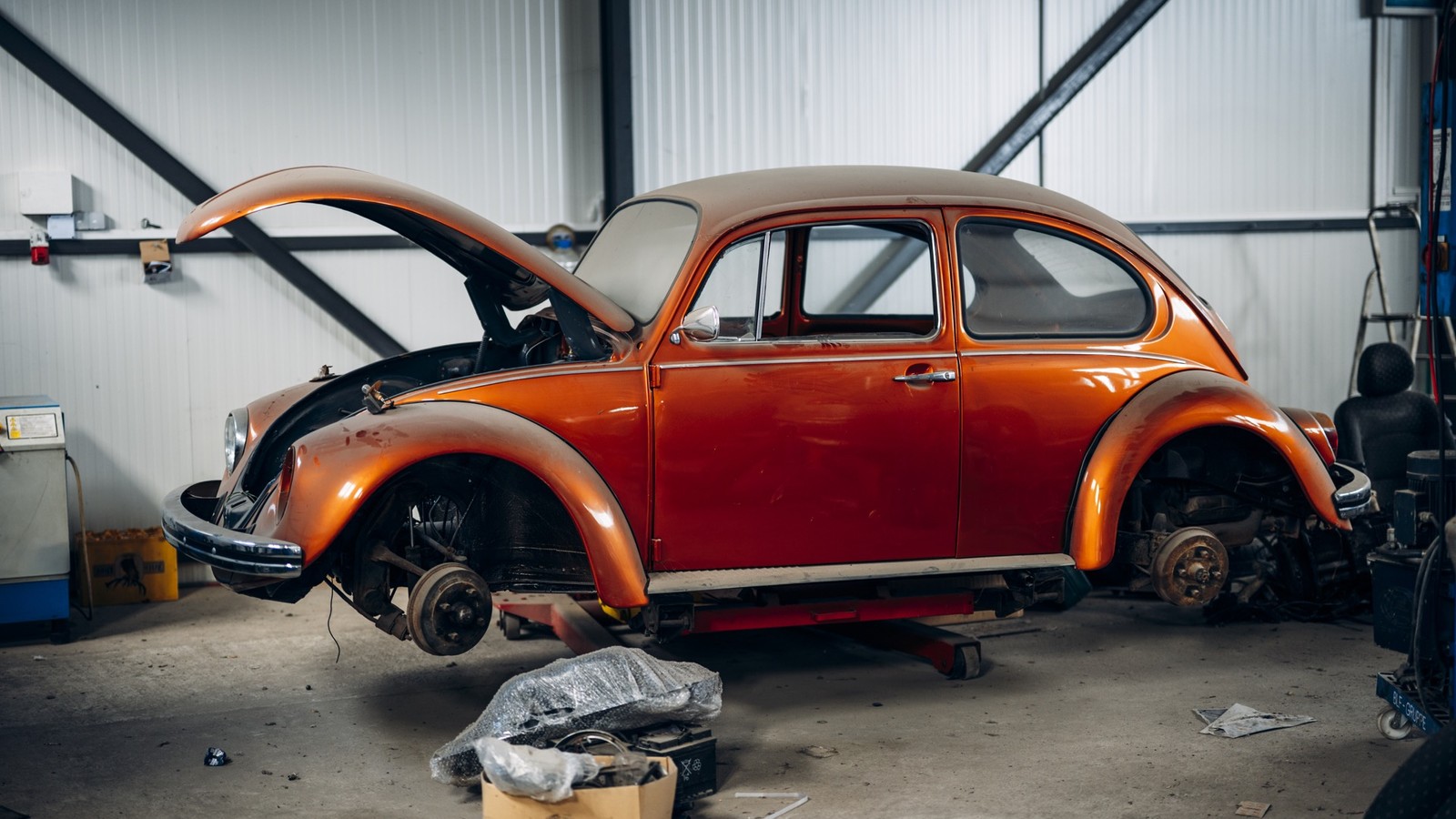
A spaced-out technical inspection does not exempt from maintenance adapted to the actual mileage. Photo: Shixart1985, Wikimedia Commons, CC BY 2.0 licence.
Can you drive daily in a Low Emission Zone (LEZ)?
The classic vehicle registration certificate does not provide a national and uniform authorisation in all low emission zones. Service-Public recommends checking with the local authority the rules applicable to classic vehicles.
In the Greater Paris Metropolis, the current decree provides an exemption for vehicles whose registration certificate bears the mention “collection”. Other territories may apply a different exemption, require a procedure or limit the number of authorised days. The rules may also evolve.
Before a regular journey:
- identify each LEZ crossed;
- consult the metropolitan regulations or the official Itinériz service;
- check whether the exemption is automatic or must be requested;
- keep the required proof;
- check the hours and categories of vehicles concerned.
Our dossier LEZ and classic cars in 2026allows a detailed check territory by territory.
Standard or classic registration certificate for daily use?
The “collection” mention is not mandatory from 30 years old. The owner can keep a standard registration certificate if the vehicle’s situation allows it.
| Criterion | Classic vehicle registration document | Standard vehicle registration document |
|---|---|---|
| Age condition | At least 30 years old, model no longer produced and essential characteristics unchanged | No condition related to classic status |
| Usage | Private; professional use excluded according to the FFVE | Depends on the vehicle category and insurance contract |
| Technical inspection for a car from 1960 | Every 5 years | Every 2 years for an affected classic car |
| Car first registered before 1960 | Exemption under classic status | Standard regime applicable |
| Black number plates | Possible if the classic status is indicated on the registration document | Generally not, except in particular historical situations |
| Low Emission Zones (LEZ) | Possible exemptions depending on local regulations | Crit’Air classification and local exemptions |
If the vehicle is genuinely used every day, including commuting to work, a standard registration document may provide a clearer framework. However, the choice must take into account administrative status, vehicle authenticity, technical inspection, insurance and local rules.
Reverting from a classic vehicle registration document to a standard certificate is not a guaranteed formality. See our analysis: can you revert a classic vehicle registration document to a standard registration document?
Checks to carry out before driving daily
Before regularly using a classic car, proceed in this order:
- Read section Z of the registration document to confirm the presence or absence of the ‘collection’ designation.
- Define the actual use: leisure, private errands, commuting, business travel or paid transport.
- Request written confirmation from the insurer, including realistic mileage and frequency.
- Check the technical inspection applicable to the date of first registration and the vehicle’s status.
- Check the Low Emission Zones (LEZs) encountered on your usual routes.
- Adapt maintenance, particularly tyres, brakes, fluids and electrical equipment.
- Arrange roadside assistance and identify a competent workshop before the first breakdown.
To acquire a classic car suited to your intended use, you can consult the classic and prestige cars offered by Plethore Cars. The history, mechanical condition and availability of parts are as important as the administrative status.
The most common mistakes
Believing that a classic registration limits the car to weekend use
This former restriction no longer exists nationally. However, private use, insurance conditions and local regulations must still be respected.
Assuming that a classic insurance policy automatically covers all journeys
Each policy sets its own conditions. Commuting, mileage and the need to have a primary vehicle must be verified.
Using the classic car as a professional tool
A classic car registration document is intended for private use. Commercial or professional activity with the vehicle may be incompatible with this status and with the insurance policy taken out.
Confusing exemption from Low Emission Zones (LEZ) with general freedom of movement
Exemptions are local. An authorisation in Greater Paris does not prove that the same rules apply in Lyon, Strasbourg, Grenoble or another urban area.
Spacing out maintenance such as the technical inspection
The five-year inspection is not a maintenance programme. A classic car used daily often requires more preventative care than a modern car.
FAQ
Can a classic car with a collection registration be driven during the week?
Yes. There is no longer a national restriction limiting its use to weekends. The use must remain private and comply with the insurance contract as well as any local regulations.
Is there a maximum mileage with a classic car registration?
The registration itself does not set a general annual mileage limit. However, a cap may be included in the classic car insurance policy.
Can you do your shopping with a classic car?
A private trip is not considered professional use. Nevertheless, check that frequent use and the expected mileage are covered by the insurance.
Can you commute to work every day with a classic car?
The home-to-work journey must be declared to the insurer. Some policies allow it, sometimes occasionally; others exclude it. For daily use, obtain written confirmation.
Can a classic car with a collection registration be used for your business?
The FFVE states that professional use of a vehicle with a classic car registration is not permitted. Paid or commercial activity requires a specific analysis before any circulation.
Does the classic car registration allow driving in all Low Emission Zones (LEZ)?
No, not automatically. Exemptions are defined locally. Check the regulations of each metropolitan area or the official Itinériz service before the journey.
Sources
- Service-Public — How to obtain a classic vehicle registration certificate? : eligibility conditions, optional nature of the mention and procedure.
- Service-Public — Vehicle registration : driving in France and abroad, category Z and specific plates.
- FFVE — Use of a vehicle with a classic car registration certificate : private use and exclusion of professional use.
- Service-Public — Insurance for a classic vehicle : compulsory third-party liability and possible contract conditions.
- Service-Public — Technical inspection of a classic vehicle : frequency and exemptions depending on the date of first registration.
- Service-Public — Crit’Air sticker : necessity to check local rules applicable to classic vehicles.
- Métropole du Grand Paris — ZFE FAQ : local exemption related to the classic car designation.
Information verified on 14 October 2026. Insurance contracts and ZFE regulations may change: please check them before altering the usual use of the vehicle.