The Honda NSX NA1 suits the buyer looking for the original styling, pop-up headlights, and the V6 3,0 litre engine, often with a lower entry point. The NA2 manual adds the V6 3,2 litre engine, a six-speed gearbox, and the updates of 1997. It is generally rarer on the market and more expensive with a comparable configuration.
But beware:NA1 and NA2 primarily designate the engine type, not the headlight shape. A facelifted NSX with fixed headlights can still be an NA1 if it retains the V6 3,0 litre engine and automatic gearbox. Conversely, an NA2 produced between 1997 and 2001 still has pop-up headlights. Before choosing, you therefore need to check the chassis number, engine, gearbox, original market, and exact version.
Technical data, market and links verified on 4 October 2026. Power outputs and equipment vary according to the market; the Honda figures cited below mainly concern the Japanese versions.
NA1 and NA2: the essential differences
| Criterion | Honda NSX NA1 | Honda NSX NA2 |
|---|---|---|
| Engine | V6 C30A, 2 977 cc | V6 C32B, 3 179 cc |
| Most characteristic gearbox | Manual 5 speed or automatic 4 speed | Manual 6 speed |
| Period | From 1990; the code remains on the automatic 3,0 L until the end | From the 1997 update on the manual 3,2 L versions |
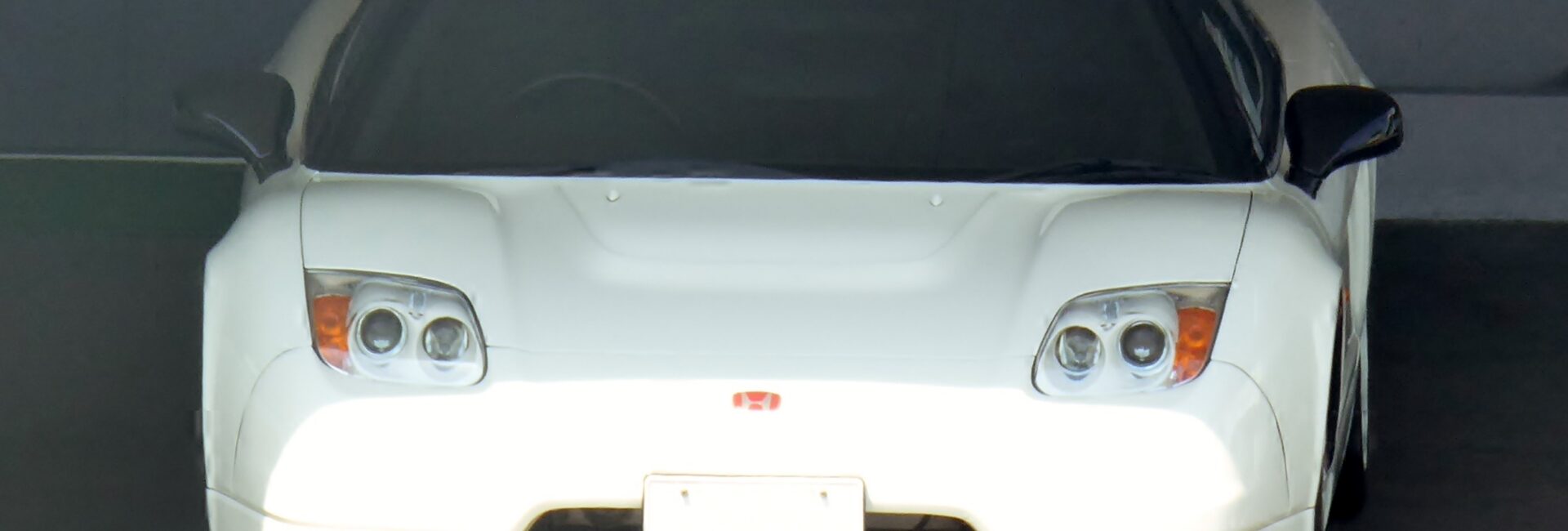
| Headlights | Pop-up until 2001, then fixed on the facelifted automatic 3,0 L | Pop-up from 1997 to 2001, then fixed from the facelift |
| Brakes and chassis | Successive updates according to the model year | Enlarged discs and revised settings during the 1997 update |
| Experience | Original character, 5 gearbox, wider range | Higher torque, 6 gearbox, rarer versions |
| Purchase | Priority on condition, history and absence of dubious structural repairs | Same priority, with increased vigilance on authenticity and price of rare versions |
The 1997 boundary is the most significant mechanically. Honda then announces the 3,2 litre engine exclusively paired with the new six-speed manual gearbox. The automatic transmission remains linked to the 3,0 litre engine. The manufacturer also adds larger brake discs, revises the suspension and introduces the Type S on its domestic market.
Why did the NSX make its mark on its era?
Launched in Japan in September 1990, the NSX places its V6 mid-rear and uses an aluminium monocoque structure. Honda presents this as a world first for a mass-produced car. The manufacturer explains that it developed several alloys and a dedicated factory to reduce weight while achieving the desired rigidity.
This architecture does not change between NA1 and NA2: both belong to the same first generation. The evolutions concern the engine, transmission, brakes, settings, equipment and, from December 2001 in Japan, style and aerodynamics.
Production of the first generation ended in 2005. Honda then recalls the main milestones of the model: Type R in 1992, NSX-T in 1995, 3,2 litre engine and six-speed gearbox in 1997, restyled bodywork at the end of 2001 and new NSX-R in 2002.
Honda NSX NA1: the choice of the original line
The NA1 receives the V6 C30A of 2 977 cm³. Depending on the market and transmission, power figures vary; it is therefore prudent to check the specification sheet corresponding to the country of delivery. The architecture remains the same: naturally aspirated V6 DOHC VTEC, rear-wheel drive and mid-rear engine.
The five-speed manual gearbox contributes to the character of the early examples. Automatic versions use a four-speed transmission and retain the 3,0 litre even after the arrival of the NA2 manual. This continuity explains why the year alone is never sufficient to identify the code.
The NA1 appeals for three reasons:
- the launch design, with pop-up headlights until 2001;
- an experience closer to the original 1990 concept;
- a generally wider choice among available examples.
It is not, however, an “inferior” version. A manual NA1 coupe, sound, original and properly maintained can be more desirable than a modified, accident-damaged or undocumented NA2. The rare Japanese NSX-R NA1 models follow a very different collector logic from common coupes.
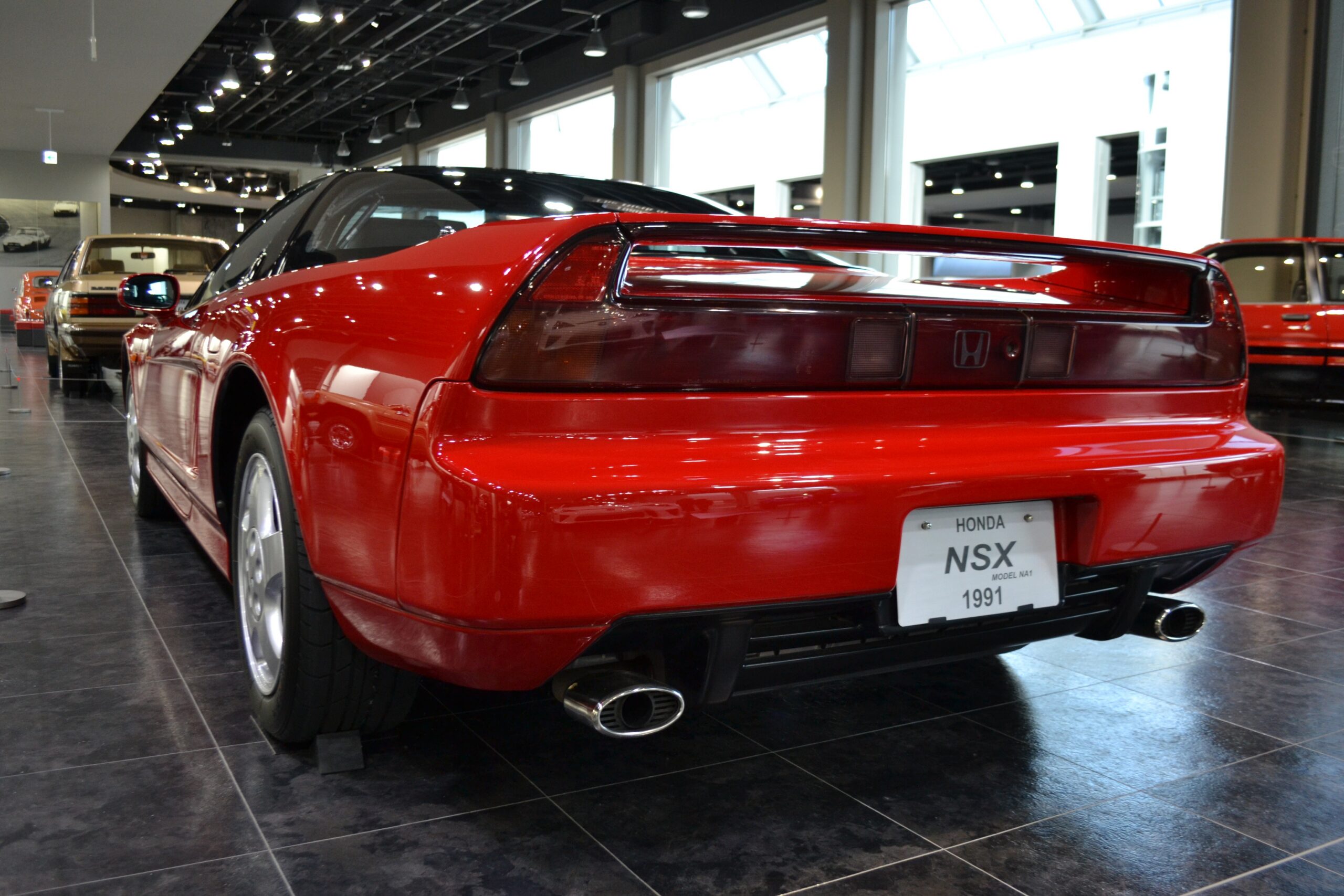
The NSX NA1 retains the V6 3,0 litre and, on the early model years, the pop-up headlights. Photo: 先従隗始,Wikimedia Commons, public domain CC0.
Honda NSX NA2: the 3,2 litre and six-speed gearbox
In February 1997, Honda increased the engine capacity of the manual versions to 3 179 cm³ and paired the C32B with a new six-speed gearbox. According to the Japanese specification sheet, the manufacturer announces 280 PS at 7 300 rpm and 31,0 kg·m of torque at 5 300 rpm for the manual 3,2 litre versions. The automatics remain at 2 977 cm³, 265 PS and four-speed on the same market.
This evolution makes the NA2 more flexible and tightens the gear ratios. Honda also enlarged the discs and adjusted the suspension and steering settings. The NA2 is therefore not just an NA1 with more displacement.
Yet, the leap does not erase the car’s identity. Fundamental dimensions, aluminium architecture, mid-engine layout and overall philosophy remain close. The choice between an excellent NA1 and an average NA2 should be made based on the individual example, not the technical sheet.
The Type S is not an ordinary NA2
The Type S appeared with the 1997 update on the Japanese market. Honda assigned it specific settings, forged BBS wheels, Recaro seats, a Momo steering wheel and weight reduction. The Type S-Zero takes this logic further by removing certain comfort equipment and part of the soundproofing.
These versions are rare and must be authenticated. A standard NSX later equipped with seats, wheels or badges inspired by the Type S does not become a Type S. Check the version code, delivery documents and equipment consistency.
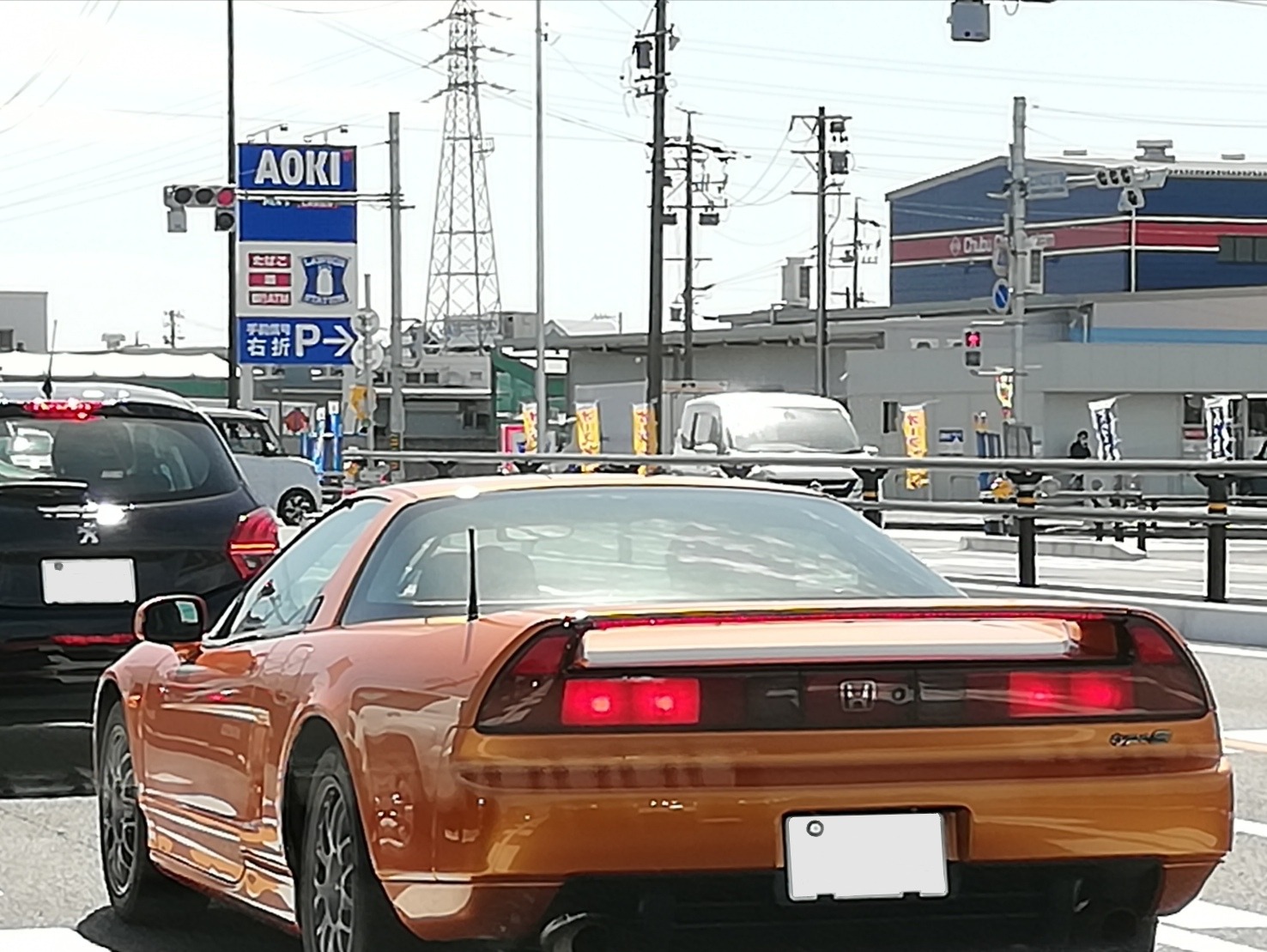
The Type S pairs the NA2 powertrain with a sportier specification offered in Japan. Photo: 先従隗始, Wikimedia Commons, public domain CC0.
Pop-up or fixed headlights: do not confuse style with engine code
The Japanese facelift was announced on 6 December 2001 for release on 14 December. Honda replaced the pop-up headlights with fixed projectors, modified the bumpers and rear lights, and adopted 17 inch wheels front and rear.
The official chart of this evolution simultaneously retains:
- the V6 3,2 litre with six-speed manual gearbox;
- the V6 3,0 litre with four-speed automatic gearbox.
An NSX with fixed headlights is therefore not automatically an NA2. Likewise, an NA2 from 1997 to 2001 retains the pop-up headlights. For an announcement, an appraisal or an estimate, use four separate pieces of information: chassis code, displacement, transmission and aesthetic phase.
And the NSX-R NA2?
Honda launched the second NSX-R in May 2002, after the facelift. It received the V6 3,2 litre and the six-speed box, but its specification went much further: aerodynamics, suspension, tyres, rigidity and weight reduction were worked on as a whole.
This NSX-R does not constitute a price reference for a standard NA2. Authentic examples belong to a very restricted market, with value levels unrelated directly to an ordinary coupe or Targa. Classic.com, for example, recorded a public peak of 934 375 dollars for an NSX-R 2003 in May 2025; this transaction should not be extrapolated to the rest of the range.
NA1 or NA2: which to choose according to your use?
Choose an NA1 if…
- you prioritise the original design and pop-up headlights;
- you appreciate the five-speed manual gearbox;
- you wish to keep more budget for a serious refurbishment;
- you have found a documented example, minimally modified and structurally sound.
Choose an NA2 if…
- you are looking for the V6 3,2 litre engine and the six-speed gearbox;
- you value the braking and chassis improvements of the 1997;
- you accept a smaller selection and a possible premium due to rarity;
- you want a Type S, an NSX-R or a specific phase and know how to authenticate it.
First choose the example if…
You are hesitating between two concrete cars. The condition of the aluminium monocoque, the quality of repairs, maintenance, origin and conformity are more important than a theoretical difference between NA1 and NA2. An independent pre-purchase inspection remains the best way to prioritise between two examples.
Our guide on pre-purchase inspection of a classic cardetails the checks, documents and the real scope of a report.
Points to check before buying a Honda NSX
Aluminium structure and bodywork
Inspect alignments, fixing points, undersides, signs of straightening and differences in finish. Aluminium repair requires specific equipment and expertise. Request photographs before work, invoices and geometry measurements when an accident is known.
Timing belt, water pump and cooling system
Low mileage does not exempt from time-related maintenance. Check the date and details of timing belt and water pump replacement, as well as the condition of hoses and fluid. In the absence of proof, budget for renewal rather than relying on verbal statements.
Clutch and manual gearbox
Check the biting point, noises, synchros and engagement of all gears cold then warm. For some North American market manual Acura NSX 1991-1992, the Acura technical bulletin 93-010 addresses a secondary shaft bearing circlip failure which can cause gear skipping or grinding noise. Do not automatically transpose a US range to a European or Japanese car: note the gearbox number and look for documented repairs.
Brakes, steering and electronic aids
Check for absence of ABS or TCS warning lights, the operation of power steering when present and the condition of the brakes. Model year and market evolutions are numerous; compare fitted parts with the car’s documentation rather than a generic list found online.
Air conditioning, windows and equipment
Test the air conditioning in all settings, window lifts, instruments, audio system, seats and controls. Equipment failure may seem secondary compared to the engine, but restoring specific components can be lengthy or costly.
History, modifications and original parts
Request invoices, inspections, old adverts, expert reports and photographs. Modified exhausts, wheels, suspension or brakes are not necessarily deal-breakers, provided they are identified, correctly fitted and accompanied by original parts when possible.
To secure a distant purchase, also consult our method for buying a classic car remotely without sending funds before the essential checks.
What do recent transactions say?
There is no single valuation applicable to all NSXs. The market separates coupes, Targas, manual or automatic gearboxes, aesthetic phases, and Type S or NSX-R versions. Geographic origin, right- or left-hand drive, mileage, colour, history, and authenticity strongly affect the value.
As examples, Classic.com recorded in 2026 a manual Honda NSX of 1997 sold for 91 000 euros in the Netherlands and a 2004 manual sold for 95 501 pounds in the United Kingdom. These results illustrate individual transactions, not a French price range: taxes, provenance, condition, and lot description must be examined before any comparison.
The Classic.com indices consulted on 4 October 2026 place the Honda NA2 coupe above the Honda NA1 coupe, but the sample and segmentation change with sales. To estimate a specimen, compare only cars close by version, gearbox, roof, market, drive, mileage, and condition.
You can consult the classic and prestige cars for sale to gauge the current supply, bearing in mind that a listed price is not a transaction price. If you already own an NSX, a free valuation of your car can provide an initial benchmark before appraisal or sale.
Verdict: NA1 for the original icon, NA2 for the mechanical evolution
The NA1 represents the NSX in its founding form: V6 3,0 litres, five-speed manual gearboxes on manuals, and pop-up headlights on the earliest model years. The NA2 offers the best mechanical development of the first generation with the 3,2 litres and six-speed gearbox.
The right purchase is not necessarily the most prestigious code on paper. It is the car whose identity is exact, structure sound, work traceable, and price consistent with its real version. Start with the chassis number and transmission, then have the specimen inspected before choosing.
Frequently asked questions
Is a Honda NSX with fixed headlights always an NA2?
No. After the 2001 facelift, the automatic 3,0 litre versions retain the NA1 powertrain while receiving fixed headlights.
Do all Honda NSX NA2 have fixed headlights?
No. NA2 produced between the 1997 mechanical evolution and the December 2001 facelift still have pop-up headlights.
What gearbox does an NSX NA2 have?
Honda’s definition of 1997 pairs the V6 3,2 litre with a six-speed manual gearbox. Automatics remain at 3,0 litres and fall under the NA1 code.
Is the NA2 more reliable than the NA1?
The code alone is not enough to judge reliability. Age, maintenance, downtime, repairs, and modifications matter more. Inspect each car and demand supporting documents.
Should one avoid a modified NSX?
Not necessarily. It is important to identify the parts, check the quality of the installation and compliance, then assess the impact on usability and value. A car that can be reverted to its original parts will be easier to appreciate.
Which NSX is the most sought after?
The NSX-R and certain authentic Type S models are at the top of the market, but they are not comparable to the standard versions. Among these, rarity, manual gearbox, condition, and history determine demand.
Sources
- Honda Global — The NSX / 1990: development, mid-engine architecture, aluminium monocoque and dedicated factory.
- Honda Global — Update 1997 and new Type S: 3,0 and 3,2 litre engines, gearboxes, brakes, suspension and Type S.
- Honda Japan — December 2001 facelift: fixed headlights, aerodynamics, 17 inch wheels and coexistence of 3,0 AT and 3,2 MT groups.
- Honda Global — NSX-R 2002: launch and definition of the second NSX-R.
- Honda Global — End of NSX production in 2005: official timeline of major developments.
- Acura Technical Service Bulletin 93-010: symptoms and procedure related to the gearbox circlip on certain Acura NSX 1991-1992.
- Classic.com — First generation Honda NSX market: segmentation and sales results consulted on 4 October 2026.
- Classic.com — Honda NSX coupe NA2 market: examples of European transactions 2026 and market index.