
Quick answer:the seller of a classic car already registered in France must provide the buyer with a certificate of administrative status (CSA), commonly known as a certificate of non-encumbrance, dated less than 15 days old. It can be obtained free of charge on HistoVec. A lien does not legally prohibit the sale, but must be understood and, in practice, settled before payment. However, an objection to the transfer blocks the change of ownership until the organisation that registered it lifts it.
Information verified on 11 September 2026. Administrative procedures may change: always check the status on France Titres and Service-Public before a transfer.
What is the purpose of the certificate of administrative status?
The certificate of administrative status brings together two pieces of information often still referred to as the “certificate of non-encumbrance”: the possible existence of a lien and that of an objection to the transfer of the registration certificate, or OTCI.
The document primarily protects the buyer. A car can be superb, properly restored and accompanied by a comprehensive historical file, yet remain administratively impossible to register in the name of its new owner. For a classic car, immobilised for a long time or passed between several family members, this check deserves as much attention as the chassis identification and the consistency of the registration document.
However, the CSA does not replace either the vehicle inspection or the complete HistoVec report. Before committing, it remains prudent to follow a structured method to inspect a classic car and verify the seller’s identity, the serial number, invoices and continuity of ownership.
Is the certificate of non-encumbrance mandatory for a classic car?
Yes. The “classic vehicle” status does not exempt the seller from providing a CSA when the used vehicle is registered in France. According to Service-Public and France Titres, the document must be given to the buyer before the transfer and be dated less than 15 days old.
This obligation applies to both sales and donations. It therefore also applies when a classic car changes hands within a family. The certificate can be printed or shared via the official HistoVec link provided by the owner.
However, the CSA is not issued for a vehicle still registered abroad. In this case, the buyer must study the documents from the country of origin, the title of ownership, the customs situation and the future French registration file. Once the vehicle is integrated into the French system, national checks become applicable.
How to obtain the certificate free of charge on HistoVec?
The seller — or a person authorised by them — can generate the certificate online on the official HistoVec service. The process is free and the result is available immediately when the entered data matches the registration file.
You need to prepare:
- the registration number;
- the identity of the holder as it appears on the registration document;
- the form number and date of the registration certificate;
- for a legal entity, the exact registered company name of the holder and their SIREN number.
The useful procedure is as follows:
- open the official HistoVec website via Service-Public or France Titres;
- select the plate format corresponding to the vehicle;
- accurately copy the identity and data from the registration certificate;
- generate the report;
- download the CSA and share the HistoVec link with the buyer;
- repeat the process if the transfer takes place after the expiry of the 15 day period.
For a transaction of value, issuing a new document on the day of signing reduces the risk that an opposition appearing in the meantime goes unnoticed. The buyer must consult the official link themselves, not just a screenshot sent by messaging.

A classic car requires documentary checks as thorough as its physical inspection. Photo: Deerpeter, CC BY-SA 4.0, via Wikimedia Commons.
HistoVec does not find the classic car: what to check?
Vehicles bearing an old registration in the FNI format — for example “1234 AB 75” — are more likely to cause a data entry error or no result. The official HistoVec FAQ clarifies a frequently misunderstood point: for a vehicle with an old number, you must enter the date of the registration certificate, not the date of first registration.
Before concluding that the file cannot be found, check:
- the selected registration format;
- the spaces, dashes and characters of the plate;
- the full name of the holder, in the order indicated on the registration certificate;
- the issue date of the document used;
- the existence of a more recent duplicate following loss or theft of the old registration certificate.
HistoVec cannot itself correct an erroneous data entry. If the exact input still fails, the holder must request correction of the file from France Titres, via the appropriate online service or with the assistance of the 3400. A vehicle with an old registration may also need to be transferred to the SIV system during a procedure.
Do not sign off simply with the phrase “it’s normal, the car is too old.” A HistoVec anomaly may be just a computer issue, but it can also reveal an expired registration certificate, an incorrect holder, or an incomplete chain of transfers. If the seller does not have a usable document, also consult our guide on buying a classic car without a registration certificate.
What is the difference between a lien and an objection?
| Situation | Effect on the transfer | Recommended response |
|---|---|---|
| No lien or objection | The transfer of ownership is not blocked by the CSA | Check that the document is less than 15 days old and corresponds exactly to the vehicle |
| Registered lien | The lien alone does not prohibit the sale, but it remains on the vehicle | Identify the creditor and obtain the release before payment |
| Objection to the transfer | The change of ownership is blocked | Suspend the sale until the official release |
| Inconsistent HistoVec data | The administrative risk is not clarified | Have the file corrected by the competent authority before the transfer |
A lien generally corresponds to a guarantee granted to a creditor, often as part of financing. Service-Public states that its presence does not legally prevent the sale. This does not mean the buyer must accept it: the lien may expose the vehicle to the creditor’s rights. A smooth transfer therefore requires obtaining the balance, repaying the debt through a secure process, then verifying the issuance of a new CSA.
An objection prohibits the transfer of the registration certificate. As long as it remains, the buyer normally cannot obtain the registration document in their name. Payment, handing over the keys or the certificate of transfer do not remove this blockage.
How to lift a lien?
In the presence of a financial lien, start by identifying the creditor organisation mentioned in the file. The owner must request the outstanding amount and the exact conditions for release. After payment, the organisation sends or provides the necessary documents for cancellation.
In a collector’s sale, the terms can be included in the protocol: a portion of the price is paid directly to the creditor and the balance goes to the seller after confirmation of the release. For a significant amount, escrow by a legal professional or a regulated payment process avoids relying on a mere promise.
Do not confuse a repayment certificate with an updated CSA. The decisive document for the transfer remains the administrative document regenerated after updating. If the release does not appear, the situation must be corrected before proceeding.
How to lift an opposition to the transfer of the registration certificate?
The procedure depends on the author and the reason for the opposition. The detailed CSA should allow identification of the nature of the blockage.
Opposition from the Public Treasury
An opposition may result from unpaid fines or a registration certificate address that has not been updated. The holder must regularise the situation with the indicated service: payment of amounts due, address correction and, if necessary, communication with the competent centre. Only the organisation responsible for the entry can lift it.
Opposition from a judicial officer
When a judicial officer has registered the opposition to guarantee payment of a debt, the owner must deal directly with them, usually by paying the claimed amount or applying the agreed terms. Then demand proof of release and a new CSA free of opposition.
Stolen vehicle or judicial opposition
An entry related to theft, immobilisation or judicial procedure is not resolved with France Titres like a simple data entry error. You must contact the police, gendarmerie or judicial authority responsible for the measure. The release depends on the case file’s situation.
Opposition from an expert: VEI or VGE
A car declared economically irreparable or seriously damaged may be subject to an opposition requested by an expert. A new inspection after repairs may be necessary. As long as the expert maintains the classification preventing re-registration, the vehicle cannot be normally transferred to a private individual; Service-Public specifies that, in certain persistent situations, only a transfer to a destruction professional is possible.
For a rare vehicle, the collector value alone does not erase a safety procedure. Before undertaking costly restoration, have the procedure, controlled works and conditions for any possible release confirmed in writing.
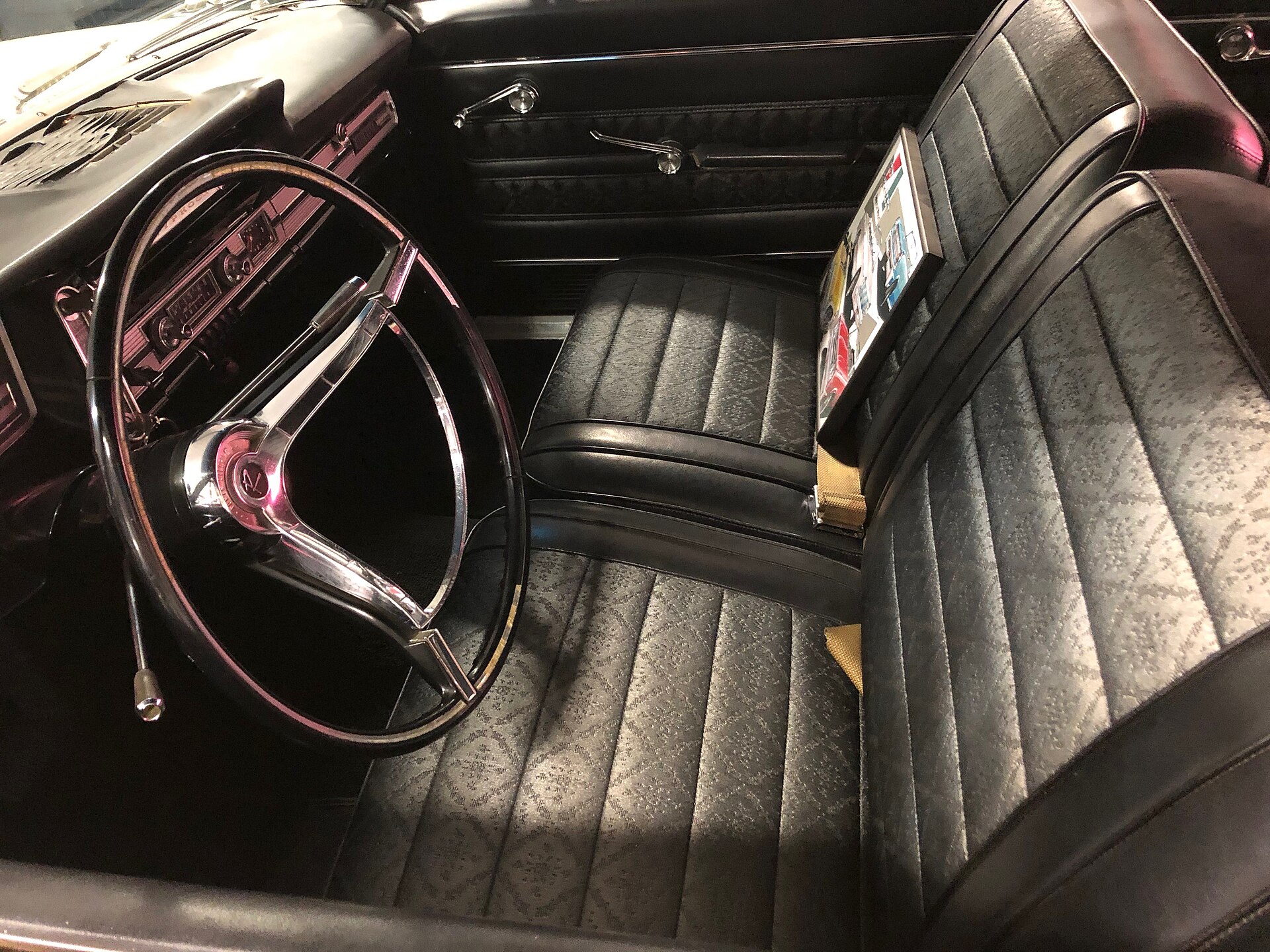
The presentation condition never allows deduction of a car’s administrative status. Photo: Christopher Ziemnowicz (CZmarlin), CC BY-SA 4.0, Rambler Ranch, via Wikimedia Commons.
Buyer’s checklist before paying the price
A blank CSA is necessary, but it alone is not sufficient to secure the purchase of a collector car. Before final payment:
- request a certificate dated less than 15 days old, ideally issued the same day;
- open the official HistoVec link provided by the holder;
- compare the plate, serial number, seller’s identity and registration certificate;
- verify that the seller is indeed the holder, except for documented intervention by an authorised professional or agent;
- search for unregistered intermediate transfers;
- condition payment on the effective lifting of any problematic mention;
- keep the report and supporting documents with the car’s file.
If an intermediary organises the transaction, clearly verify who is selling, who is receiving the payment, and in whose name the registration document is issued. Our guide dedicated to consignment sale of a classic car details the points to be covered in the mandate, insurance, and payment.
To prepare a sale before publishing an advertisement or entrusting a mandate, Plethore Cars presents its solutions for selling a classic car. This commercial link does not replace either the HistoVec check or, when the case is complex, the advice of a legal professional.
Can you buy if the certificate is pledged or has an opposition?
With a pledge, the sale is not automatically prohibited, but buying without a release exposes you to a disproportionate risk. The reasonable solution is to identify the debt, organise its repayment, and wait for an updated CSA.
With an opposition, the transfer of the registration document is blocked. The transaction must be postponed, even if the seller offers a significant discount or promises to resolve the issue after delivery. For a classic car to be restored, the visible mechanical cost should not mask a potentially definitive administrative obstacle.
If the opposition is only discovered after purchase, immediately gather the advertisement, the transfer certificate, proof of payment, correspondence, the issued CSA, and the response from France Titres. Ask the seller to regularise the situation in writing, with a precise deadline. Depending on the context and amount involved, legal advice may assess possible remedies; the administration alone does not settle the contractual dispute between seller and buyer.
Frequently asked questions
Is the certificate of non-pledge free?
Yes. The CSA can be generated free of charge by the holder on HistoVec. Beware of commercial websites charging for a procedure accessible on the official portal.
How long is the certificate valid?
For the transfer, it must be dated less than 15 days ago. For a significant transaction, generating one on the day of signing is an additional precaution.
Does a classic car registration change the rule?
No. The mention “classic vehicle” does not remove the obligation to provide the CSA for a used car registered in France.
Can the seller provide only a screenshot?
It is better to request the complete document or the official HistoVec link. The link allows the buyer to directly consult the information shared by the holder.
Can a pledged car be sold?
According to Service-Public, a pledge alone does not prohibit the sale, unlike an opposition. However, it remains prudent to obtain its release before payment and transfer.
What to do if HistoVec does not recognise an old registration?
Use the date on the registration certificate and not the date of first registration, then verify all data exactly. If the error persists, the holder must contact France Titres to have the file corrected.
Main sources
- Service-Public — Administrative Status Certificate: Non-Pledge and Non-Opposition : obligation, 15 day deadline, effects of pledge and opposition, principles of release.
- France Titres — The Administrative Status Certificate : detailed content of the CSA and free acquisition via HistoVec.
- Service-Public — Requesting the certificate with HistoVec : access to the online service, report data and sharing by the owner.
- HistoVec — I cannot find my vehicle : entering previous registrations and date of the certificate to use.
- HistoVec — Issues with vehicle data : service limitations and guidance towards France Titres for corrections.
Last check: 11 September 2026. Update recommended every six months or upon any changes to vehicle registration online services.