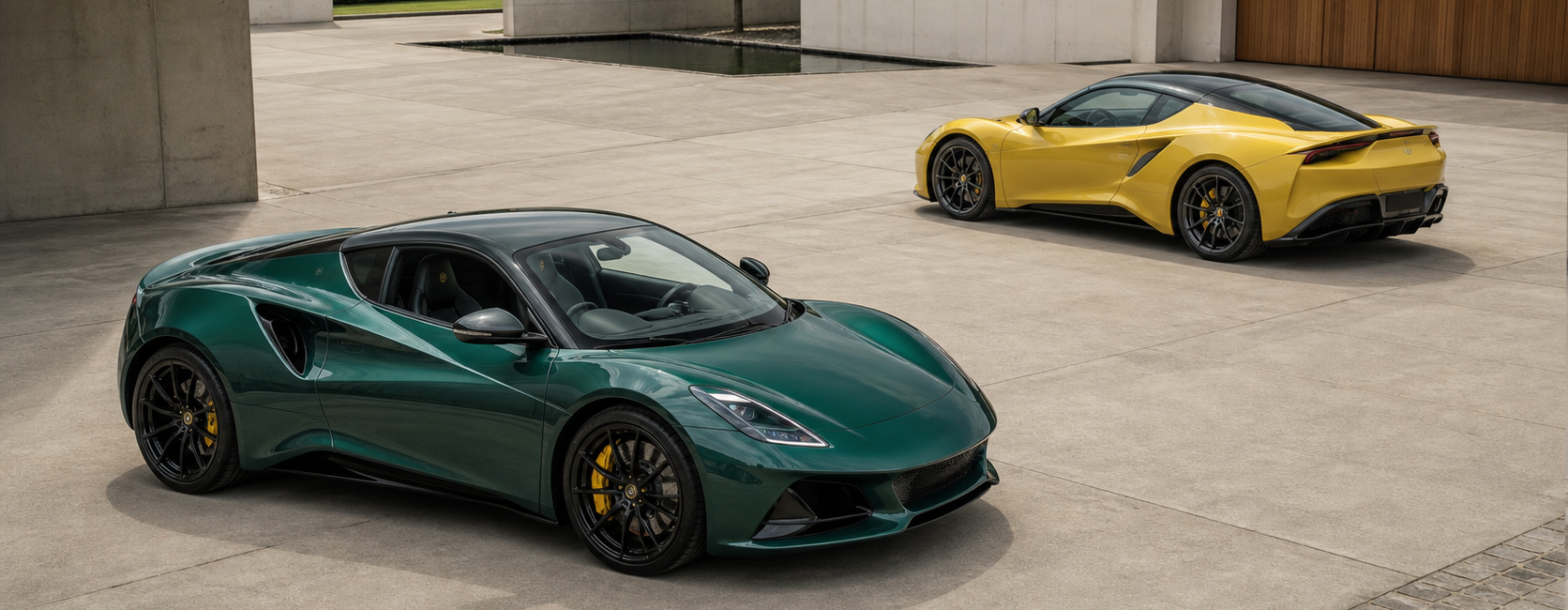
The Lotus Emira V6 SE and the Turbo SE share a silhouette and philosophy, but they do not offer the same relationship with the driver. The former retains a three-and-a-half-litre supercharged V6 paired with a six-speed manual gearbox. The latter uses a turbocharged four-cylinder and an eight-speed dual-clutch transmission. The choice should not be limited to the number of cylinders.
The short answer: choose the V6 SE if manual control and mechanical character are central to your project. Prefer the Turbo SE if you value the speed of the dual-clutch, frequent use, or shared driving. In both cases, the condition, maintenance, and configuration of a specific example matter more than a theoretical hierarchy.
Define the journeys that will actually make up the usage
List your usual routes: secondary roads, city, motorway, mountains, trips or occasional track use. Add parking, traffic, and driver constraints. A sports car chosen for an ideal moment can become frustrating if it does not correspond to real journeys.
Consult the Lotus available on PlethoreCars and compare them to the sports cars offered. The Emira should be judged against the alternatives you would use with the same frequency, not just against its range twin.
Choose the V6 SE for mechanical interaction
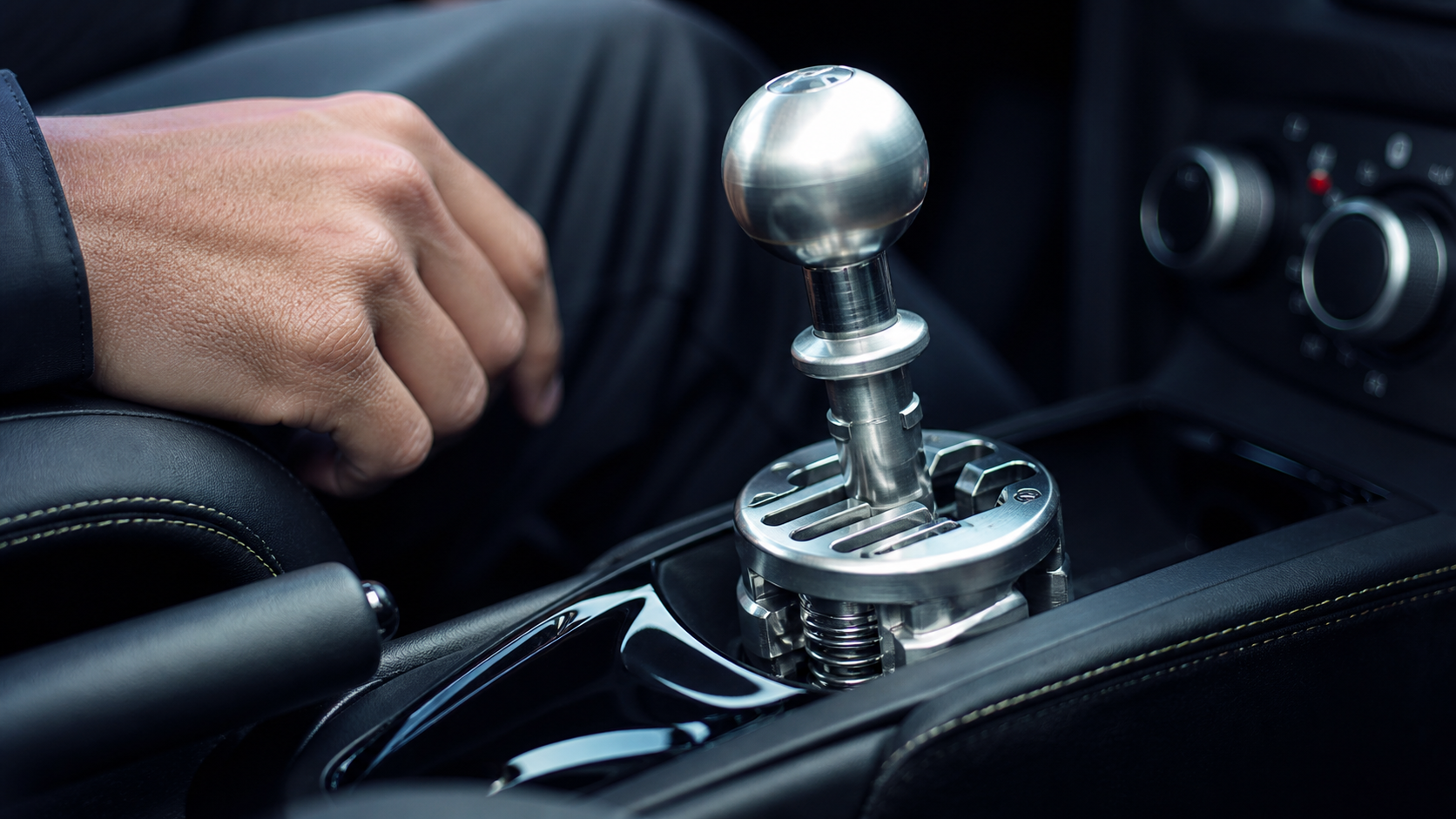
The V6 SE officially retains a three-and-a-half-litre supercharged V6 and a six-speed manual gearbox. This combination appeals to the buyer who wants to be involved in every acceleration, work the heel-and-toe technique, and accept a more engaging driving style in slowdowns.
The test should verify the quality of gear changes when cold and then warm, the biting point, the clutch’s progressiveness, and the pedal positions. A delightful control for ten minutes can become less suitable for regular urban use. It is also necessary to distinguish the desired character from a defect or imperfect adjustment.
Choose the Turbo SE for ease of use
The Turbo SE pairs a turbocharged four-cylinder with an eight-speed dual-clutch gearbox. This setup may suit the buyer who uses the car often, shares the wheel, or encounters traffic. It should not be considered a default choice: its pace and response must genuinely please you.
Test progressive starts, manoeuvres, acceleration, manual mode, and shifts under light load. A gearbox that is quick during strong acceleration must also be smooth in a car park or narrow street. Evaluate the sound in various situations, without trying to replicate the character of the V6.
Compare the chassis on an imperfect road
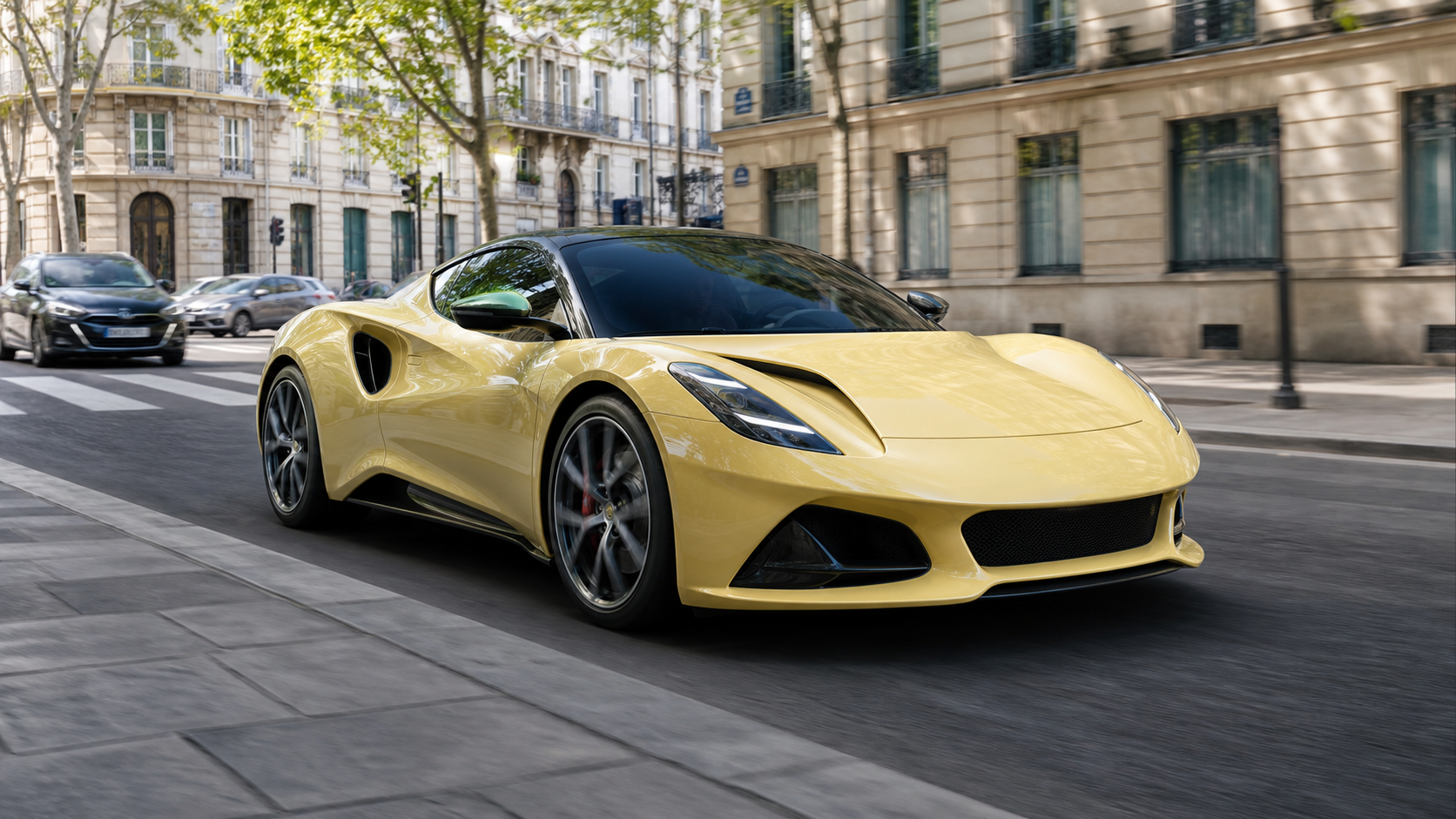
A Lotus is judged when the road varies. Request a route with joints, bumps, slow corners, and moderate braking. Observe the precision of the front axle, how the car absorbs irregularities, and the confidence it maintains when the surface deteriorates.
Compare the tyres, suspension settings, and the condition of the alignments. Two Emiras of different versions can seem close if well set up, or very different if one shows uneven wear or an unsuitable configuration.
Check the model year and exact documentation
Lotus publishes separate manuals according to the model years and requests checking the tenth character of the VIN to select the correct document. This simple step prevents applying procedures or equipment to a car that belong to a different model year.
Request the VIN before the visit, then gather the corresponding manual, the warranty guide, invoices, work carried out by the network, and any updates. The official page dedicated to the Emira warranty confirms that specific documentation exists: it is necessary to verify its applicability to the vehicle and the country concerned.
Inspect both versions with the same rigour
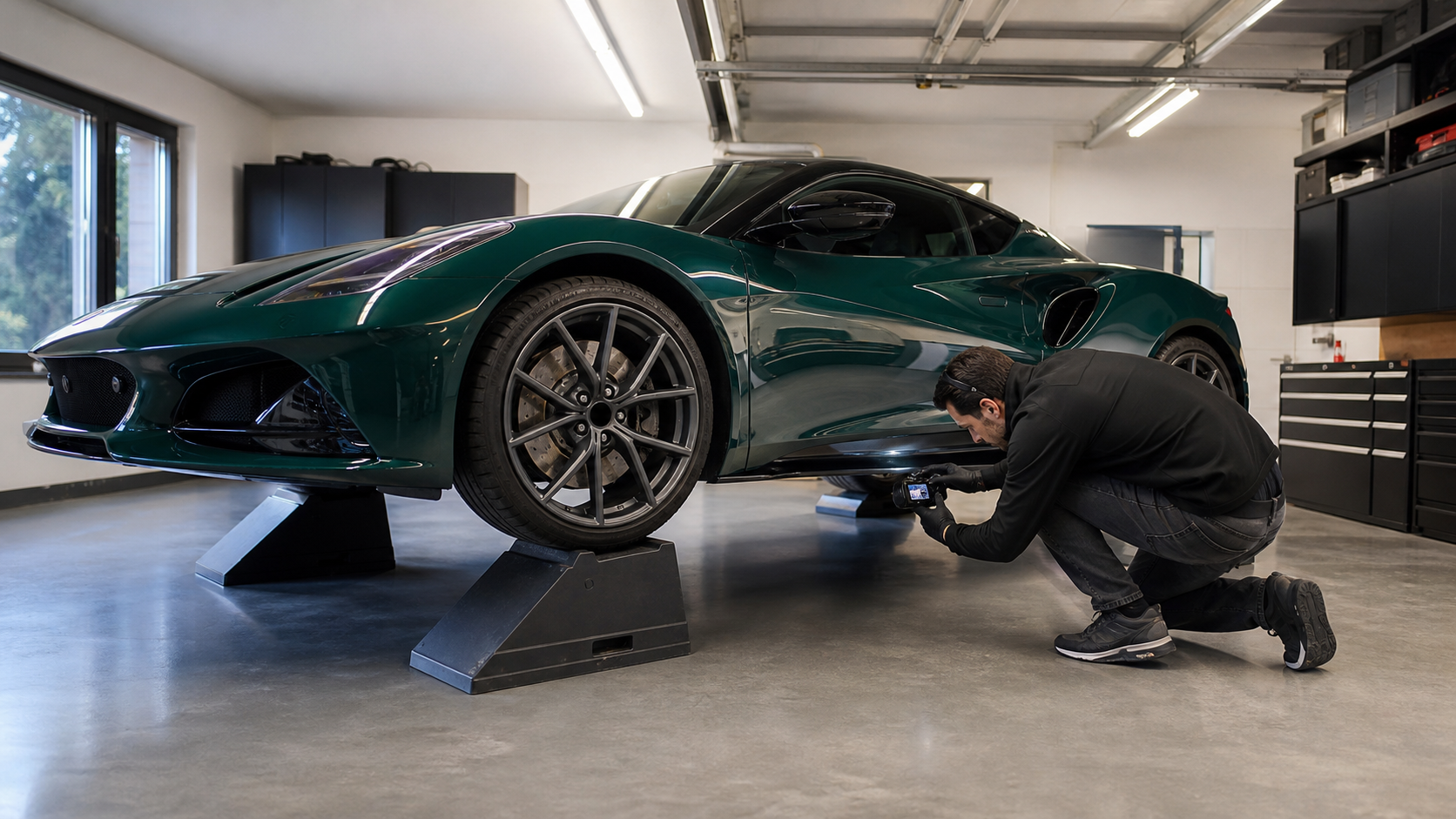
Check the underbody protections, sills, wheels, tyres, brakes, glazing and alignments. A low sports car can accumulate marks that are not visible in sales photographs. Request an illustrated report, not just a verbal assessment.
Test the air conditioning, screens, cameras, sensors, lighting, seats and all controls. Link each anomaly to the diagnosis and history. An intermittent function should be noted even if it returns to normal after a restart.
Read the maintenance as a chronology
Sort the invoices by date and mileage. Check consumables, warranty interventions, immobilisations and any changes of service centre. A lightly used car can be excellent, but its storage and restarts must be understandable.
The sports cars already sold show why a clear file accompanies the value. Photograph the condition on entry and keep the reports so as not to have to reconstruct the history at resale.
Do not confuse mechanical prestige with liquidity
A manual gearbox and a V6 can attract certain enthusiasts. This guarantees neither an increase in value nor a quick sale. Colour, options, condition, provenance and price consistency also influence the number of interested buyers.
The Turbo SE can appeal to a different audience thanks to its transmission and ease of use. The correct approach is to identify this audience and maintain an understandable configuration, rather than declare one version universally superior.
Compare the overall cost before signing
Add to the purchase price insurance, transport, parking, tyres, brakes, maintenance and corrections arising from the inspection. Keep a reserve available after acquisition. A perfectly configured car but without usage margin can lead to deferring interventions.
Also compare the warranty conditions applicable to each example. Never assume that coverage is transferable or identical from one country to another: obtain written confirmation corresponding to the VIN.
Verdict: choose the version you will use
The V6 SE suits the buyer who places the manual gearbox and mechanical character first. The Turbo SE better suits those who prioritise smoothness, quick control and more frequent use. No choice dispenses with a complete file and an independent inspection.
Our analysis of the 911 GT3 Touring offers another reading of interaction and desirability. From the purchase, also consider organising a future resalewhile preserving every piece of evidence.
FAQ
Which Lotus Emira should you choose for the road?
The V6 SE manual prioritises mechanical interaction. The Turbo SE with dual-clutch may be better suited for frequent, urban, or shared use. Testing on your own roads should be the deciding factor.
Is the manual gearbox enough to make the V6 more desirable?
No. The configuration, condition, maintenance, quality of gear changes, and suitability for your use remain decisive.
What should you check on a recent used Emira?
Check the VIN, the manual corresponding to the model year, recall campaigns and warranty operations, updates, tyres, brakes, lower areas, and the operation of all controls.
Should you buy the most powerful version?
Not automatically. The best version is the one whose transmission, chassis, comfort, and overall budget truly match your driving style.
These tips are general. Always verify the documents, history, compliance, independent inspection, insurance, applicable warranty, and current market conditions before purchase.