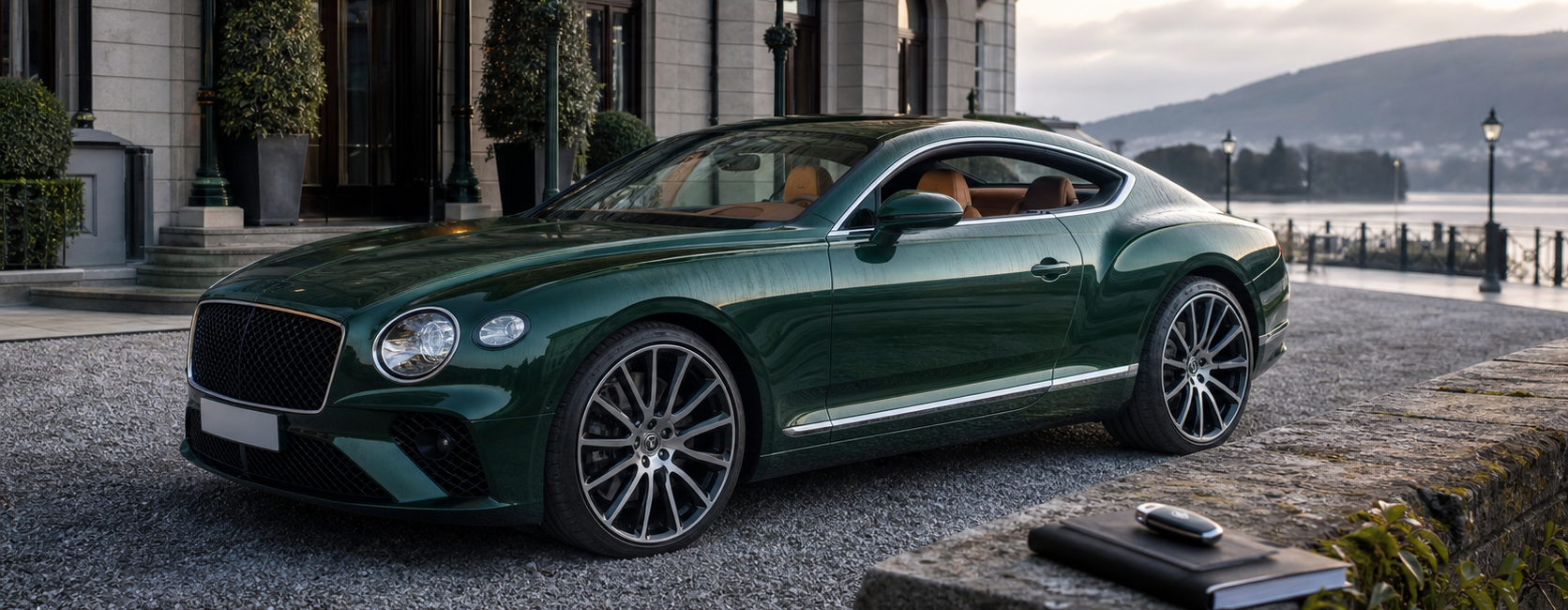
The Bentley Continental GT W12 has entered a new phase of its career. Bentley ceased production of its W12 engine in 2024, while the fourth generation Continental GT adopts a plug-in hybrid powertrain. For the used car buyer, the temptation is clear: to acquire one of the last great twelve-cylinder GTs before they become rarer.
The short answer: yes, a Continental GT W12 can be a very coherent purchase in 2026, but only if the example is impeccable. The end of the engine enhances the desirability of the lineage; it does not erase maintenance costs, the risks of a poorly maintained car, nor the depreciation of a configuration that is difficult to resell.
Why the Continental GT W12 is more appealing
The W12 embodies what has historically distinguished the Continental GT: effortless power, silence at cruising speed, torque reserve, and the ability to cross Europe in exceptional comfort. It is not a lightweight sports car, but a grand tourer capable of supercar acceleration while retaining four seats and a genuine boot.
The disappearance of the engine creates a clear boundary between two eras. The new Continental GT is more powerful and efficient thanks to hybridisation, but some buyers will prefer the straightforward narrative of a last W12: a large combustion engine, all-wheel drive, and a silhouette already familiar. To gauge the real offer, start by comparingthe Bentleys currently offered on PlethoreCars.
Which generation to buy?
First generation: entry price should not be the sole deciding factor
The first Continental GTs may seem very accessible considering their new price and performance. This is precisely where the risk is highest. A car bought at the price of a recent premium saloon remains a complex Bentley to maintain. Air suspension, electronics, cooling, transmission, brakes and tyres retain the costs of a prestige car.
This generation may suit an enthusiast with a competent specialist, a complete history, and a realistic financial reserve. It is less suitable for someone simply seeking the cheapest way to drive a Bentley.
Second generation: the compromise, provided the history is checked
More modern and better refined, the second generation often offers an interesting balance between presence, comfort and price. The most appealing examples combine a classic configuration, coherent mileage and a continuous maintenance record. A Speed or special edition may be more desirable, but the rarity of the name never compensates for unclear provenance.
Third generation: the last W12 easiest to understand
The Continental GT launched at the end of the 2010s still seems very current. Its design, interior and technology make it simpler to use daily. It is also the generation that most clearly carries the story of the end of the W12, particularly in its Speed versions and the final limited production series.
It requires a higher purchase budget, but its reduced age may limit some immediate upgrades. This does not exempt one from an inspection: a recent GT poorly stored, accident-damaged or minimally maintained remains a bad purchase.
The real annual budget of a Bentley Continental GT
The cost of ownership is not limited to the annual service. One must think in cycles and provision for irregular expenses. Their amount depends heavily on the generation, usage, chosen network and initial condition.
| Category | What to anticipate | Warning sign |
|---|---|---|
| Routine maintenance | Regular servicing, fluids, filters, diagnostics | Long periods without invoices |
| Brakes and tyres | High weight, large dimensions, costly wear | Mismatched or overly aged tyres |
| Suspension | Inspection of pneumatic components and running gear | Sagging car or noises on poor road surfaces |
| Electronics | Test all equipment, batteries and control units | Intermittent alerts or inactive functions |
| Bodywork | Paint, wheels, glazing and specific parts | Colour mismatches or irregular panel gaps |
The prudent rule is to keep a refurbishment budget separate from the purchase price. A pre-purchase inspection at Bentley or with a recognised specialist costs little compared to suspension, braking system or major electronic failure.
Essential checks before purchase
- Demand a continuous history.The service book alone is not enough: invoices, dates, mileages and work must be cross-checked.
- Carry out a full electronic diagnosis.The absence of a warning light on the dashboard does not guarantee the absence of stored faults.
- Test the car cold.Starting, idling, noises, smoke, warming up and gearbox behaviour must be observed.
- Check the suspension and running gear.The car’s weight stresses bushes, tyres, bearings and brakes.
- Measure the condition of the battery and charging circuit.Cars that are rarely used often suffer from insufficient voltage, a source of parasitic faults.
- Check for bodywork repairs.A repainted area is not automatically a deal-breaker, but it must be explained and properly carried out.
- Verify manufacturer recalls and service campaigns.The chassis number allows the network to confirm applicable interventions.
Configuration and resale: what offers the best protection
With a Bentley, personalisation is part of the pleasure. However, it can also significantly reduce the number of potential buyers when reselling. Elegant and coherent combinations generally remain more liquid: dark blue, black, grey, deep green, interiors in tan, brown or cream, wood veneers and stitching that align with the grand touring spirit.
Very flashy colours, irreversible modifications or an extremely customised interior require a more attractive price. Conversely, a Speed version, a documented final series or a particularly harmonious Mulliner configuration can benefit from greater desirability. Also consultalready completed sales filesto observe the importance given to presentation, documentation and overall coherence.
W12 or new plug-in hybrid?
The choice contrasts less two performances than two uses. The new plug-in hybrid offers useful electric range for short trips, immediate response and superior performance. It suits a buyer who wants the most modern Continental GT.
The W12 is more aimed at those who value mechanical character, historical continuity and a car whose main technology is already known. It is not automatically a better investment: taxes, usage restrictions, energy costs and regulatory changes can weigh on demand. It should primarily be purchased for its driving experience.
What alternatives to the Continental GT W12?
An Aston Martin DB11 or DBS favours a sportier atmosphere and a more demonstrative line. You can comparethe available Aston Martins. A front-engined Ferrari offers more mechanical tension and an image closer to a supercar; browsefront-engined Ferraris offered for sale. A Porsche Panamera Turbo prioritises daily efficiency and four genuine seats, but with a less ceremonial dimension.
The Bentley remains difficult to replace when the goal is to combine presence, silence, speed, artisanal finish and travel capability.
Verdict: a good W12 rather than a merely affordable W12
In 2026, the Continental GT W12 deserves its place on the list of a grand GT enthusiast. The end of production makes its history clearer, but the best strategy remains conservative: prioritise the third generation if the budget allows, seek an elegant configuration, demand a complete file and have the car independently inspected.
A cheap Bentley can become very expensive. An expensive but perfectly documented Bentley can be the most rational decision. When reselling, the quality of the file, photos and marketing will be decisive; an owner can notablyentrust the sale of a prestige carto a specialised contact.
FAQ
Will the Bentley Continental GT W12 increase in value?
The end of the W12 supports its desirability, especially for the latest Speed and limited editions. However, an increase is not guaranteed: condition, mileage, configuration, taxation and running costs will remain decisive.
Which Continental GT W12 is the most reliable?
It is safer to speak of the quality of the individual car rather than an infallible generation. A recent and well-maintained third generation limits the age of components, but each car must be diagnosed and inspected.
Can a Continental GT W12 be used every day?
Yes, if its size, fuel consumption and running costs are compatible with your journeys. Regular use and proper battery maintenance may be preferable to prolonged storage without monitoring.
What should be checked as a priority?
The invoiced history, electronic diagnostics, suspension, brakes, tyres, cooling system, batteries, bodywork and the presence of applicable manufacturer service operations.
These tips remain general. Before any purchase, have the documents, history, chassis number, mechanical condition and current market prices checked by competent professionals.