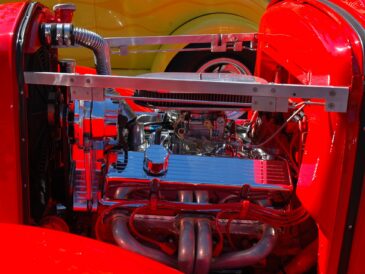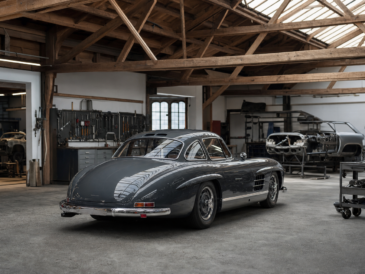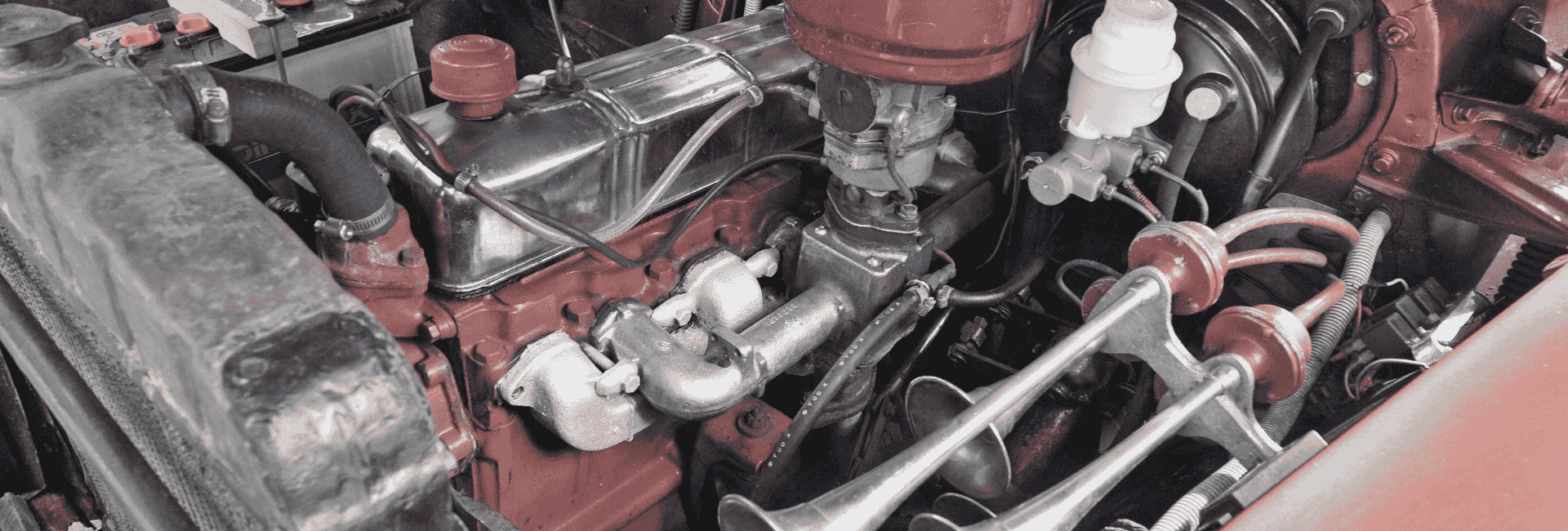
Just a dubious Weber carburetor installed on an Alfa Romeo Giulia Sprint was enough to ruin months of meticulous restoration. The anecdote, common in specialized workshops, illustrates a scourge that continues to grow in the world of classic cars: counterfeit spare parts.
The phenomenon is nothing marginal. In 2024, Mercedes-Benz participated in the seizure of more than 1,5 million counterfeit products through 793 operations carried out worldwide, according to the manufacturer’s official data. And while contemporary premium brands are at the forefront, the historic vehicle segment is not spared—on the contrary. The scarcity of original components, the continuous rise in the value of classics, and the opacity of certain distribution channels make it a particularly fertile ground for counterfeiters.
For collectors, the challenge is triple: preserve the vehicle’s authenticity, ensure its mechanical safety, and protect an often substantial investment. This article guides you in identifying counterfeit parts and the steps to take to secure your purchases of rare parts.
Why classic cars are a preferred target
The mechanics of scarcity
The market for parts for classic vehicles follows an inexorable economic logic: the older a model gets, the rarer its original components become, and the higher their value increases. A set of dashboard instruments for a Porsche 356 can cost several thousand euros. An original exhaust manifold for a Ferrari Dino 246 GT alone represents a five-figure investment. This mechanical inflation, natural and legitimate, creates a considerable opportunity for counterfeiters.
The phenomenon is amplified by the globalization of trade. Counterfeiters, primarily located in Southeast Asia and Turkey, now have sufficiently advanced manufacturing technologies to produce visually convincing replicas. The Marseille customs department thus seized nearly 80 000 counterfeit car parts in 18 months, all originating from Turkey, for an estimated value of four million euros (source: France Bleu / French Customs, 2024).
The rise of unregulated sales channels
Online shopping has profoundly transformed collectors’ habits. While specialized platforms have made it easier to access pieces that were once unavailable, they have also opened the door to unscrupulous sellers. On general marketplaces, the collector only sees the item in a photo—and counterfeiters frequently use images of authentic components to illustrate their listings. The lack of physical inspection before purchase makes detection almost impossible for an uninformed buyer. The choice of purchasing channel weighs as heavily as expertise:our guide to spare parts websites compares them.
The most frequently counterfeited pieces in the collection world
Not all components are targeted with the same intensity. Counterfeiters prefer parts with high demand, high margins, and relatively simple visual reproduction.
The braking elements
Brake pads, discs, and calipers are among the most copied parts, all combined into one segment. The danger is immediate here: comparative tests carried out by manufacturers have shown that the braking distance of a vehicle equipped with counterfeit brake pads can double to 110 km/h compared to genuine brake pads (source: UseYourLaw / PSA manufacturer data). On a classic car without ABS, the consequences can be dramatic.
Body and upholstery parts
Enjoliveers, chrome handles, vintage mirrors, control buttons: these items, highly sought after for concours restorations, are often reproduced but are often crude yet sufficiently similar to deceive an untrained eye. Quality differences are usually evident over time—finishes that deteriorate, chrome that flakes off, and approximate adjustments.
Mechanical and electrical parts
Alternators, starters, water pumps, electrical wiring harnesses: these components are particularly problematic because their quality only becomes apparent with use. A counterfeit mechanical part can function correctly for a few weeks before failing, sometimes leading to cascading damage to other vehicle components.
The “NOS” (New Old Stock) parts
These vintage new pieces, stored since the end of the model’s production, represent the restaurateur’s dream. Their high value makes them particularly vulnerable to counterfeiting. Forgeries are not hesitant to “age” recently produced reproductions artificially to make them appear as authentic NOS items.
Concrete methods for identifying a counterfeit
The visual examination: the details that betray
The first line of defense remains careful observation. Several visual cues allow you to spot a suspicious piece.
On original components, the manufacturer usually engraves its brand, a reference number, and sometimes a foundry code or a production date. The absence of these markings, or their presence in a different typography from that used at the time, constitutes an immediate warning sign. The quality of the finish—moldings, surface irregularities, paint thickness—also provides valuable clues. Authentic pieces from the 1950 to 1970 years, even used, exhibit a level of finish that cheap reproductions struggle to replicate.
Packaging also deserves special attention. Original manufacturers used specific packaging, identifiable by their colors, logos, and cardboard weight. Generic packaging or packaging that displays different graphics from the original constitutes a serious indication of counterfeiting.
Verification of serial numbers and OEM references
Each original part carries an OEM (Original Equipment Manufacturer) reference number that allows it to be linked to a model, a production year, and a precise technical specification. This number is the key to any authentication process.
However, it is important to keep in mind that this number does not guarantee authenticity on its own: counterfeiters are perfectly capable of reproducing an OEM code. Therefore, verification must cross-reference the reference number with other indicators—the quality of the engraving, the consistency of the typography, and compatibility with the manufacturer’s technical documentation.
For brands that have developed heritage programs — Porsche Classic, Mercedes-Benz Classic, Alfa Romeo Classiche, Fiat Heritage —, it is possible to have a reference number verified directly with the manufacturer’s historical department. For example, Porsche Classic offers a catalog of more than 50 000 parts for its historic models, with authenticity guarantees.
The use of a qualified expert or restaurateur
In doubt, human expertise remains irreplaceable. Specialized restaurateurs develop a tactile and visual sense that no analytical framework can fully replace. They know the specific characteristics of foundry techniques unique to each era, the manufacturing tolerances specific to each factory, and the subtle design evolutions that have shaped the production of a model.
Brand clubs and associations — FFVE (French Federation of Antique Vehicles) in France, FIVA (International Federation of Antique Vehicles) on a global scale — also constitute valuable resources. Their experienced members can guide a collector to trusted suppliers and help authenticate specific parts. These networks serve as reliable platforms, brought together inour top 10 of car parts websites for old cars.
The most common mistakes to avoid
Trust only in the price
An abnormally low price is the most obvious warning sign, but it is not the only trap. Some counterfeiters position their products at prices close to market rates to enhance the illusion of authenticity. Vigilance must be exercised regardless of the price level.
Buy under pressure
Impersonators excel at creating artificial urgency. Announcing a rare item accompanied by the phrase “last available copy” or “several interested buyers” is designed to bypass the time for reflection and verification. A truly authentic item always deserves a period of analysis before purchase.
Neglect traceability
A part sold without any provenance history—no original invoice, no mention of the donor vehicle, no workshop documentation—should raise suspicion. Traceability is one of the pillars of authentication in the collection world. Serious sellers are generally able to provide a minimum amount of context about the origin of the component.
Confuse adaptable piece and counterfeit
It is essential to distinguish between these two categories. An adaptable part is a component manufactured by a third-party supplier, designed to be compatible with a specific model, without claiming to be an original part. It is legal and sometimes of good quality. Counterfaking, on the other hand, deliberately usurps the visual identity and markings of a manufacturer to be presented as an authentic component. European regulations clearly distinguish these two scenarios.
The good habits to secure your purchases
Prefer specialized distribution channels
Suppliers specializing in parts for classic vehicles—whether independent or affiliated with a brand network—offer a first level of guarantee. Their reputation is built on the reliability of their catalog, and many of them provide personalized technical support, compatibility checks, and, sometimes, authenticity certificates.
Attend exchange fairs and specialized exhibitions
The dedicated events — Rétromobile, Epoqu’Auto, Techno-Classica Essen — allow you to inspect the parts in person before making any purchase. Direct contact with the sellers and the opportunity to compare several copies constitute natural filters against counterfeiting.
Systematically document your purchases
Keeping the invoices, photos before assembly, serial numbers and correspondence with the seller creates a traceability file that protects the buyer and the future value of the vehicle.
Leverage authentication technologies
Some manufacturers and equipment suppliers are now deploying digital solutions: holograms, QR codes linked to databases, safety labels with the 3D effect. For example, Stellantis has implemented a labeling system that allows customers to verify the authenticity of a component by simply scanning it. These tools, which are still emerging in the collection field, are gradually being generalized.
To remember: expert advice
Authenticating a rare piece of art relies on a cluster of converging clues, never on a single criterion. Here are the fundamental principles to keep in mind.
First, systematically cross-check your sources of information. Verification of the OEM number, visual inspection, consultation with an expert, and searching for documentation form a cohesive set. None of these elements, taken individually, are sufficient to guarantee authenticity.
Secondly, prioritize short-circuits and identified sellers. A specialized supplier who commits to their reputation on every sale offers an incomparably higher level of trust than an anonymous seller on a general marketplace.
Thirdly, invest in the relationship with specialists. Experienced restaurateurs, brand clubs, and automotive experts form a network of skills whose value far outweighs the cost of a consultation.
Fourthly, never compromise on safety components. Brakes, suspension, steering, tires: for these critical components, any slightest uncertainty about authenticity must lead to immediate replacement. The risk is not only financial—it is human.
Finally, document every intervention. A complete and rigorous restoration file protects your investment, facilitates future transactions, and contributes to the preservation of automotive history.
FAQ
How to verify the authenticity of a NOS (New Old Stock) part for a classic car?
An authentic NOS piece generally features packaging that is consistent with the vehicle’s production period, foundry or manufacturing markings that conform to the manufacturer’s specifications, and a condition that is suitable for extended storage. Beware of artificially aged packaging and cross-reference the reference number with the manufacturer’s technical documentation or brand club databases.
What are the legal risks associated with buying counterfeit parts?
In France, the possession and use of counterfeit parts constitute a criminal offense under the intellectual property code. Beyond the criminal aspect, installing non-approved parts can result in the loss of the vehicle’s registration permit, refusal of compensation by the insurer in case of an accident, and failure of the technical inspection.
Are the manufacturers’ “Classic” programs reliable for sourcing original parts?
The heritage departments of major manufacturers — Porsche Classic, Mercedes-Benz Classic, Jaguar Heritage, BMW Classic — are among the most reliable sources. They guarantee the authenticity and technical compliance of their parts, even though their prices are generally higher. For models covered by these programs, it is often the safest solution.
What should we do if we discover a counterfeit part already installed on our vehicle?
Replacement should be considered without delay, especially if it involves a component related to safety (braking, steering, suspension). Keep the suspect part and the corresponding purchase documentation, which may be used in case of a claim against the seller. Feel free to report the seller to the appropriate authorities and alert the collector communities to prevent other buyers.
conclusion
Counterfading of rare pieces is not an anecdotal phenomenon: it is a structural challenge that every collector sooner or later faces. In a market where the value of historic vehicles continues to increase, counterfeiters are perfecting their methods and expanding their distribution channels.
In the face of this reality, the best protection remains knowledge. Knowing how to inspect, question, verify, and surround yourself with experts transforms a risky purchase into a controlled process. Beyond the financial stakes, it is the very integrity of the automotive heritage that is at play with every authenticated part.
You are restoring a classic vehicle and want to deepen your knowledge about authenticating original parts? Plethore accompanies you through its specialized dossiers and dedicated guides for the preservation of automotive heritage.