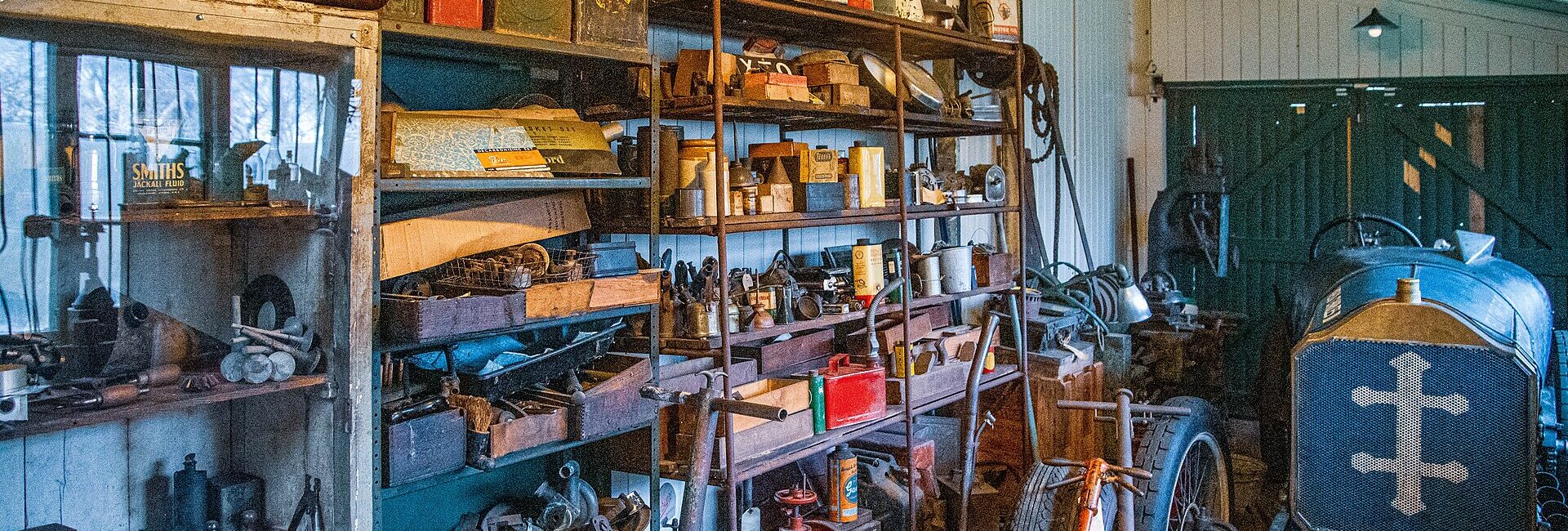
Finding a part for a classic car is not necessarily difficult. Findingthe correct reference, in the right condition and at a fair priceis more challenging. Between original new old stock parts, second-hand, reuse, reproduction and modern adaptations, the best channel depends on the model, the component sought and the level of authenticity expected.
The best approach is therefore not a single website. It is a method: precisely identify the part, consult the most knowledgeable networks, compare options and secure the purchase. Here is the search order that works best for maintaining or restoring a classic car.
The essentials in 30 seconds
- Start with the reference, not the common name of the part.
- For a rare part, first contact themodel or brand club.
- For a wear part, compare specialists, recognised reproductions and equipment suppliers.
- For an original part that has become unobtainable, look toauthorised end-of-life vehicle (ELV) centres, professional reuse operators and swap meets.
- Always request detailed photos, dimensions, origin and return conditions.
- For braking, steering, suspension and fuel supply parts, have the solution validated by a competent professional.
Before searching: precisely identify the part
The quickest way to waste time is to search for “carburettor for 205” or “headlight for 911” without further detail. The same car may have had several configurations depending on the year, factory, export market or serial number.
Prepare a search sheet including:
- the make, model, version and first registration date;
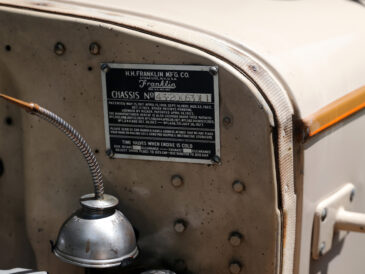
- the chassis number or VIN;
- the engine type and, if possible, its number;
- the reference engraved, moulded or printed on the old part;
- the dimensions and number of fixings;
- clear photos of the part, its connectors and its location;
- the reference from the manufacturer’s catalogue or technical manual.
On a classic car, the removed part is often your best sample. Do not discard it before comparing the replacement. It may also be repairable or serve as a core for an exchange.
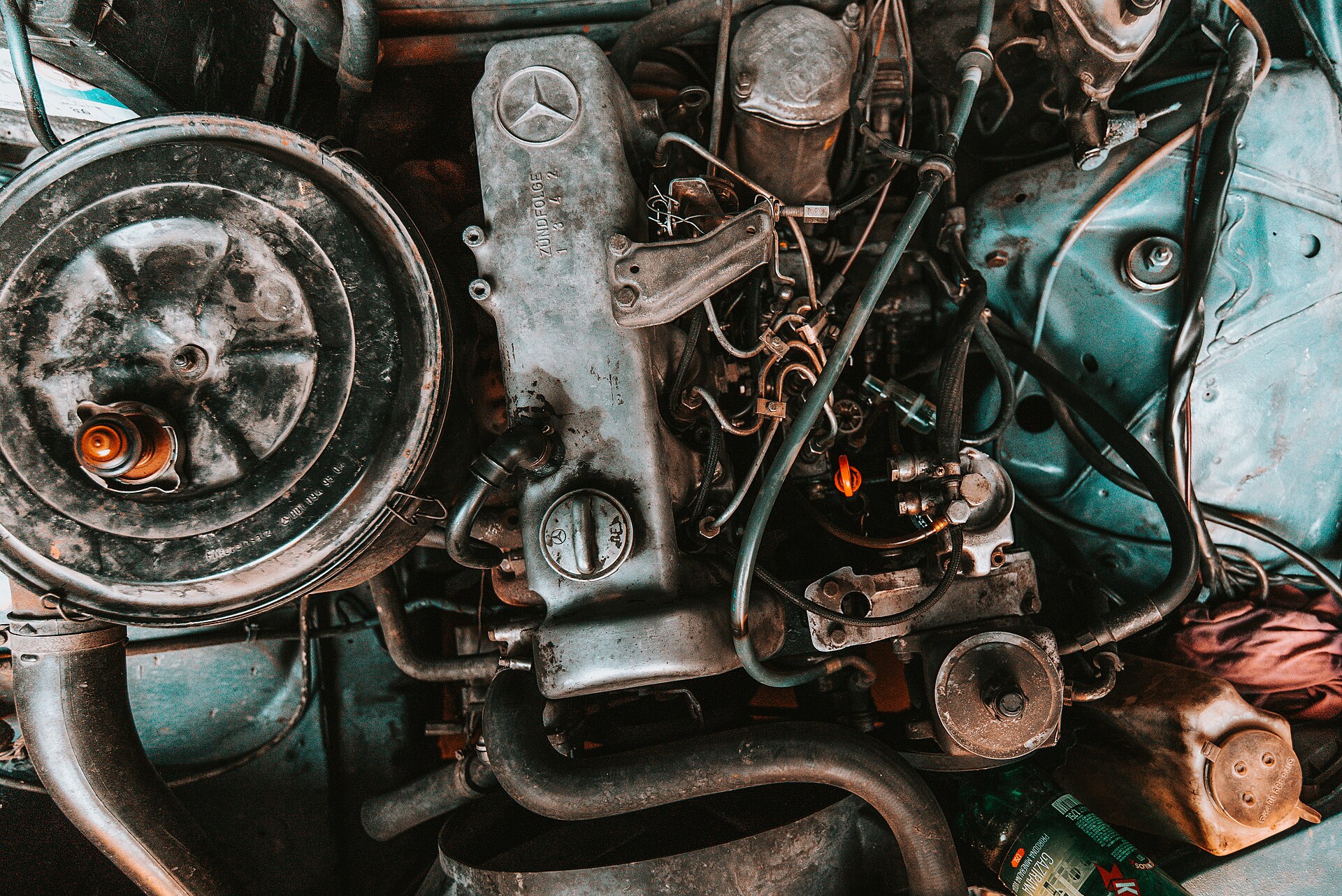
Photo: Nenad Stojković / Wikimedia Commons, CC BY 2.0. Image cropped and resized.
1. Brand clubs: often the best first reflex
For a specific part, a serious club is often more effective than a search engine. Its members know which references are interchangeable, which reproductions are reliable and which suppliers truly know the model. Some clubs also organise group purchases, hold internal stock or connect sellers and owners.
The Fédération Française des Véhicules d’Époque (FFVE) reminds that clubs provide access to technical archives, internal exchanges and group orders. Its directory allows finding a structure by make, model or region. This is particularly useful for body parts, trim, fittings or elements produced in small series.
The right message to send to a club is a few lines: complete vehicle identification, sought reference, photo of the part and location. Avoid a simple “I’m looking for this part, who has one?”: the more precise the request, the more relevant the response.
2. Specialists and manufacturer channels
For common mechanical parts or reproductions, prioritise a recognised specialist for the model or brand. They can verify compatibility, explain differences between two assemblies and indicate any necessary modification. This expertise often outweighs a small saving on an uncertain reference.
Some brands or heritage associations maintain their own supply chain. For example, L’Aventure Peugeot Citroën DS markets parts from historic stocks as well as reproductions and announces more than 24 000 references. Other manufacturers have “Classic” or “Heritage” departments. Always check if the brand has an official structure before turning to an adaptation.
A reproduction is not automatically inferior to an original part. For a gasket, hose or silent block, a correctly specified modern material may even be preferable to old stock hardened by time. However, ask who manufactures the part, according to which specifications and with what feedback.
3. Second-hand parts and professional reuse
A used original part can be the best solution for a handle, mechanism, headlight unit, body part or trim element no longer manufactured. Authorised end-of-life vehicle centres and professional reuse platforms offer better traceability than an anonymous listing.
The DGCCRF specifies that parts from the circular economy can notably come from authorised ELV centres. Repairers must offer, in the categories provided by regulations, a circular economy part instead of a new one. Platforms like Opisto distribute parts from ELV centres presented as checked and guaranteed.
For a classic car, do not rely solely on the indicated model. Request the exact reference, donor vehicle, its year and photos of all sides. For an electrical part, check voltage, connectors and numbers on the casing.
4. Swap meets and shows: the good plan to compare in person
Parts swap meets remain essential. You can compare two assemblies side by side, talk with professionals, rummage through old stock and leave with a part difficult to ship. Major automotive events, regional shows and club swap meets often bring together sellers, reproducers and technical documentation.
Arrive with the old part, a caliper, your references and photos. Note the seller’s name and ask for an invoice when dealing with a professional. A label “part of 404” is not proof of compatibility: check dimensions and fixings before paying.
The FFVE and brand associations publish event calendars. The Bourse Classique of L’Aventure Peugeot Citroën DS, for example, announces parts for all brands, old stock, reproductions and technical documentation. This is exactly the kind of event where a rare search can succeed.
5. Classified ads and marketplaces
General marketplaces, auction sites and enthusiast groups greatly expand the choice. They are suitable for hubcaps, instruments, body parts, accessories, workshop manuals or restoration lots. However, they require greater vigilance.
Before paying:
- demand several photos taken by the seller, not catalogue images;
- ask for a photo of the reference with a dated paper;
- check the account’s age and consistency of other listings;
- prefer payment methods with buyer protection;
- refuse any pressure to leave the messaging system or pay by irreversible means;
- agree in writing on the announced compatibility and return conditions.
A rare part listed far below market price, with only one blurry photo, should be considered suspicious. Our guide onrare parts and counterfeitsdetails useful checks.
6. Repair, refurbish or reproduce
When the part no longer exists, repair is often the smartest route. A radiator can be rebuilt, a starter or alternator reconditioned, a carburettor restored, a pump rebuilt and a metal part reproduced by a qualified workshop.
Exchange standard allows receiving a refurbished unit against return of the old one. Always keep the “core” of the part. For a one-off reproduction, provide a detailed plan and choose a workshop familiar with classic cars.
3D printing may suit some buttons, covers, ducts or non-structural elements. It must not be improvised for parts subject to high stress, heat, fuel or involved in safety. In these cases, the material and process must be validated by a professional.
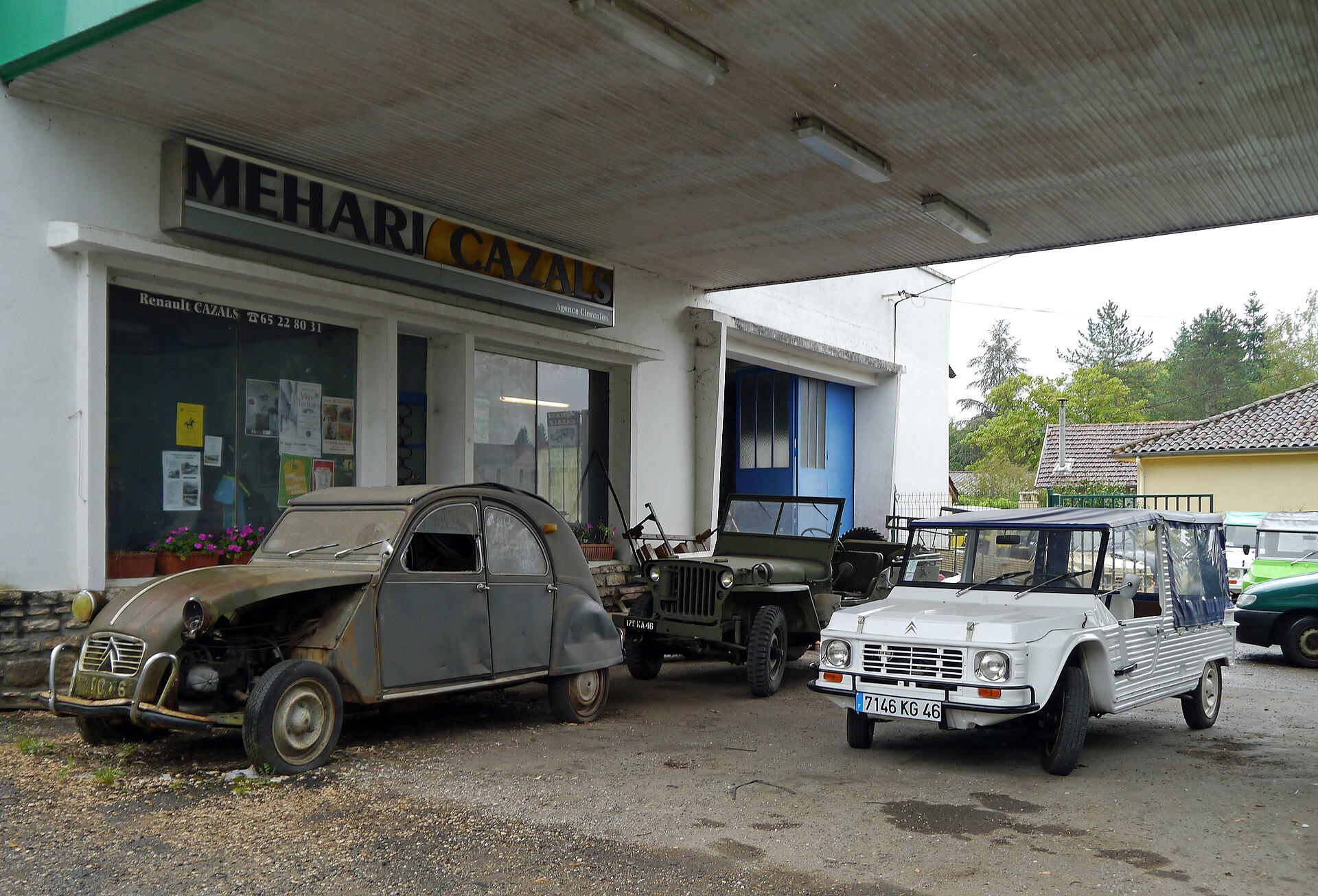
Photo: Mic from Reading / Wikimedia Commons, CC BY 2.0. Image cropped and resized.
Which channel to choose depending on the part sought?
| Part sought | First channel to try | Relevant alternative | Main vigilance |
|---|---|---|---|
| Filter, bearing, ignition, belt | Specialist or equipment supplier | Cross-reference at a distributor | Brand, dimensions and manufacturing date |
| Gasket, hose, silent block | Recognised reproduction | Manufacture from model | Compatibility with fuels, oils and temperature |
| Light, handle, dashboard | Club or model specialist | Professional second-hand or swap meet | Version, side, condition and fixings |
| Bodywork, bumper, glazing | Specialist or reuse | Swap meet, ad with handover | Corrosion, deformation and transport cost |
| Alternator, starter, carburettor | Reconditioner | Exchange standard | Keep the old part and its reference |
| Braking, steering, suspension | Specialised professional | New part or documented reproduction | Safety, origin and conformity |
| Unobtainable part | Club, archives and international network | Professional reproduction | Plan, material and workshop responsibility |
NOS, second-hand or reproduction: which to choose?
ANOS (“New Old Stock”) part is an old part never fitted. It can be ideal to preserve a car’s authenticity, but its age does not guarantee its condition. Rubber, membranes, gaskets, glues and some electrical components can degrade in storage.
A second-hand part often preserves the original design and markings. It suits removable and inspectable elements well. Its wear must be measured, not just judged from photos.
Reproduction is relevant when the original part has become rare or unusable. Its quality depends on the manufacturer and specifications. Look for feedback from a club, the producer’s identity and a clear invoice rather than a vague promise of “original quality”.
Checklist before buying
- Compare the seller’s reference with that of the vehicle and the removed part.
- Check dimensions, left or right side, connectors and number of fixings.
- Request current, clear and unmanipulated photos.
- Know the real condition: recent new, NOS, reconditioned, tested second-hand or simple part to restore.
- Obtain the manufacturer’s name and country of production for a reproduction.
- Confirm the total price including shipping, deposit, taxes and possible return fees.
- Keep the listing, exchanges, invoice and lot reference.
- Have the part checked before fitting when it concerns safety.
Keep these documents in the vehicle’s historical file. They will help explain the work done and reassure a future buyer. If a major restoration changes the car’s value, you can also request afree valuation of your vehicle.
Costly mistakes
The first mistake is buying too quickly a “compatible” part without verifying the reference. The second is confusing new appearance with mechanical quality. A third is fitting a rare part before photographing and documenting it.
Also beware of incomplete sets: a cheap bumper can become very costly if its rare fittings are missing. For heavy or fragile parts, calculate transport and inspect the planned packaging. Finally, never sacrifice safety for authenticity: an invisible but properly made part is better than a cracked or out-of-tolerance original element.
The real good plan: build your network before a breakdown
A classic car owner benefits from joining a club, registering two or three serious suppliers and meeting a specialist before an emergency. Also create a list of maintenance references and reasonably buy hard-to-find consumables, without hoarding parts whose materials age poorly.
If you are still searching for the model that fits your project, consult theclassic cars offered on Plethore Cars. For a more commercial selection of suppliers, ourranking of classic car parts websitescomplements this methodological guide.
Frequently asked questions
Where to find an unobtainable classic car part?
Start with the brand or model club with the exact reference and a photo. Then consult specialists, manufacturer heritage structures, swap meets, authorised ELV centres and reconditioners. If nothing exists, consider a professional reproduction from the old part.
Is a NOS part necessarily better?
No. It has never been fitted, but it may be several decades old. Gaskets, membranes, hoses, tyres, glues and electrical components must be inspected and sometimes replaced despite their new appearance.
Can a second-hand part be fitted on a classic car?
Yes, if it is compatible, in good condition and suitable for its use. For safety components, have it checked and fitted by a professional. A reused part from a professional generally offers better traceability than an anonymous sale.
How to verify that a part is compatible?
Cross-check the manufacturer’s reference, chassis number, engine type, dimensions, connector and fixings. Do not rely solely on the model name or year indicated in the listing.
Do clubs sell parts?
Some hold stock, organise reproductions or group orders. Others simply connect members and share references of tested suppliers. Their knowledge of variants is often their main advantage.
Should old replaced parts be kept?
Yes, when they are rare, repairable, core parts or bear a reference. They can serve as a model for reproduction and contribute to the car’s historical file. Ask the repairer to return them if you wish to keep them.
Sources consulted
- FFVE — Why join a club this year?: technical archives, group purchases, exchanges and mutual aid among members.
- DGCCRF — Vehicle maintenance and repair: repair order, invoice, replaced parts and circular economy parts.
- DGCCRF — Survey on garages and automotive centres: offering reuse parts and role of authorised ELV centres.
- L’Aventure Peugeot Citroën DS — Restoring or maintaining your car: historic stocks, reproduced parts and parts catalogue.
- L’Aventure Peugeot Citroën DS — Bourse Classique 2026: sale of old parts, reproductions and documentation.
- Opisto — Presentation of the sector: second-hand parts from ELV centres.
Information verified on 19 October 2026. Catalogues, stocks and commercial conditions evolve: always check references and guarantees at the time of order.