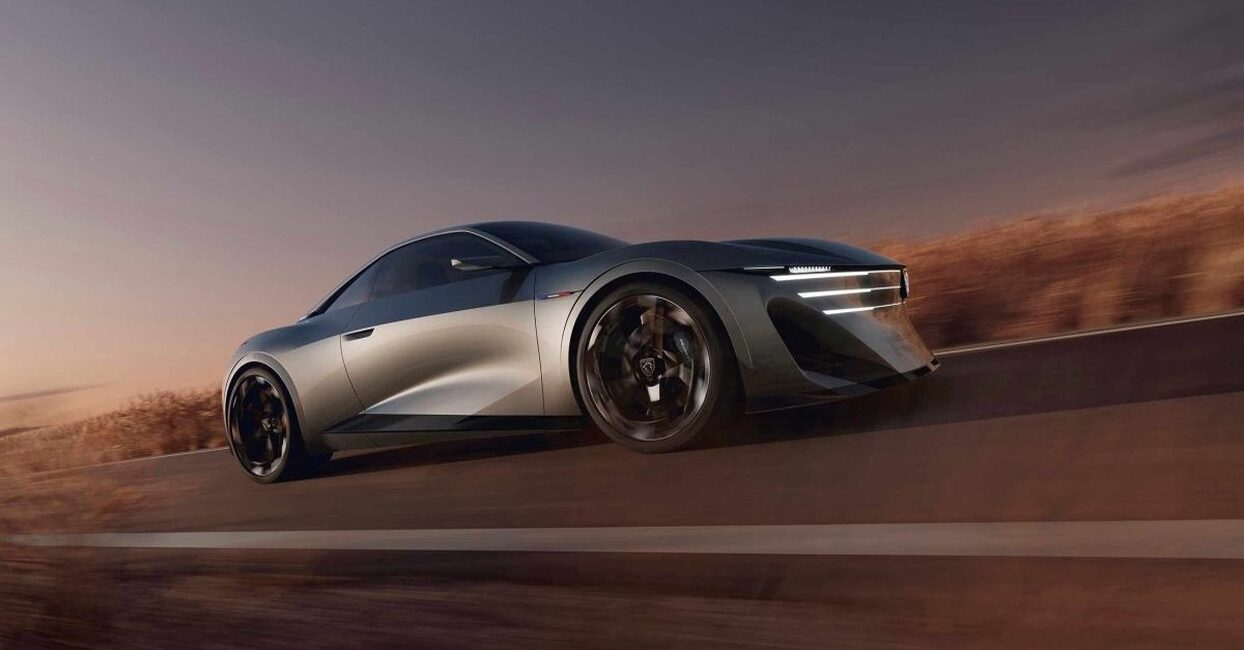
The Paris Motor Show 2026 opens to the public from 13 to 18 October at Paris Expo Porte de Versailles. This 91th edition brings together more than 60 manufacturers and confirms two major trends: the return of more modest small electric cars and the deliberate use of automotive heritage to imagine the models of tomorrow.
The Citroën 2 CV, Alpine A310, Peugeot RCZ, Audi A2, and the two-seater smart are thus back in the spotlight. But beware of shortcuts: some vehicles on display are already intended for commercial release, while others remain design studies without an industrial timeline. Here are the ten major new models of the Paris Motor Show 2026 with their actual status and information confirmed by the manufacturers.
The new models of the Paris Motor Show 2026 at a glance
| New model | Status at the show | Key points to remember |
|---|---|---|
| Citroën 2 CV Concept | Concept car | A small European electric car envisaged for 2028 |
| Alpine A310 VISION | Independent design study | A tribute to the A310, without direct preview of a production model |
| Peugeot RCZ Vision | Concept car | A four-seat electric coupe with sporting ambitions |
| Peugeot E-T16 Concept | Concept car | A radical vision of the next generation of 208 electric |
| Renault E-Space Concept | Concept car | An electric family car that reinterprets the “car to live in” concept |
| smart #2 | Production model | The return of a genuine two-seater electric city car |
| Audi A2 e-tron | Production model | An efficient electric compact announced with up to 646 km WLTP range |
| Lancia Gamma | Production model | Lancia’s new flagship, hybrid or electric |
| Fiat Grizzly and Grizzly Fastback | Models presented in Europe | Two multi-energy family body styles |
| Opel STX Concept and GSE 27FE | Concepts | A forward-looking estate and an experimental electric sports car |
1. Citroën 2 CV Concept: the return of the essential car
The Citroën 2 CV Concept is probably the most popular revelation of the show. Measuring 3,76 metres long, this electric city car reprises several identifiable design cues from the original 2 CV: separated headlights, rounded wings, simple silhouette and retractable roof.
Citroën is not content with a nostalgic exercise. The brand indicates that a European production model inspired by the concept is envisaged around 2028, with a targeted starting price of approximately 15 000 euros under the forthcoming European “E-Car” regulations. This ambition remains conditional: no definitive power, battery capacity or range figures have yet been announced.
The real question posed by the concept therefore goes beyond its style. Is it possible once again to manufacture a light, simple and affordable automobile in Europe? For enthusiasts, this approach is more faithful to the spirit of the 2 CV than a literal copy of its bodywork.
To explore the subject further, find our analysis of the new Citroën 2 CV electric presented in 2026.
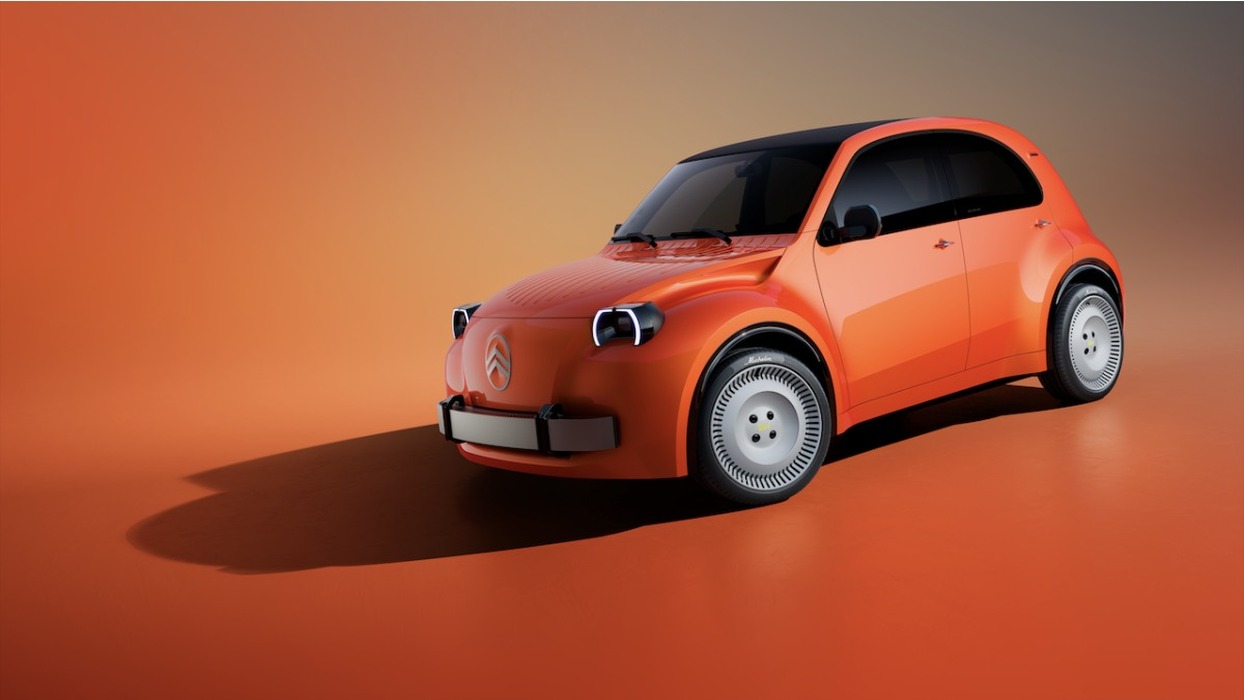
Citroën 2 CV Concept. Press photo: © Citroën / Stellantis, used for editorial purposes. Source: official Citroën newsroom.
2. Alpine A310 VISION: a spectacular tribute, but not the future A310
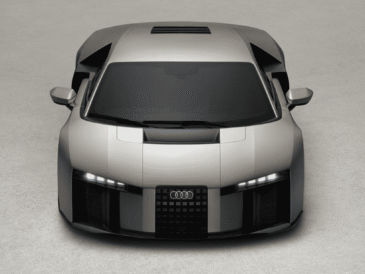
TheAlpine A310 VISION celebrates both the 55 years of the four-cylinder A310 and the 50 years of the A310 V6. The concept measures 4,55 metres long and only 1,18 metre high. Its very wide rear, taut surfaces and aerodynamic work offer a futuristic interpretation of the historic sports car.
Alpine specifies, however, that this is an “independent design study“. It should not be presented as an exact preview of a future production A310. The brand is indeed working on expanding its electric sports range, but the style, mechanics and timing of any potential commercial successor are not automatically derived from this prototype.
This distinction is essential at a show where a historic name can create more expectations than the manufacturer’s press release. Our article dedicated to theAlpine A310 VISION at the Mondial 2026 goes into detail about its proportions and positioning.
3. Peugeot RCZ Vision: the coupé returns to centre stage
With the “RCZ Vision“, Peugeot revives the idea of a compact and desirable coupé. The concept features four seats and announces an electric powertrain of 500 hp, a 1 000 volt architecture, a range of up to 600 kilometres and a recharge from 10 to 80 % in ten minutes.
These figures are “concept targets” communicated by Peugeot, not the homologated specifications of a car available to order. The solid electrolyte battery mentioned by the brand also belongs more to a technological roadmap than to an imminent production vehicle.
The RCZ Vision is nevertheless important for another reason: it shows that electrification does not necessarily condemn low, visually light and emotional body styles. In a market saturated with SUVs, the return of a coupé already constitutes a statement.
4. Peugeot E-T16 Concept: the electric 208 goes into competition mode
Peugeot’s second world premiere, theE-T16 Concept references the 205 Turbo 16 without attempting to replicate it. The brand announces 816 hp and a 0 to 300 km/h achieved in 16 seconds. Its interest lies less in these extreme values than in its claimed role: to offer a radical vision of the next generation of E-208.
The Peugeot stand connects this study to several eras of its history, with the 205 GTi, the new E-208 GTi and the 9X8 endurance model. The manufacturer thus uses motorsport as a common thread between heritage, current range and future electric city cars.
However, one should not expect a production 208 developing 816 hp. The E-T16 is an image and technology laboratory, some themes of which — proportions, aerodynamics, interface or light signature — may possibly be adopted later.
5. Renault E-Space Concept: the “living car” goes electric
Renault presents the world premiere of theE-Space Concept, an electric family car measuring 4,70 metres. Its name plays on the letter E and the notion of space, but the vehicle does not merely replicate the MPV launched in 1984. Rather, it seeks to update the promise of the “living car” in a market where families are massively turning to crossovers.
The concept introduces a new interpretation of Renault’s U-shaped light signature and works on interior modularity. On the same stand, the brand displays the new Mégane E-Tech electric, the Trafic E-Tech electric, several personalised R5 Turbo 3E models and heritage studies around the Renault 8 Gordini and Renault 4 JP4.
This staging reveals a clear strategy: Renault no longer confines its history to a museum. The manufacturer uses it to distinguish its electric models in an increasingly homogeneous technical environment.
6. smart #2: a genuine production car, only 2,75 metres long
Thesmart #2 is one of the most concrete novelties of the show. Unlike previous concepts, this is a production model intended to bring smart back to the field that built its reputation: that of the two-seater micro city car.
Measuring 2,746 metres in length, it claims a turning diameter of 6,95 metres. Its rear motor develops 60 kW, approximately 82 hp, and 130 Nm. The 35,8 kWh lithium iron phosphate battery aims for up to 290 kilometres of WLTP range, while charging from 10 to 80 % is announced in twenty minutes on a suitable fast charger. These values remain subject to final approval depending on the markets.
In a show dominated by increasing size and weight, the smart #2 is almost a break. Its success will, however, depend on its price, actual habitability and its ability to remain as simple to use in the city as the historic Fortwo.
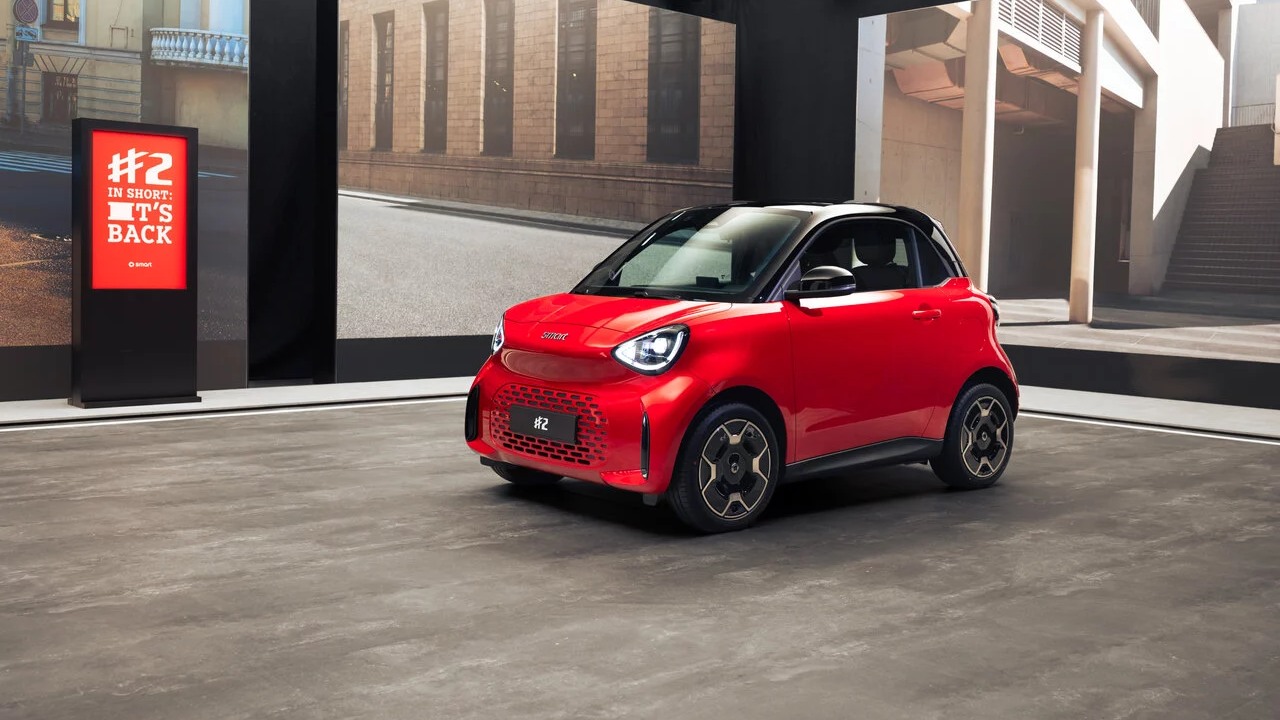
New smart #2. Press photo: © smart Europe, used for editorial purposes. Source: official smart newsroom.
7. Audi A2 e-tron: efficiency and range rather than a show of strength
TheAudi A2 e-tron is not revealed for the first time in Paris, but the Mondial offers its first presentation before a large international public. Its name refers to the A2 launched at the end of the 1990s, a light and aerodynamic car whose efficiency was ahead of its time.
Audi announces up to 646 kilometres of WLTP range for the new electric compact. Produced in Ingolstadt, it is to be launched in Europe in December 2026; the German price starts at 38 200 euros according to the brand’s press release. French prices and available configurations may differ.
The connection with the original A2 is relevant if energy sobriety remains at the heart of the project. It would be much less so if the name only served to dress up a conventional electric compact. Dimensions, weight and real consumption will therefore be more revealing criteria than maximum range alone.
8. Lancia Gamma: the return of an Italian flagship
The new Lancia Gammamakes its first appearance at an international motor show at the Mondial. This 4,67 metre fastback crossover is built on a 2,79 metre wheelbase and will be offered with hybrid and electric powertrains.
The announced HF Integrale electric version develops 375 hp thanks to two motors. Lancia plans production in Melfi, Italy. Beyond performance, the Gamma must above all prove that the brand’s revival can extend beyond the Ypsilon and recapture a form of elegance characteristic of the great historic Lancias.
For collectors, the name Gamma obviously recalls the saloons and coupes of the 1970 and 1980 decades. The new model is not a reissue. It reuses a range name to establish a new flagship in a completely different industrial context.
9. Fiat Grizzly: two body styles for a new global family car
Fiat presents for the first time in Europe the Grizzly and Grizzly Fastback. Under 4,50 metres in length, these family models claim an interior volume of 3,5 m³ and will be offered with several types of powertrain: petrol, hybrid and electric depending on the markets.
The Grizzly adopts a more classic SUV silhouette, while the Fastback favours a sloping roofline. Their interest at the Mondial lies in their pragmatic positioning: Fiat aims to build a global family around relatively compact models rather than multiplying niche vehicles.
The stand also shows the Multiplina and Multiplay concepts. Again, the historic names serve to speak of modularity and onboard life, but none of the presented exercises should be confused with immediate commercial launches.
10. Opel STX Concept and GSE 27FE: two visions of electric sportiness
Opel unveils two world premieres. The STX Concept takes the form of a forward-looking estate and explores the brand’s future design language. The GSE 27FE, more radical, highlights an experimental interpretation of electric performance.
The choice of an estate car deserves attention. This body style was long central to European culture before being marginalised by SUVs. By giving the STX a prominent place, Opel suggests that a low, family car can still be a modern proposition.
These two vehicles are concepts. They allow us to read intentions in terms of design, aerodynamics and GSE identity, but do not constitute either a price list or a firm commitment to a future model.
And Mercedes-Benz, DS, Volkswagen and the other manufacturers?
The show is not limited to this selection. Mercedes-Benz notably presents to the public the new CLA, VLE, GLC, GLB and GLA, as well as the AMG GT Coupé 4 Doors. These are important presentations, although not all are necessarily world premieres.
Stellantis announces more than 60 vehicles, nine concepts and eight exhibiting brands. DS Automobiles, Alfa Romeo, Volkswagen, Škoda, Cupra, Hyundai, Toyota, BYD and several Asian manufacturers complete an edition much denser than recent European shows.
What the Mondial 2026 really reveals
Three key insights emerge from these new releases.
Firstly, the small car is once again becoming strategic. The smart #2 and the Citroën 2 CV Concept respond to a simple demand: electric vehicles that are less bulky and potentially more affordable.
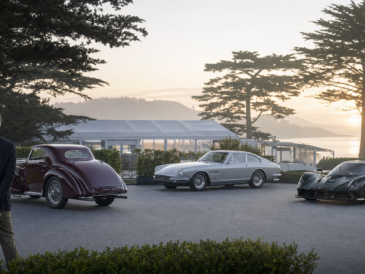
Secondly, European manufacturers are increasingly drawing on their heritage. A2, A310, 2 CV, RCZ, Espace, Gamma or Turbo 16 are all references capable of giving an immediate identity to electrified projects. This approach carries a risk: the name creates a promise that the product must then live up to.
Finally, the boundary between concept car and marketable vehicle should be approached with caution. The smart #2, the Audi A2 e-tron and the Lancia Gamma are production models. The 2 CV Concept is linked to an industrial project envisaged for 2028. The A310 VISION, on the other hand, is explicitly presented as an independent study. RCZ Vision, E-T16, E-Space and STX remain technological or stylistic manifestos.
Visitors wishing to compare this reinterpretation of heritage with the cars that inspired it can browse the classic, sports and prestige cars currently offered on Plethore Cars.
Practical information
The Mondial de l’Auto 2026 takes place from Tuesday 13 to Sunday 18 October at Paris Expo Porte de Versailles. Opening hours, prices, evening sessions and access arrangements may change: it is advisable to consult the official practical information for the Mondial before travelling.
For a visit focused on new releases, it is better to prepare a route grouping stands by hall and check the presentation schedule. The most anticipated concepts usually attract many visitors over the weekend.
FAQ on the new releases at the Mondial de l’Auto Paris 2026
What are the most important new releases at the Mondial de Paris 2026?
The Citroën 2 CV Concept, the Alpine A310 VISION, the Peugeot RCZ Vision and E-T16, the Renault E-Space Concept, the smart #2, the Audi A2 e-tron and the Lancia Gamma are among the main new releases.
Will the new Citroën 2 CV be marketed?
Citroën is considering a European production model inspired by the concept for 2028, with a target price around 15 000 euros subject to the future E-Car regulatory framework. The final technical specifications have not yet been announced.
Does the Alpine A310 VISION herald the future production A310?
No. Alpine describes it as an independent design study that does not directly anticipate a production model. It pays tribute to the historic A310 and explores form and aerodynamic solutions.
Is the Peugeot RCZ Vision available to order?
No. The RCZ Vision is a concept car. Its power, range and charging figures express the technological objectives of the project and do not constitute the homologated data of a marketed vehicle.
Which new release is closest to commercialisation?
The smart #2, the Audi A2 e-tron and the Lancia Gamma are production models. Their schedules and prices vary by country. They are therefore more concrete than the many concepts on display.
When does the Mondial de l’Auto Paris 2026 take place?
The show is open to the public from 13 to 18 October 2026 at Paris Expo Porte de Versailles. The day of 12 October is dedicated to press and professional presentations.
Main sources
- Mondial de l’Auto — official list of exhibitors : manufacturers present and new models announced at the stands.
- Le Monde — models not to be missed at the 2026 Mondial : general context of the 91th edition.
- Citroën / Stellantis Media — 2 CV Concept : dimensions, positioning and series project.
- Alpine — A310 VISION : concept status and dimensions.
- Peugeot / Stellantis Media — RCZ Vision : architecture and technical objectives.
- Peugeot — programme for the 2026 Mondial : RCZ Vision, E-T16 and exhibited models.
- Renault — E-Space Concept : dimensions and concept philosophy.
- smart — world premiere of the smart #2 : dimensions, engine and charging features.
- Audi — A2 e-tron at the Paris Mondial : range, production and European launch.
- Lancia / Stellantis Media — Lancia at the 2026 Mondial : Gamma, dimensions and powertrains.
- Opel / Stellantis Media — STX Concept and GSE 27FE : status of the two concepts.
Information verified on 13 October 2026. The values announced for the concepts are not homologation data. Prices and schedules may change depending on the markets.