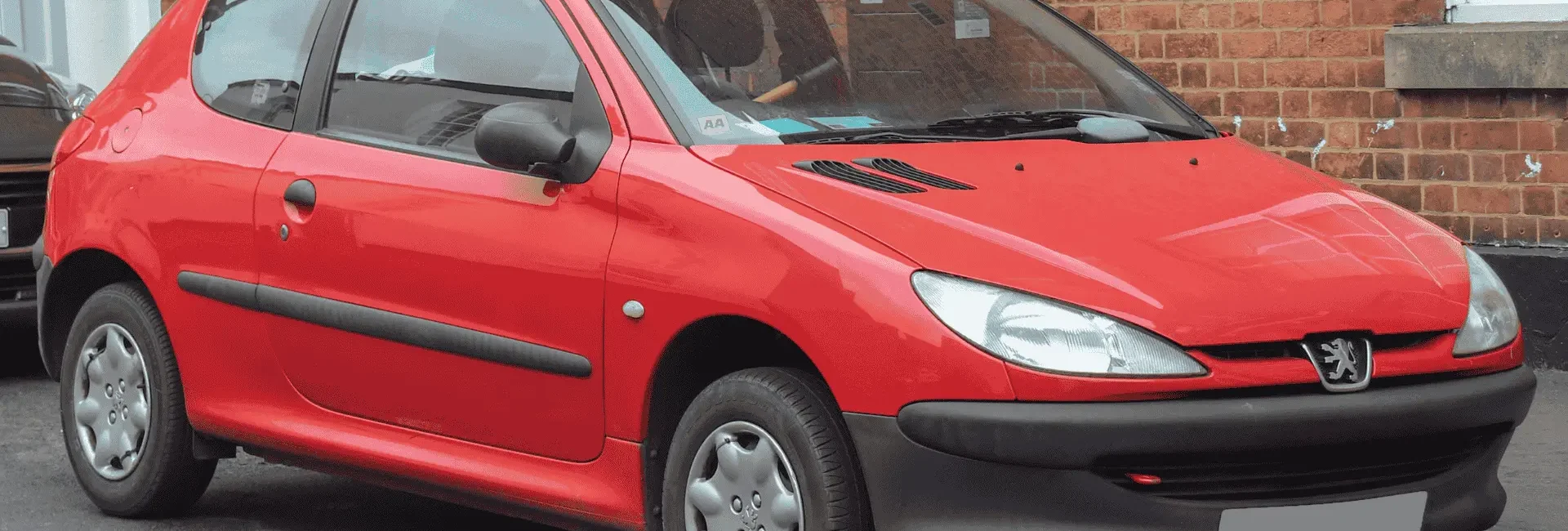
In short:The most sold French car in history is the Peugeot 206, ahead of the Renault 4 and the Renault 5. The ranking includes ten models produced in several million units, from the 2CV to the Peugeot 405.
In the bustling world of automobiles, certain French creations have transcended their mere utilitarian function to become true societal phenomena. From the mythical Citroën 2CV to the timeless Peugeot 206, these models have written the most beautiful pages of the Tricolour industry, captivating millions of drivers around the world. Their success is not a matter of chance: it reflects a subtle alchemy between stylistic daring, technical pragmatism, and the ability to embody the spirit of a bygone era. This ranking of the ten best-selling French cars reveals much more than just a commercial list—it tells the story of the evolution of lifestyles, the democratization of mobility, and the excellence of a hexagonal craftsmanship that has been able to shine far beyond our borders.
1. Peugeot 206 : The Undeniable Queen (8,36 Millions of Copies)
At the top of this automotive pantheon stands the Peugeot 206, a true industrial triumph of the Sochalien. Produced from 1998 to 2012, this versatile city car has conquered the world with a total of8 358 217 copies, including 7 941 290 copies of 206 and 416 927 copies of 206+. This phenomenal success is explained by a winning formula: round and warm lines signed by Gérard Welter, a precise chassis inherited from Peugeot’s expertise, and a particularly attractive value-for-money ratio compared to its rival, the Renault Clio II.
Initially marketed with gasoline engines from 1.1 to 2.0 liters and HDi diesel, the 206 embodies the technical maturity of the 2000 years. The S16 version, equipped with a 2.0-liter engine producing 137 horsepower, appealed to enthusiasts of sports driving, while the HDi 70 and 110 horsepower versions responded to the growing concerns about fuel efficiency. Its success crosses borders: assembled in Mulhouse, Poissy, as well as in Wuhan, China, and under license in Iran by Iran Khodro, the 206 illustrates the ability of a French manufacturer to think globally while preserving its identity.
To learn more about this topic, please consult our article dedicated toR5 thermal: our complete survey.
2. Renault 4: The Popular Utility Vehicle (8,14 Millions of Copies)
Just behind the 206, the Renault 4 stands out as another tricolor legend with 8 135 424 units produced according to Planète Renault, on an exceptionally long production run from 1961 to 1992 in France — and up to 1994 in Morocco and Slovenia. Designed to replace the aging 4CV, the “4L” adopts a radically different philosophy: that of a semi-utility car, practical and robust, capable of transporting both people and goods thanks to its revolutionary rear hatch for its time.
The 4L stands out for its understated mechanical simplicity, with evolving powertrains ranging from 603 cm³ for the R3 temporary model to 1 108 cm³ for the GTL. This technical austerity makes it a reliable, economical, and easy-to-maintain vehicle—key advantages for a popular and rural clientele. Its distinctive look, featuring asymmetrical doors and a fabric roof on certain versions, gives it a retro charm that continues to appeal to youngtimer enthusiasts today. Sold in more than 100 countries and produced in 28 countries, the Renault 4 is the third best-selling car in the world after the Volkswagen Beetle and the Ford T.
3. Renault 5: The Modern City Car (5,5 Millions of Exemplars)
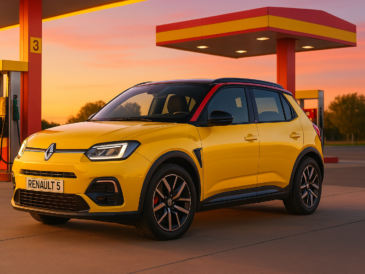
Launched in 1972 to modernize the Renault lineup in response to competing city cars, the Renault 5 embodies the stylistic break of the 70 era. With approximately 5,5 million units sold according to Autodiscount estimates, it has established itself as the benchmark city car of its generation. Its signature design by Michel Boué, featuring its rectangular headlights and sleek lines, makes a statement and has had a lasting influence on French automotive aesthetics. Several of these icons have since been relaunched in modern versions:the classics reinvented for the current era.
The R5 benefits from a proven technical base—that of the Renault 4—while offering a decidedly more modern style and superior comfort. The engines have evolved over the years, from the petrol versions 956 cm³ and 1.4 liters to the famous Alpine and Turbo sports variants that have marked the history of the French rally. The most sold car in France between 1974 and 1983, it is used by both private individuals and public services, particularly La Poste and the Gendarmerie. Its career extends to 1996, a testament to its conceptual relevance.
4. Citroën 2CV: The Timeless Icon (5,11 Millions of Copies)
An absolute symbol of French popular automobiles, the Citroën 2CV remains one of the most iconic industrial objects of the 20th century. Produced from 1949 to 1990, it totaled5 114 961 copiesan impressive figure for a car with a decidedly minimalist concept. Designed to “transport two farmers on hooves, fifty kilograms of potatoes, or a ton of hay bales,” according to Pierre Boulanger’s legendary specifications, the “Deuche” embodies accessible and non-artificial mobility.
Its exceptional longevity — 41 years of production — reflects an timeless philosophy: a two-cylinder air-cooled engine transitioning from 9 horsepower to 1949 to 29 horsepower at the end of its production run, according to the official Stellantis website, a revolutionary suspension capable of “absorbing flaws in a plowed field without breaking an egg basket,” and a removable bodywork that facilitates maintenance. Originally produced in Levallois-Perret and later in Mangualde, Portugal for its final years, the 2CV remains today one of the most sought-after French cars in the collection, proving that authenticity transcends trends. This longevity is not an isolated case:the oldest car brands still in operationthey have the same endurance.
5. Renault 9 and 11: The Winning Duo (6,3 Millions of Copies)
Following the devastating failure of the Renault 14, the compact sedan had to regain its foothold in the compact saloon segment. Launched respectively in 1981 and 1983, the Renault 9 (three-door saloon) and 11 (two-door hatchback) form a formidable commercial duo with more than 6,3 million units sold, according to L’Essentiel de l’Éco. The R9 even secured the prestigious title of European Car of the Year in 1982, recognizing its modern design signed by Robert Opron and its generous interior space.
These models mark a turning point in Renault’s strategy: careful finish, modern equipment (electronic injection, automatic transmission as an option), and an extensive range that allows them to reach a broad customer base. Paradoxically, despite this impressive commercial success, the 9 and 11 have never achieved the status of classic cars, overshadowed by their charismatic predecessors. Their production continued until the early years of 1990, particularly in Argentina, where they experienced a second life.
6. Renault Clio II: Guaranteed Replacement (5,63 Millions of Copies)
Replacing the Renault 5 wasn’t an easy task. Yet, the Clio II, launched in 1998, successfully met the challenge by selling 5,63 million units. As a direct competitor to the Peugeot 206, it stands out with a more sensible yet no less elegant style, signed by Patrick Le Quément, and with a clear improvement in assembly quality compared to the previous generation.
The Clio II is appealing for its versatility and diverse powertrains, ranging from petrol versions 1.2 and 1.6 liters to economical dCi diesel engines, not to mention the sporty Clio RS variants that continue the tradition of French small bombs. Its spacious interior for its class and healthy road handling make it a city car appreciated by families and young drivers alike. The Clio has remained one of the best-selling cars in France for decades, confirming the relevance of Renault’s formula in this highly competitive segment.
7. Peugeot 205: The Unmissable Sporty Car (5,28 Millions of Exemplars)
Launched in 1983 during a crisis for PSA, the Peugeot 205 literally saved the French automaker by becoming one of the greatest successes in French automotive history with 5,28 million units produced, according to Wikipedia. Its nervous and timeless design, a joint work of Gérard Welter and Pininfarina, immediately appeals to the eye. But it is above all its exceptional chassis that makes it legendary: precise, balanced, communicative, it transforms every journey into a pleasure of driving.
The 205 shines both on the road and in competition. The GTI 1.6 and 1.9 litre versions embody the golden age of French small sports cars, while the 205 Turbo 16 dominates the World Rally Championship in 1985 and 1986. This dual helmet—popular car and sports icon—explains why the 205 today enjoys a high collection value, particularly for the GTI and Roland Garros versions. Its legacy endures: the 206 that follows it retains its philosophy while modernizing the aesthetic codes.
8. Peugeot 207: The Ambitious Heir (4 Millions of Copies)
Replacing the legendary 206 posed a formidable challenge. Launched in 2006, the Peugeot 207 tackles it by adopting a more aggressive style and a confident upgrade. In just eight years of its career—compared to fourteen for its predecessor—it achieved the feat of surpassing 4 million units sold, demonstrating an impressive production rate and sustained demand.
The 207 modernizes the lineup with more powerful and fuel-efficient powertrains, including the latest generation HDi diesel engines, and a higher level of equipment (standard ESP, automatic climate control, etc.). Its RC version continues Peugeot’s sporting tradition with a turbo engine producing 175 horsepower. Despite a shorter career than expected—replaced from 2012 by the 208—the 207 confirms Peugeot’s dominance in the European B-segment and anticipates the evolution toward more sophisticated and technologically advanced city cars.
9. Peugeot 405: The Elegant Family Sedan (2,5 Millions of Exemplars)
Presented in 1987, the Peugeot 405 embodies the pinnacle of Peugeot’s expertise in family sedans. With more than 2,5 million units produced, according to estimates, it remains today the brand’s best-selling family car. Its balanced design, signed by Pininfarina, gives it timeless elegance that distinguishes it from its more ordinary competitors.
Technically, the 405 continues the recipes that made Peugeot successful: a rigorous chassis, precise steering, and remarkable suspension comfort. The engine options range from the 1.6 and 1.9 liter gasoline versions to atmospheric and then turbo diesel engines, anticipating the growing interest in diesel that characterized the 90 years. The 405 also marks a sporting milestone with its Mi16 and T16 versions, the latter boasting prestigious victories in rally-raid events, including at the Dakar Rally. Produced until 1997 in France—and much later in Iran and Egypt—it embodies an era when Peugeot excelled in the art of the versatile large series car.
10. Renault 4CV: The Pioneer (1,11 Million of Exemplars)
Closing this ranking, the Renault 4CV deserves its place for a major historical reason: it is the first French car to have crossed the milestone of one million units produced. Between 1947 and 1961, exactly1 105 547 unitswere assembled, a colossal number for the time, which testifies to Pierre Lefaucheux’s industrial genius, then in charge of the nationalized Renault Group.
Designed clandestinely during the Occupation by engineers Fernand Picard and Charles-Edmond Serre, the 4CV symbolizes the post-war renewal. Its advertising slogan summarizes its positioning: “4 horsepower, 4 doors, 444 000 francs” — meaning accessibility for the greatest number of people. Nicknamed the “butter crumb” due to its yellow color on the first prototypes (paint recovered from the Afrikakorps according to historical sources), it massively powers France and even exports to the United States and Japan. Its rear engine of 747 cm³ initially developing 17 horsepower according to technical specifications allows it to reach 90 km/h, respectable performance for its time.
Comparative Table: The 10 Most Sold French Cars
| rank | model | period | Examples | Main Motorizations | Particularities |
| 1 | Peugeot 206 | 1998-2012 | 8,36 M | 1.1 to 2.0 The essence, HDi 70-110 ch | The most sold French car in history |
| 2 | Renault 4 | 1961-1992 | 8,14 M | 603 cm³ to 1108 cm³ | 3th best-selling car in the world |
| 3 | Renault 5 | 1972-1996 | 5,5 M | 956 cm³ to 1.4 L, Alpine, Turbo | The most sold car in France 1974-1983 |
| 4 | Citroën 2CV | 1949-1990 | 5,11 M | 375 to 602 cm³, 9 to 29 ch | 41 years of production |
| 5 | Renault 9/11 | 1981-1996 | 6,3 M | 1.1 to 1.7 Gasoline and diesel | European Car 1982 |
| 6 | Renault Clio II | 1998-2012 | 5,63 M | 1.2 to 1.6 The essence, dCi | Direct rival of 206 |
| 7 | Peugeot 205 | 1983-1998 | 5,28 M | 1.0 to 1.9 L, GTI, Turbo 16 | PSA saved from bankruptcy |
| 8 | Peugeot 207 | 2006-2014 | 4 M | HDi, gasoline, RC 175 ch | 4M in 8 only years |
| 9 | Peugeot 405 | 1987-1997 | 2,5 M | 1.6 to 1.9 L, Mi16, T16 | The most sold family Peugeot |
| 10 | Renault 4CV | 1947-1961 | 1,11 M | 747 cm³, 17 ch | 1 French era to 1 million. |
Conclusion: The Tricolore Excellence in the Service of Popular Mobility
This ranking of the most sold French cars reveals a constant: the success of hexagonal models relies on a subtle balance between pragmatism, accessibility, and a strong stylistic identity. From the post-war Renault 4CV to the Peugeot 206 of the new millennium, French manufacturers have been able to meet the aspirations of their time while creating durable products, both in terms of commercial longevity and their presence in the collective imagination.
Today, as the automotive industry undergoes an unprecedented electric transformation, these models represent an era of golden age when French engineering was shining on the global stage. Their legacy endures in the DNA of the Tricolor manufacturers and in the hearts of enthusiasts who continue to perpetuate these mechanical legends.
And you, which French car from this ranking has left the most impression on you? Which one do you think embodied the tricolor automotive genius at its peak?Share your memories and your passion in the comments.
Discover more car stories and in-depth analyses on Plethore.fr, your media dedicated to automotive excellence.
Image source:https://encrypted-tbn0.gstatic.com/images?q=tbn:ANd9GcSZp_yg1fTNdkW4UbrDFb1Tr_c_L5cVJbanCA&s